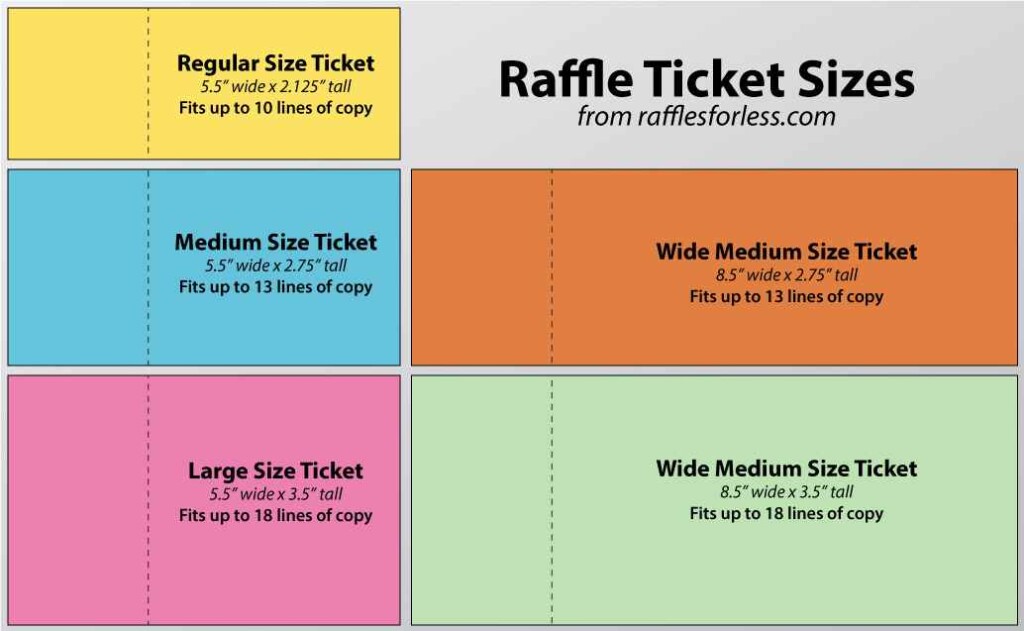

If you’re wondering how much raffle tickets should cost, there isn’t one price that works for every fundraiser. A $1 ticket may be perfect for a school event, while a $10 or $20 ticket may make more sense for a charity gala with a high-value prize.
The right price depends on your fundraising goal, total expenses, expected number of buyers, prize value, audience, raffle format, and how much each supporter is realistically willing to spend.
The good news is that you don’t have to guess.
With a simple pricing formula, realistic sales estimate, and well-designed ticket bundles, you can set raffle ticket prices that make participation accessible while giving your organization a better chance of reaching its fundraising goal.
This guide shows you exactly how to calculate your price, compare fundraiser raffle ticket prices, structure bundles, price basket raffles, and avoid the most common pricing mistakes.
How Much Should Raffle Tickets Cost?
For many U.S. fundraisers, a single raffle ticket may fall somewhere around $1 to $20, but that is a starting range rather than a universal rule.
School and community fundraisers often use lower prices such as $1–$5, while charity events, galas, and raffles featuring higher-value prizes may support $5–$20 or more.
The right price is the one that works backward from your fundraising goal and realistic sales volume.
Typical starting points
| Raffle type | Possible starting price | Common bundle idea |
| School fundraiser | $1–$5 | 5 for $20 |
| Church fundraiser | $1–$10 | 5 for $20 |
| Community raffle | $2–$10 | 6 for $25 |
| Sports fundraiser | $2–$10 | 10 for $25 |
| Charity fundraiser | $5–$20 | 5 for $50 |
| Corporate event | $10–$25+ | 5 for $100 |
| High-value prize raffle | $10–$100+ | Limited-ticket packages |
These are examples, not fixed industry standards. Your audience, prize, expected sales and legal requirements should determine the final price.
The Simple Raffle Ticket Pricing Formula
The easiest way to establish a starting price is:
(Fundraising Goal + Total Costs) ÷ Expected Tickets Sold = Minimum Average Ticket Price
For example:
- Fundraising goal: $5,000
- Prize and event costs: $1,000
- Expected tickets sold: 1,000
Calculation:
($5,000 + $1,000) ÷ 1,000 = $6
Your average ticket revenue therefore needs to be about $6 per ticket to cover the $1,000 in costs and generate the additional $5,000 you’re targeting.
You could then test a practical pricing structure such as:
- 1 ticket: $5
- 3 tickets: $15
- 10 tickets: $50
Your actual average revenue will depend on how many buyers choose each option.
Don’t confuse ticket price with fundraising revenue
A $5 ticket does not mean your fundraiser will raise $5 for every ticket you print.
What matters is the number of tickets actually sold.
For example:
| Ticket price | Tickets sold | Gross revenue |
| $1 | 2,000 | $2,000 |
| $2 | 2,000 | $4,000 |
| $5 | 2,000 | $10,000 |
| $10 | 2,000 | $20,000 |
The challenge is that raising the price can reduce the number of people willing to buy.
That’s why pricing should be based on realistic demand, not simply the highest amount you think someone might pay.
How to Calculate Your Raffle Ticket Cost Step by Step
Before deciding your raffle ticket cost, work through these six numbers.
1. Set your fundraising goal
Start with the amount your organization actually needs to raise.
For example:
Goal: $10,000
Don’t stop there. Determine what the money will fund.
Are you paying for equipment? Supporting a school program? Funding a nonprofit initiative? Covering event expenses?
A specific goal also makes it easier to communicate the purpose of the raffle to potential buyers.
2. Add every relevant expense
Your total costs may include:
- Prize purchases
- Raffle ticket printing
- Event venue
- Marketing
- Payment processing
- Permits or licensing
- Advertising
- Decorations
- Staff or event services
- Online platform fees
- Shipping or delivery
If a prize is donated, its purchase cost may be $0 to your organization. If you purchase the prize yourself, include that expense in your calculation.
3. Estimate realistic ticket sales
This is where many pricing plans go wrong.
Don’t automatically assume you’ll sell every ticket you print.
If you print 5,000 tickets but realistically expect to sell 1,500, use 1,500 in your planning model.
Your estimate should consider:
- Number of supporters
- Event attendance
- Past raffle sales
- Number of volunteers selling tickets
- Selling period
- Prize appeal
- Ticket price
- Online vs. in-person sales
4. Calculate your minimum average price
Use:
(Goal + Costs) ÷ Expected Tickets Sold
Example:
- Goal = $7,500
- Costs = $1,500
- Expected sales = 1,500 tickets
($7,500 + $1,500) ÷ 1,500 = $6
Your average revenue needs to be approximately $6 per ticket.
5. Round to a buyer-friendly price
A calculated price of $6.17 may be mathematically accurate, but it isn’t necessarily the easiest price to communicate.
You could instead test:
- $7 each
- 3 for $20
- 10 for $60
The objective is to create a simple structure that buyers understand immediately.
6. Stress-test your plan
Don’t calculate only one scenario.
Build three:
| Scenario | Expected tickets | Average revenue | Gross revenue |
| Conservative | 750 | $6 | $4,500 |
| Target | 1,500 | $6 | $9,000 |
| Strong | 2,000 | $6 | $12,000 |
This gives your team a more realistic view of what could happen.
What Are the Best Raffle Ticket Prices for Different Events?
The best raffle ticket prices depend heavily on the audience.
A price that works at a school carnival may not work at a formal charity gala.
School fundraiser raffle
Schools often benefit from accessible pricing because families may be buying multiple tickets while also paying for other event activities.
Possible structure:
- 1 ticket = $2
- 3 tickets = $5
- 10 tickets = $15
If your prize is particularly attractive, you may be able to move toward a $5 ticket.
The key is making it easy for parents, teachers and community supporters to participate without requiring a large purchase.
Church fundraiser
A church raffle may need a broad pricing structure that works for different household budgets.
For example:
- 1 ticket = $2
- 5 tickets = $8
- 10 tickets = $15
Keep the ticket information clear and make sure your organization has checked the applicable state and local rules before selling tickets.
Sports team fundraiser
Sports teams often sell tickets through parents, players and supporters.
A simple structure could be:
- 1 = $5
- 5 = $20
- 15 = $50
The larger bundle gives supporters who already want to contribute an easy way to increase their purchase.
Charity fundraiser
Charity events can support higher prices when the prize and audience justify them.
Possible structure:
- 1 = $10
- 3 = $25
- 10 = $75
Don’t raise the price simply because the organization is a nonprofit. The ticket should still offer a compelling value proposition.
Corporate or gala raffle
A formal event with an expensive prize, dinner and entertainment can support a different pricing model.
Possible structure:
- 1 = $20
- 3 = $50
- 10 = $150
For a high-dollar raffle, however, you may want to limit the number of tickets and clearly communicate the drawing rules and odds.
How to Price Basket Raffle Tickets
Basket raffle ticket prices require a slightly different approach because you may have multiple prizes instead of one major prize.
Suppose your event has 10 baskets:
| Basket | Approximate value |
| Spa basket | $150 |
| Restaurant basket | $100 |
| Family game basket | $125 |
| Coffee basket | $75 |
| Sports basket | $200 |
| Movie basket | $100 |
| Grocery basket | $150 |
| Pet basket | $100 |
| Outdoor basket | $175 |
| Technology basket | $250 |
Instead of giving every basket the same ticket price, you could use a simple tiered system.
For example:
- Standard baskets: $5 per entry
- Premium baskets: $10 per entry
- Grand-prize basket: $20 per entry
Another approach is to let participants buy a set number of tickets and place each ticket into the drawing container for the basket they want to win.
The important thing is to make the rules easy to understand before someone purchases.
Raffle Tickets Pricing: Should You Offer Bundles?
In many fundraisers, bundles are worth testing because they encourage supporters who already intend to participate to buy additional entries.
Instead of:
1 ticket = $5
try:
- 1 ticket = $5
- 5 tickets = $20
- 15 tickets = $50
The buyer receives a better per-ticket price as the quantity increases.
Why bundle pricing can work
A supporter who planned to spend $5 may still buy one ticket.
But someone already planning to spend $20 now has an obvious option.
Your pricing structure should therefore serve at least two groups:
Casual buyer: wants one or two chances.
Committed supporter: wants several chances and is willing to spend more.
A simple bundle formula
Start with your base price.
If:
1 ticket = $5
you might test:
5 tickets = $20
That reduces the effective price to $4 per ticket while increasing the buyer’s total transaction from $5 to $20.
The discount must be large enough to feel meaningful without damaging your fundraising target.
Raffle Ticket Pricing Strategies That Can Increase Revenue
There is no guaranteed pricing tactic, but several approaches are useful to test.
Strategy 1: Keep the entry price accessible
Your lowest price should not create unnecessary friction.
For a community fundraiser, $1–$5 may be easier to sell than $20.
Strategy 2: Make bundles obvious
Don’t make supporters calculate complicated combinations.
Use simple offers such as:
1 for $5 | 5 for $20 | 15 for $50
Strategy 3: Use a clear middle option
A three-tier structure gives buyers an easy comparison.
For example:
| Option | Price | Effective price |
| 1 ticket | $5 | $5 |
| 5 tickets | $20 | $4 |
| 15 tickets | $50 | $3.33 |
Strategy 4: Use limited-ticket pricing carefully
If you intentionally limit the number of entries, explain the limit clearly.
Scarcity can affect perceived value, but it should never be presented in a misleading way.
Strategy 5: Test early-bird offers
An early-bird offer can encourage supporters to purchase before the final event period.
For example:
First 100 tickets: $5
Regular price: $7
If you use this strategy, communicate the deadline clearly and honor the advertised terms.
How Much Should Raffle Tickets Cost Based on Prize Value?
Prize value matters, but it should not be the only factor.
Consider two raffles.
Raffle A
Prize value: $500
Audience: 500 local families
Expected sales: 1,000 tickets
A $1–$5 ticket may make sense because the fundraiser depends on volume.
Raffle B
Prize value: $10,000
Audience: 300 donors
Tickets available: 300
A much higher price may be possible because the event is based on limited availability and a substantially larger prize.
The important lesson is:
Prize value influences what buyers may accept, but expected sales determine whether your pricing model works financially.
Raffle Ticket Pricing Calculator Formula
You don’t need complicated software to create a basic raffle ticket pricing calculator.
Use these inputs:
A = Fundraising goal
B = Total expenses
C = Expected tickets sold
Then:
Minimum average ticket price = (A + B) ÷ C
Example
Goal: $10,000
Expenses: $2,000
Expected tickets sold: 2,000
($10,000 + $2,000) ÷ 2,000 = $6
Your minimum average revenue is $6 per ticket.
Now compare three pricing plans:
| Plan | Single | Bundle | Estimated average |
| A | $5 | 5 for $20 | $4–$5 |
| B | $7 | 5 for $30 | $6–$7 |
| C | $10 | 5 for $40 | $8–$10 |
Plan B may be a better starting point if your audience can support it because it is closer to the required average.
The calculator is a planning tool, not a guarantee of sales.
Raffle Ticket Price vs. Raffle Ticket Printing Cost
Your raffle ticket cost has two different meanings that organizers sometimes confuse.
Ticket selling price
This is what the participant pays.
Example:
$5 per ticket
Ticket production cost
This is what your organization pays to produce the physical ticket.
Example:
$0.05 per printed ticket
Those numbers should not be treated as the same thing.
Your ticket production cost is one of the expenses that belongs in your pricing calculation.
For example:
- Fundraising goal = $5,000
- Prize = $500
- Ticket printing = $100
- Marketing = $200
- Expected sales = 1,000
Total requirement:
$5,000 + $500 + $100 + $200 = $5,800
Required average:
$5,800 ÷ 1,000 = $5.80
You could therefore test a $6 or $7 base price rather than simply choosing $5 because it feels affordable.
Should You Charge More for Raffle Tickets?
Sometimes.
A higher price may make sense when:
- The prize is highly desirable
- Ticket availability is limited
- Your audience has demonstrated willingness to spend
- The event is premium or formal
- Your fundraising goal requires fewer, higher-value transactions
- The odds are clearly communicated and attractive
But higher prices can also reduce participation.
Before increasing your raffle ticket prices, ask:
Would my expected number of buyers fall enough to offset the higher price?
That’s the real pricing question.
Pros and Cons of Different Pricing Models
| Pricing model | Pros | Cons |
| Low single-ticket price | Easy participation | Requires more sales |
| Higher single-ticket price | More revenue per sale | Can reduce buyers |
| Bundle pricing | Encourages larger purchases | Requires careful math |
| Tiered pricing | Serves different budgets | More complicated |
| Early-bird pricing | Creates early momentum | Requires clear deadlines |
| Limited-ticket pricing | Can support premium pricing | Smaller total audience |
There is no universally superior model.
Choose the simplest structure your audience can understand.
Common Raffle Ticket Pricing Mistakes
Mistake 1: Pricing based on emotion
“$5 sounds reasonable” isn’t a pricing strategy.
Start with your financial goal.
Mistake 2: Assuming you’ll sell every ticket
Printing 5,000 tickets doesn’t mean you’ll sell 5,000.
Use a realistic sales estimate.
Mistake 3: Ignoring expenses
Prize, printing, marketing and event costs all affect the amount you need to raise.
Mistake 4: Making bundles too complicated
Avoid structures such as:
1 for $4
4 for $13
9 for $27
17 for $46
Buyers shouldn’t need a calculator.
Mistake 5: Offering a discount that is too large
A bundle can increase transaction size, but excessive discounts can undermine your fundraising goal.
Mistake 6: Copying another organization’s price
Another fundraiser may have a different audience, prize, attendance, cost structure and legal requirements.
Use other events for context, not as your formula.
Mistake 7: Forgetting the legal side
Raffle laws vary across the United States.
The IRS notes that raffles are among gaming activities that can be subject to state and local regulation, particularly for tax-exempt organizations.
Check the applicable rules in the jurisdiction where your raffle will take place before selling tickets.
How to Make Your Raffle Ticket Price Easy to Understand
Your ticket price should be visible wherever you promote the raffle.
Instead of writing:
“Tickets are available at several prices depending on quantity.”
Use:
1 for $5
5 for $20
15 for $50
This makes the value immediately clear.
Also explain:
- What the buyer can win
- Drawing date
- Where the drawing takes place
- How winners are contacted
- Organization conducting the raffle
- Any applicable restrictions or requirements
For the physical ticket itself, clear numbering and a well-designed stub can make sales and drawing administration easier.
Don’t Forget the Cost of Printing Your Tickets
Once you know your selling price, the next question is how much you should spend producing the tickets.
Professional printing costs can vary based on:
- Quantity
- Ticket size
- Paper
- Color
- Numbering
- Perforation
- Book format
- Customization
Ordering more tickets may reduce the per-ticket production cost, but only order quantities that make sense for your expected sales.
If you’re comparing options, review the current Raffles For Less pricing information before finalizing your budget.
For organizers who are deciding between DIY and professionally printed tickets, our professional raffle ticket printing guide can help you compare the practical differences.
Best Practices for Setting Raffle Ticket Prices
Use this process before announcing your price:
- Set the fundraising goal.
- List every expected expense.
- Estimate realistic ticket sales.
- Calculate your minimum average ticket revenue.
- Research what your audience can reasonably afford.
- Consider the prize value.
- Choose a simple base price.
- Create one or two bundle options.
- Test conservative and optimistic sales scenarios.
- Confirm applicable state and local raffle requirements.
- Print a sample ticket.
- Track sales once the raffle begins.
The most important step is number three.
A perfect formula cannot compensate for an unrealistic sales estimate.
Raffle Ticket Pricing Checklist
Before publishing your raffle price, make sure you can answer yes to these questions:
- Is the fundraising goal clearly defined?
- Have all major costs been included?
- Is expected ticket volume realistic?
- Does the price fit the target audience?
- Does the prize justify the price?
- Is the base price easy to understand?
- Are bundle discounts financially sustainable?
- Have you considered your break-even point?
- Have you checked applicable raffle regulations?
- Is the ticket information easy to read?
- Is the numbering system organized?
- Have you tested the pricing with a few likely supporters?
Legal and Tax Considerations for U.S. Raffles
Pricing is only one part of running a raffle.
Raffles and other gaming activities can be regulated at the state and local level, and requirements vary by jurisdiction. The IRS specifically notes that gaming conducted by tax-exempt organizations can have federal tax considerations and that state and local laws can apply.
Prize winners can also have federal tax obligations. The IRS states that gambling winnings include raffle winnings and that taxable winnings may need to be reported as income.
Don’t describe raffle ticket purchases as tax-deductible charitable donations. IRS Publication 526 states that amounts paid to buy raffle or lottery tickets generally aren’t deductible as charitable contributions.
Because requirements can differ by state and event type, verify the rules that apply to your specific fundraiser before selling tickets.
Frequently Asked Questions About Raffle Ticket Prices
How much should raffle tickets cost?
A common starting range is $1–$20 per ticket, but the correct price depends on your fundraising goal, expenses, prize, audience and expected sales. School and community events often use lower prices, while formal events and high-value prize raffles may support higher prices.
What are the best raffle ticket prices for a fundraiser?
The best price is the one that allows you to reach your financial goal without making participation unnecessarily difficult. Start with (goal + expenses) ÷ expected tickets sold, then adjust for your audience and prize.
How much should I sell raffle tickets for?
Use your required average revenue per ticket as the starting point. If your calculation produces $6 per ticket, you could test $5–$7 pricing and use bundles to increase the average amount each buyer spends.
What are typical raffle ticket prices?
Many fundraisers use prices from $1 to $20, although some premium or limited-ticket raffles charge considerably more. There is no universal standard because event format, prize value, audience and ticket availability vary.
How do I calculate raffle ticket pricing?
Use this basic formula:
(Fundraising goal + total expenses) ÷ expected tickets sold = minimum average ticket price.
Then adjust the result to a simple price that your audience can reasonably afford.
Should I offer raffle ticket bundles?
Usually, bundles are worth considering because they give supporters an easy way to purchase several entries at once. Common structures include 3 for $10, 5 for $20, or 10 for $40, but your discount should be based on your fundraising target.
How much should basket raffle tickets cost?
Basket raffle pricing depends on basket value, number of baskets, audience and event format. You can charge a flat entry price for every basket or use different price levels for standard and premium baskets.
Should raffle tickets be $1 or $5?
Either can work. A $1 ticket may encourage higher participation but requires significantly more tickets to reach the same revenue. A $5 ticket can reduce the number of sales required but may limit participation among price-sensitive supporters.
Does a more expensive raffle ticket raise more money?
Not necessarily. A higher ticket price generates more revenue per sale, but if it causes a large drop in buyers, total revenue may decrease. The goal is to find the price that balances transaction value with participation.
How many raffle tickets should I print?
Print based on realistic demand rather than simply choosing a large number. Consider your expected audience, sales period, previous event performance and ticket-selling capacity. Ordering too many tickets can create unnecessary production costs.
Should raffle ticket prices include printing costs?
Yes. Printing is one of the expenses you should consider when calculating your required average ticket revenue. Other costs may include prizes, marketing, payment processing, venue expenses and applicable fees.
Conclusion: Set a Raffle Ticket Price That Actually Works
So, how much should raffle tickets cost?
Start with the numbers instead of guessing.
Add your fundraising goal and total expenses, estimate how many tickets you can realistically sell, and divide the total by your expected sales volume. That gives you the minimum average revenue you need per ticket.
From there, choose a simple price that fits your audience and prize. Consider bundles such as 5 for $20 or 10 for $35–$50 when they make financial sense, and test different scenarios before committing.
Remember that the best raffle ticket prices aren’t necessarily the highest or lowest prices. They’re the prices that make participation attractive while giving your organization a realistic path toward its fundraising goal.
Once your pricing is set, make sure your physical tickets support the event with clear information, professional printing, accurate numbering and a format that’s easy for your team to distribute.
For professionally printed tickets, explore the current Raffles For Less ticket order options and choose a format that fits your event.