Planning a fundraiser, charity event, school raffle, church fundraiser, sports-team event, or community drawing? Custom raffle tickets can do much more than identify an entry. A well-designed ticket gives participants the information they need, helps organizers track entries, and gives your fundraiser a professional appearance.
The good news is that you do not need to be a professional designer to create effective raffle tickets. You can start with a template, design your own layout, or work with a professional printer.
The important part is knowing what information belongs on the ticket, how numbering and stubs should work, which size fits your event, and when professional raffle ticket printing makes more sense than printing everything yourself.
This guide explains the entire process from planning and design to printing and distribution.
What Are Custom Raffle Tickets?
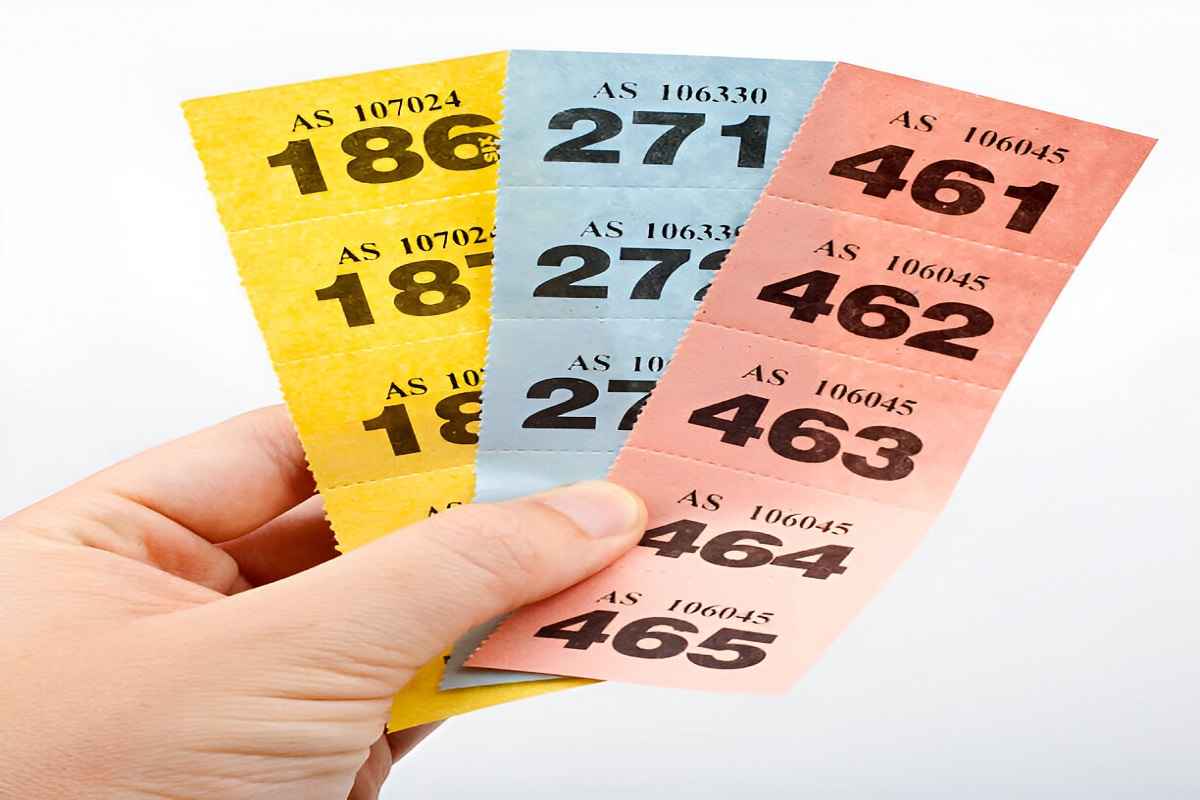
Custom raffle tickets are tickets personalized for a specific fundraiser, organization, event, or drawing. Instead of using a generic ticket, you can include your organization name, logo, prize information, ticket price, drawing date, contact information, numbering, and other relevant details.
A typical custom ticket includes two connected sections:
- The main ticket given to the participant
- A detachable stub retained for the drawing
- Matching ticket numbers
- Event or organization information
- Prize details
- Drawing date and time
- Ticket price
- Space for participant information when appropriate
The exact information and format should depend on your event and applicable rules.
A professionally printed ticket can also provide consistent numbering, clean perforation, durable paper, and a polished appearance.
Why Use Custom Raffle Tickets?
Generic tickets can work for a simple drawing, but personalized tickets offer several practical advantages.
1. They Make Your Fundraiser Look Professional
Your ticket is often one of the first physical items a supporter sees.
Adding your organization’s name, logo, colors, and event information creates a more consistent fundraising experience.
2. They Make Ticket Management Easier
Sequentially numbered tickets can help your team track which tickets were distributed and sold.
For larger events, organized numbering can reduce confusion during the final drawing.
3. They Give Participants Important Information
A good ticket should answer basic questions without requiring the participant to search for another document.
Depending on the event, that may include:
- What the raffle supports
- Ticket price
- Prize information
- Drawing date
- Drawing location
- Organization name
- Contact information
- Rules or eligibility information
4. They Reinforce Your Organization’s Brand
A school can use school colors and a mascot.
A nonprofit can feature its logo and fundraising message.
A sports organization can incorporate team colors and imagery.
A business can use its brand identity for a promotional drawing.
5. They Create a Better Physical Record
A numbered ticket with a detachable stub provides a straightforward physical entry system for many traditional raffles.
What Information Should Go on a Raffle Ticket?
One of the most important steps when you create raffle tickets is deciding what information belongs on the final design.
At minimum, consider including:
| Ticket Element | Why It Matters |
| Event name | Identifies the raffle |
| Organization name | Establishes who is conducting it |
| Ticket number | Helps identify the entry |
| Ticket price | Makes the purchase terms clear |
| Drawing date | Tells participants when the winner will be selected |
| Prize information | Explains what participants could win |
| Contact information | Gives participants a way to reach the organizer |
| Stub | Provides a convenient entry record |
| Rules or terms | Helps communicate applicable requirements |
Not every raffle needs exactly the same information. Your state, local jurisdiction, organization type, and raffle structure may require additional disclosures.
For a more detailed breakdown, see our guide on what information to include on a raffle ticket.
What Should Be Printed on the Stub?
The stub should contain enough information to identify the ticket if it is separated from the participant portion.
Common stub information includes:
- Matching ticket number
- Participant name
- Phone number
- Email address
- Other contact information when appropriate
Avoid collecting unnecessary personal information. Only request information your organization actually needs.
How to Create Raffle Tickets Step by Step
If you are wondering how to create a raffle, start with the event rather than the artwork.
The ticket design should support the way your raffle will actually operate.
Step 1: Define Your Raffle
Before designing anything, determine:
- What are you raising money for?
- What is the prize?
- When will the drawing occur?
- Where will it occur?
- How much will tickets cost?
- How many tickets do you expect to sell?
- Who will sell the tickets?
- What information needs to be collected?
This prevents you from designing a beautiful ticket that does not contain an important operational detail.
Step 2: Decide How Your Tickets Will Be Used
Think about whether you need:
- Individual tickets
- Tickets with detachable stubs
- Tickets stapled into books
- Calendar raffle tickets
- Large-format tickets
- Tickets with additional writing space
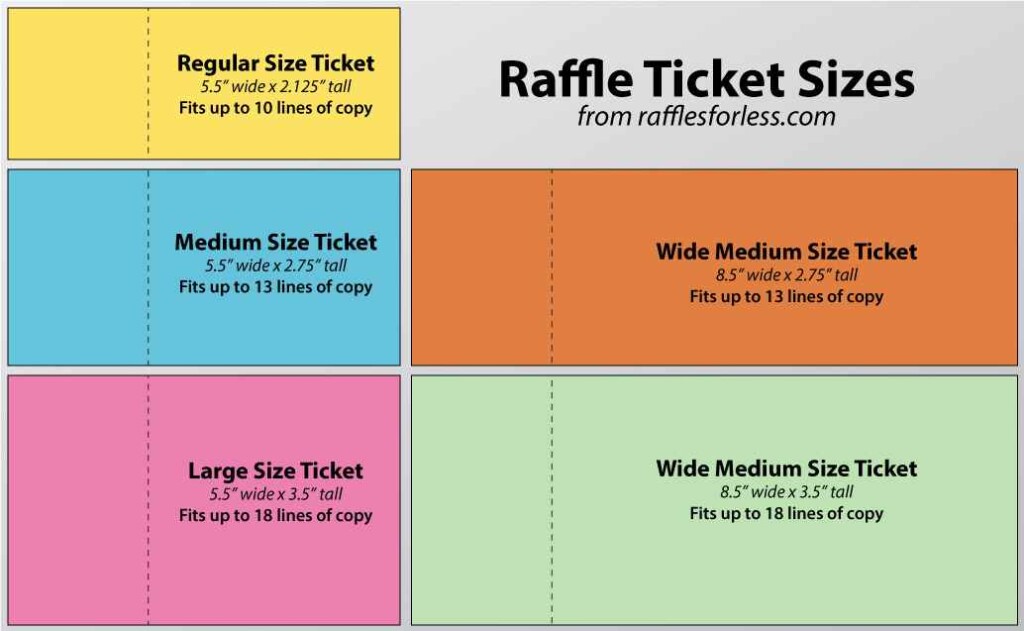
Raffles For Less offers multiple sizes and formats, including regular, medium, large, wide medium, wide large, and calendar raffle options.
Step 3: Choose Your Ticket Size
Select a size based on how much information you need and how the tickets will be distributed.
A simple fundraiser may work well with a regular-size ticket.
A ticket containing extensive prize details, sponsor information, or a calendar may need more space.
Step 4: Plan the Layout
Keep the most important information visually prominent.
A simple hierarchy might be:
RAFFLE NAME
Prize or fundraising purpose
Ticket price
Drawing date
Ticket number
Organization information
Rules or additional details
Step 5: Add Branding
Use:
- Organization logo
- Brand colors
- School mascot
- Event imagery
- Sponsor logos when appropriate
Avoid filling every available space with graphics.
Step 6: Add Numbering
Make sure the ticket number is easy to find.
If your tickets have stubs, the number should correspond between the participant portion and the drawing stub.
Step 7: Proofread Before Printing
Check:
- Spelling
- Dates
- Times
- Prize descriptions
- Ticket prices
- Phone numbers
- Website addresses
- Organization name
- Legal or required language
- Numbering sequence
A mistake printed on 2,000 tickets is much more expensive to fix than a mistake caught during proofreading.
Step 8: Approve the Final Proof
Always review the final version before production.
This is especially important when using professional raffle ticket printing, because the printer generally produces the approved artwork according to the specifications submitted.
How to Design Your Own Raffle Tickets
If you want to design your own raffle tickets, begin with a practical layout rather than trying to make the ticket look complicated.
Your design should be:
- Easy to read
- Easy to identify
- Consistent with your organization
- Appropriate for the event
- Large enough to accommodate required information
- Simple enough to print clearly
Use a Strong Visual Hierarchy
The event name and prize should usually receive more visual attention than secondary information.
For example:
Annual School Fundraiser
Grand Prize: $2,500
Drawing: October 25, 2026
Ticket: $10
This is easier to scan than placing every detail in the same font size.
Use Contrast Carefully
Make sure text remains readable against the background.
Dark text on a light background is often easier to read than decorative text placed over a busy photograph.
Leave Enough White Space
White space is not wasted space.
It helps separate information and makes the ticket easier to understand.
Keep Numbers Easy to See
Ticket numbers should not be hidden in decorative artwork.
If volunteers need to verify a ticket quickly, the number should be immediately visible.
What Is a Raffle Ticket Maker?
A raffle ticket maker is a design tool or software solution that helps users create ticket layouts.
A typical online ticket maker may allow you to:
- Choose a template
- Add event details
- Upload a logo
- Change colors
- Add images
- Adjust text
- Create a printable design
These tools can be useful for simple DIY projects.
However, designing the artwork and producing professional physical tickets are two separate steps.
If you use Raffles For Less graphics templates, remember that the company’s templates are intended as production guides for professional design software. They show important elements such as ticket dimensions, safe areas, perforation location, and numbering placement.
Raffle Ticket Creator vs. Professional Printing
A raffle ticket creator can help you prepare artwork, but it does not automatically solve the physical production side of the project.
Think about the process in two stages:
Design
Create the artwork, wording, branding, and layout.
Production
Choose the stock, size, numbering, perforation, finishing, quantity, and shipping.
This distinction matters because a design can look excellent on a computer screen but still create printing problems if the dimensions, safe area, or perforation placement are wrong.
Choosing the Right Raffle Ticket Size
Raffles For Less currently offers five primary ticket sizes:
| Size | Overall Dimensions |
| Regular | 2-1/8″ × 5-1/2″ |
| Medium | 2-3/4″ × 5-1/2″ |
| Large | 3-1/2″ × 5-1/2″ |
| Wide Medium | 2-3/4″ × 8-1/2″ |
| Wide Large | 3-1/2″ × 8-1/2″ |
The company also offers calendar raffle formats designed for events where the ticket itself includes a calendar or daily prize information.
Which Size Should You Choose?
Choose the regular size when you need a straightforward ticket with limited copy.
Choose the medium or large size when you need more room for prize information, rules, logos, or sponsor details.
Choose a wide format when your event requires a larger design area.
Choose a calendar raffle ticket when the fundraising format depends on displaying multiple dates or daily prizes.
The best choice is not necessarily the largest ticket. Choose the smallest format that comfortably fits all essential information.
Raffle Ticket Numbering and Perforated Stubs
Numbering is one of the most practical features of a physical raffle ticket.
Sequential numbers can make it easier to:
- Match ticket and stub
- Identify winning entries
- Track distribution
- Organize unsold tickets
- Reduce confusion during the drawing
Perforation also makes the ticket easier to separate.
Raffles For Less states that its tickets are consecutively numbered and perforated, with optional stapling or padding into books.
Why Sequential Numbering Matters
Imagine selling 1,500 tickets.
If every ticket has a unique number, your team can establish a clear sequence and verify entries more easily.
Without organized numbering, volunteers may have a harder time identifying tickets and maintaining accurate records.
DIY vs. Professional Raffle Ticket Printing
There is no single answer for every fundraiser.
The right option depends on your budget, quantity, design requirements, equipment, and available time.
| Factor | DIY Printing | Professional Printing |
| Initial setup | Usually simple | Requires ordering |
| Design control | High | High with custom artwork |
| Equipment | Printer required | Printer handled by provider |
| Numbering | May require manual setup | Can be professionally numbered |
| Perforation | More difficult | Professionally produced |
| Consistency | Depends on equipment | High |
| Large quantities | Can become time-consuming | Better suited |
| Professional finish | Depends on printer | More consistent |
| Labor | Higher for large batches | Lower organizer workload |
DIY Printing Pros
- Immediate control
- Useful for small quantities
- Can work for simple events
- No professional production lead time
DIY Printing Cons
- Cutting can be time-consuming
- Numbering may require additional work
- Perforation is more difficult
- Print quality depends on equipment
- Large batches can consume volunteer time
Professional Printing Pros
- Consistent production
- Professional perforation
- Consecutive numbering
- Multiple sizes and paper colors
- Easier bulk production
- Less manual labor
Professional Printing Cons
- Requires planning before ordering
- You need to approve the final design
- Rush orders may have different costs or shipping options
For a larger fundraiser, professional production can be worth considering because volunteers can spend their time selling tickets and promoting the event instead of assembling them.
How Much Does Raffle Ticket Printing Cost?
The cost of raffle ticket printing depends on several variables.
These can include:
- Ticket quantity
- Ticket size
- One-sided or two-sided printing
- Paper stock
- Finishing options
- Stapling or padding
- Shipping requirements
- Design services
Raffles For Less publishes current pricing by ticket quantity and size. For example, its listed design-it-yourself pricing varies by size and quantity, with options ranging from 250 tickets upward.
For accurate pricing, always check the current order form rather than relying on an old blog post or example.
You can also review our detailed guide on how to price raffle tickets for a fundraiser if you are deciding what to charge participants.
How Many Tickets Should You Print?
Do not automatically print the largest possible quantity.
Estimate your expected sales first.
Consider:
- Number of supporters
- Event attendance
- Number of volunteers
- Historical sales
- Ticket price
- Prize appeal
- Length of the sales period
For example, if your team reasonably expects to sell 1,000 tickets, you may want enough inventory to accommodate additional demand without dramatically overprinting.
Numbered tickets also make inventory management easier.
If you need help understanding ticket economics, see our guide to raffle ticket pricing and costs.
Raffle Ticket Design Best Practices
The strongest designs are usually simple, readable, and purpose-driven.
1. Put the Event Name First
Participants should immediately know what the ticket represents.
2. Make the Prize Easy to Find
If the grand prize is the primary selling point, do not hide it in small text.
3. Use Your Organization’s Branding
Your logo and colors can make the ticket feel connected to the organization people are supporting.
4. Make the Ticket Number Prominent
A number that is difficult to read creates unnecessary work during the drawing.
5. Avoid Excessive Decoration
Graphics should support the information, not compete with it.
6. Proofread Multiple Times
Have someone who did not create the ticket review it.
Fresh eyes often catch errors the original designer overlooks.
7. Check the Final Dimensions
Artwork must fit the selected ticket size and account for perforation and numbering requirements.
8. Order Samples When Appropriate
If the event is large or the design is complex, reviewing a physical proof or sample can provide more confidence than viewing the artwork on a monitor.
You can also browse the Raffles For Less raffle ticket samples for examples of different sizes and design approaches.