Most fundraising events live or die on one decision that gets made too late: what kind of ticket you’re actually selling. A gala admission ticket, a raffle ticket, and a 50/50 drawing stub all get called “fundraising tickets,” but they raise money in completely different ways and they come with different printing needs, different pricing math, and in some states, different rules.
If you’re planning an event and trying to figure out which type you need, how many to print, what to charge, and how to get them into supporters’ hands, this guide walks through all of it. It’s written for the groups we print for every day: PTAs, booster clubs, churches, volunteer fire departments, animal rescues, and small nonprofits running their first or fiftieth fundraiser.
What Are Fundraising Tickets?
Fundraising tickets are printed or digital tickets sold by an organization to raise money, either by granting entry to an event or by entering the buyer into a prize drawing. The two purposes are distinct: an admission ticket sells access, while a raffle ticket sells a chance to win.
That distinction matters more than it sounds. Admission tickets are limited by your venue’s capacity and usually stop selling at the door. Raffle tickets have no ceiling; one supporter can buy fifty and they can sell for weeks before the event and right up to the moment of the drawing. If your revenue goal depends on volume, that difference is the whole ballgame.
The Two Main Types of Fundraiser Tickets
Event Admission Tickets
These are the tickets for charity dinners, galas, pancake breakfasts, golf scrambles, trivia nights, concerts, and festivals. One ticket equals one person at the event.
Admission tickets tend to be priced higher per ticket, because the buyer is receiving something tangible a meal, a round of golf, an evening out. They’re also capacity-capped, which makes revenue easy to forecast but hard to grow. If your hall seats 200 and you charge $50, your ceiling is $10,000 before sponsorships and add-ons.
Raffle Tickets
Raffle tickets sell a chance at a prize. They’re typically inexpensive per ticket ($1 to $20 is common), sold in bundles, and designed around volume. A raffle can run alongside an event, replace an event entirely, or extend fundraising for weeks before the drawing date.
Raffle tickets have physical requirements admission tickets don’t: they need sequential numbering so each entry is unique and traceable, and a perforated stub so the buyer keeps one half while the organization collects the other with the purchaser’s name and phone number on it. Without those two features, drawing a winner becomes guesswork.
Quick Comparison
| Admission Tickets | Raffle Tickets | |
| What the buyer gets | Entry to the event | A chance to win a prize |
| Typical price | $20–$150+ | $1–$20, often bundled |
| Revenue ceiling | Capped by venue capacity | Limited only by sales effort |
| Sales window | Usually closes at the event | Can run for weeks beforehand |
| Numbering needed | Optional (helpful for tracking) | Essential |
| Perforated stub | Rarely needed | Almost always needed |
| Extra regulation | Generally minimal | Often licensed or restricted by state |
Can One Ticket Do Both?
Yes, and it’s one of the more effective setups we see. A combination ticket grants admission and enters the holder into a door-prize drawing. Practically, that means printing a numbered, perforated ticket where the stub goes into the drawing bin at check-in and the main body serves as the attendee’s admission.
It works especially well for dinners and banquets, where you already have everyone in the room and a live drawing adds energy to the evening. The one thing to plan for: if the drawing prize is meaningful, be clear in your promotion that admission includes one entry, so nobody feels misled when additional entries are sold separately.
Which Ticket Type Fits Your Event?
Work backward from your goal and your volunteer capacity.
- You need to raise a specific amount and have a venue booked. Sell admission tickets, then layer a raffle on top to break the capacity ceiling.
- You have a strong prize but no event budget. Run a standalone raffle. No catering, no venue, no seating chart just tickets, a sales push, and a drawing you can livestream.
- Your supporters are spread out geographically. Raffle tickets travel. Alumni, parishioners who moved away, and out-of-state family members can buy in without attending anything.
- You have a large volunteer base but a small budget. Raffle tickets scale with people power. Ten volunteers each selling a book of 50 outperforms most small-event admission revenue.
- This is your first fundraiser ever. Start with a raffle. The planning load is a fraction of an event, and the lessons transfer.
Some organizations run both in the same season and simply keep the accounting separate. That’s fine, as long as your tickets look distinct enough that volunteers and buyers don’t mix them up at a busy sales table.
How Many Tickets Should You Print?
Divide your fundraising goal by your ticket price, then add 20–30% for sellout headroom, comp tickets, and voided stubs. A group aiming for $5,000 at $10 a ticket needs 500 sold, so printing 600–650 is sensible.
Printing short is the more expensive mistake. Reorders mean a second setup, a second shipping window, and a real risk of running out mid-campaign during your best sales week. Per-ticket cost also drops significantly at higher quantities, so the extra hundred tickets usually cost far less than you’d expect you can check current raffle ticket pricing by quantity to see where the breaks fall for your order size.
One caution for raffles: if you print a fixed number and advertise “only 500 tickets sold,” you’ve made a promise. Honor it. Selling beyond an advertised cap damages trust and, depending on your state, may create a compliance problem.
How to Price Fundraiser Tickets
Pricing is where most groups either leave money on the table or price themselves out of their own community.
For admission tickets, start with your true cost per attendee food, venue, staffing, entertainment then add the margin that gets you to your goal. If your per-plate cost is $28 and you want $30 net per guest, $60 is your floor, not $45.
For raffle tickets, price against the prize and your audience’s habits. A $5 ticket on a $500 gift basket feels reasonable; a $5 ticket on a $50,000 truck feels like a bargain and will sell hard. Our guide on how much to charge for raffle tickets breaks the math down by prize value and audience size.
Bundles Almost Always Outperform Single Tickets
A ladder like 1 for $5, 5 for $20, 15 for $50 raises the average purchase without feeling pushy. Most buyers skip the single and take the middle tier. Print the bundle pricing directly on the ticket and on your sales flyer so volunteers don’t have to explain it forty times a night.
Early Bird Pricing Creates Urgency
Discounting the first wave of tickets, or offering an extra drawing exclusive to early buyers, front-loads your sales and gives you real numbers to work with weeks before the deadline. An early bird raffle is one of the few tactics that reliably moves purchases earlier rather than just shifting who buys.
It also buys you information. If early sales are soft, you still have time to add a prize, extend the deadline, or push harder options you don’t have if everything sells in the final 48 hours.
What to Print on Your Fundraising Tickets
Every fundraising ticket should carry:
- Your organization’s name and its 501(c)(3) status if applicable
- Event name and purpose what the money supports, in a few words
- Date, time, and venue (admission) or drawing date and location (raffle)
- Ticket price, including bundle pricing
- Prize description for raffles, with any conditions stated plainly
- A unique sequential number
- Stub fields for name, phone, and email
- Contact information and your website
- Any required license or permit number your state mandates
- Fine print age restrictions, “need not be present to win,” and how winners will be notified
Numbering and Perforation
Sequential numbering does three jobs at once: it makes each entry unique, it lets you reconcile cash against tickets sold, and it tells you exactly which volunteer sold which block. Hand a numbered book to each seller and your accounting reconciles itself at the end of the night.
Perforation is what makes the stub system work. The buyer keeps the numbered half as proof; you keep the matching half with their contact details. When the drawing happens, you pull a stub, call the number, and the person holding the match wins. Simple, transparent, and hard to dispute.
Design That Actually Sells
Fundraising tickets get handed across tables, tucked into church bulletins, and pinned to office corkboards. They need to read clearly from three feet away.
Keep the prize or event name as the largest element. Use your organization’s colors and logo so the ticket is instantly recognizable. Leave real white space cramming eight lines of fine print into the margin makes a ticket look amateur and makes the stub hard to write on. And print the drawing or event date large enough that nobody has to squint at it a month later.
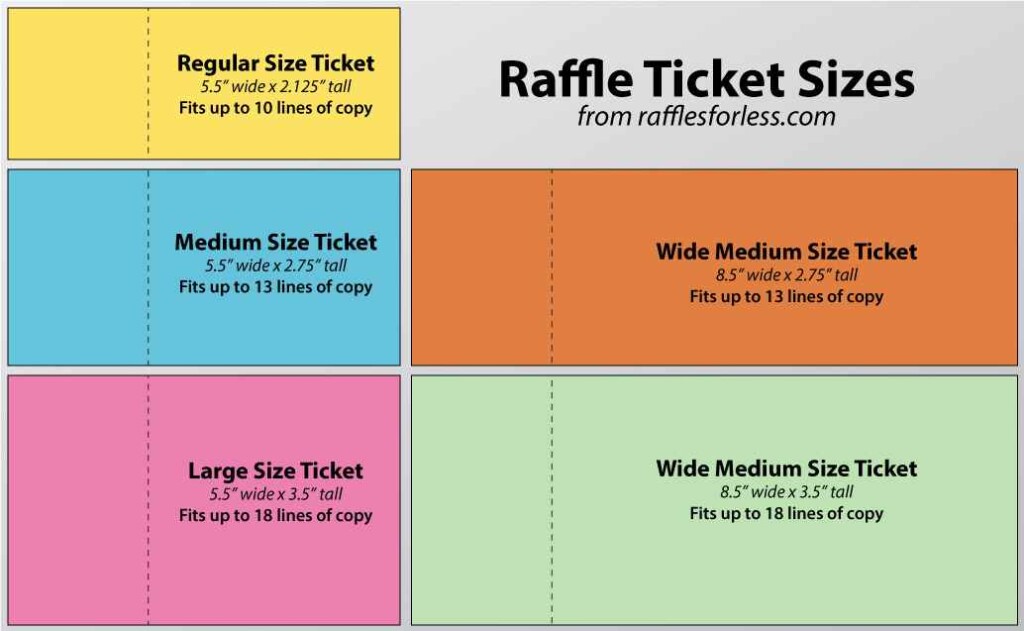
If you’d rather start from a proven layout than design from scratch, our free raffle ticket templates give you the standard structure with room for your artwork, and our team can handle the design entirely if your volunteers would rather focus on selling.
Selling Fundraiser Tickets: Online, In Person, or Both
Online Fundraising Ticketing
Selling fundraiser tickets online widens your reach beyond the people who physically show up at your church, school, or storefront. Ticketing platforms handle payment processing, send confirmations, and produce a clean list of buyers. For admission-based charity event tickets, an online option is close to expected these days.
The tradeoffs are real, though: platform and payment fees take a bite out of every sale, and raffles face additional complications many payment processors and online ticketing services restrict or prohibit raffle sales, and several states have specific rules about selling raffle entries online or across state lines. Verify both before you build a campaign around it.
In-Person and Printed Ticket Sales
Physical tickets still do something digital ones can’t: they get carried, shown, and asked about. A volunteer with a book of tickets at a Friday night football game, a table after Sunday service, or a stack at the front desk of a local business converts people who would never have found an online link.
Printed tickets also cost nothing per transaction. Every dollar collected stays with your organization, and cash sales settle instantly rather than in a payout cycle.
The Hybrid Approach
Most successful campaigns run both. Sell printed tickets in person through volunteers and partner businesses, offer an online option for supporters at a distance, and assign a dedicated block of ticket numbers to online sales so your records never double-count. If someone buys online, either mail their ticket or record their assigned number and hold the stub for the drawing just be consistent, and tell buyers upfront which method you’re using.
A Simple Timeline for Fundraiser Ticket Sales
- 8–10 weeks out: Confirm your prize or event details, set your goal, and check your state and local requirements.
- 7–8 weeks out: Finalize pricing and bundle tiers. Decide on your ticket count.
- 6–7 weeks out: Approve artwork and place your printing order, allowing time for proofing and shipping.
- 5 weeks out: Distribute numbered books to volunteers with a simple tracking sheet. Brief them on the pitch and the bundle ladder.
- 4–5 weeks out: Launch the early bird window and announce it everywhere you have an audience.
- 2–4 weeks out: Steady sales push. Share progress publicly people respond to a visible goal.
- Final week: Urgency messaging, last calls at services and games, and a final volunteer sweep.
- Drawing day: Reconcile stubs against cash, draw publicly or on video, notify the winner promptly, and thank everyone by name where you can.
- Within a week after: Post results, deliver the prize, and record what worked for next time.
Legal and Tax Considerations
Raffle rules in the United States are set at the state level, and sometimes at the county or municipal level on top of that. Requirements vary widely, and a setup that’s routine in one state may require a license or be prohibited outright in another.
Things commonly regulated include who may run a raffle (often restricted to qualifying nonprofit, religious, or veterans’ organizations), whether a permit or registration is required, prize value caps, how proceeds must be used, recordkeeping and reporting duties, minimum age to purchase, and whether tickets may be sold online or across state lines.
There are also tax matters worth understanding. The IRS generally treats the purchase of a raffle ticket as a payment for a chance to win rather than a charitable contribution, which means it typically isn’t deductible as a donation. For event admission tickets, only the portion of the price exceeding the fair market value of what the attendee receives is generally deductible, and organizations are usually required to disclose that value. Raffle prizes above certain thresholds can also carry withholding and reporting obligations for the organization.
None of this is legal or tax advice, and the specifics depend on your state, your organization type, and your prize. Check with your state’s charitable gaming office or attorney general’s office, your local jurisdiction, and a qualified accountant or attorney before you print anything. A ten-minute phone call in week one saves an expensive problem in week ten.
Common Mistakes to Avoid
Printing too few tickets. Running out during your strongest sales week is the most common preventable loss. Order headroom.
Skipping sequential numbering. Without unique numbers, you can’t reconcile cash, can’t track volunteers, and can’t cleanly run a drawing.
Burying the important details. If the drawing date, prize, or price isn’t immediately readable, volunteers end up explaining the ticket instead of selling it.
Pricing from feel instead of math. Guessing at a number that “sounds right” is how groups end up needing to sell 900 tickets to hit a goal they could have reached with 400.
Waiting too long to order. Rushed printing limits your design options and compresses your sales window. Six weeks of lead time is comfortable; two is stressful.
Making no plan for unsold tickets. Decide in advance whether the drawing proceeds regardless, and state it on the ticket if you’ve advertised a fixed number.
Forgetting to collect contact information. The stub is your donor list. A raffle that adds 300 names to your database is worth more than the cash it raised.
How Different Organizations Use Fundraising Tickets
Schools and PTAs often pair a spring raffle with an existing event like a carnival or field day, using homeroom competitions to drive volume. Our guide to running a raffle for a school fundraiser covers the specifics, including how to handle student sellers responsibly.
Churches typically sell after services across several weeks, with tickets available in the bulletin and at a staffed table. Consistency matters more than intensity four modest Sundays usually beat one big push.
Sports teams and booster clubs sell at games, where there’s a captive, enthusiastic audience. Team-signed memorabilia and season packages are strong low-cost prizes.
Animal rescues and small nonprofits tend to do best with donated prizes from local businesses, which keeps prize cost near zero and brings the donating business’s customers into the campaign.
Fire departments and civic groups frequently run large-prize raffles with a fixed ticket count, advertised well in advance and sold through community partners. The limited-quantity angle does a lot of the selling for you though the odds you advertise should be accurate and easy for buyers to verify.
Ready to Print Your Fundraising Tickets?
Once you’ve settled on ticket type, price, and quantity, printing is the straightforward part. Raffles For Less produces custom numbered and perforated tickets for nonprofits, schools, churches, and community organizations across the U.S. with free shipping, fast turnaround, and either a free template you can customize yourself or full custom design handled by our team.
Start your order or request a quote and get your tickets in volunteers’ hands while there’s still runway to sell them.
Frequently Asked Questions
Do fundraiser tickets have to be numbered?
Admission tickets don’t require numbering, though it helps with tracking and check-in. Raffle tickets should always be numbered it’s how you keep entries unique, reconcile sales, and run a defensible drawing.
Can we sell fundraiser tickets online?
Admission tickets, generally yes. Raffle tickets are more complicated: some states restrict or prohibit online raffle sales, and many payment processors don’t permit them. Confirm both your state’s rules and your processor’s policies before launching.
What’s the difference between a raffle and a sweepstakes?
A raffle requires a purchase to enter, which is why it’s regulated as charitable gaming in most states. A sweepstakes must offer a free entry method. Some organizations choose a sweepstakes structure specifically to sidestep raffle licensing, but the rules still vary verify locally.
How far in advance should we start selling?
Four to six weeks is the sweet spot for most raffles. Shorter campaigns don’t build momentum; longer ones lose it. Larger prizes and fixed-quantity raffles can justify running two to three months.
Are fundraising tickets tax deductible for the buyer?
Raffle ticket purchases generally aren’t deductible as charitable contributions, since the buyer receives a chance to win in return. For event tickets, only the amount above the fair market value of what the attendee receives is typically deductible. Direct buyers to a tax professional rather than making promises on the ticket.
What if we don’t sell all our tickets?
For most raffles the drawing proceeds anyway, with remaining tickets simply unsold. If you advertised a fixed number or a minimum, state your policy clearly on the ticket and in your promotion so expectations are set upfront.