If you’ve ever tried to tear a ticket along a line that wasn’t actually perforated, you know why this detail matters more than it seems. Perforated ticket printing is what gives event and raffle tickets that clean, snap-apart tear between the main ticket and the stub, and it’s one of the main things separating a professional-looking ticket from a homemade one.
This guide covers what perforated ticket printing actually involves, the paper and stock choices that affect how your tickets look and feel, how it compares to printing tickets without perforation, and what to consider when ordering printed tickets for a raffle or other event.
What Is Perforated Ticket Printing?
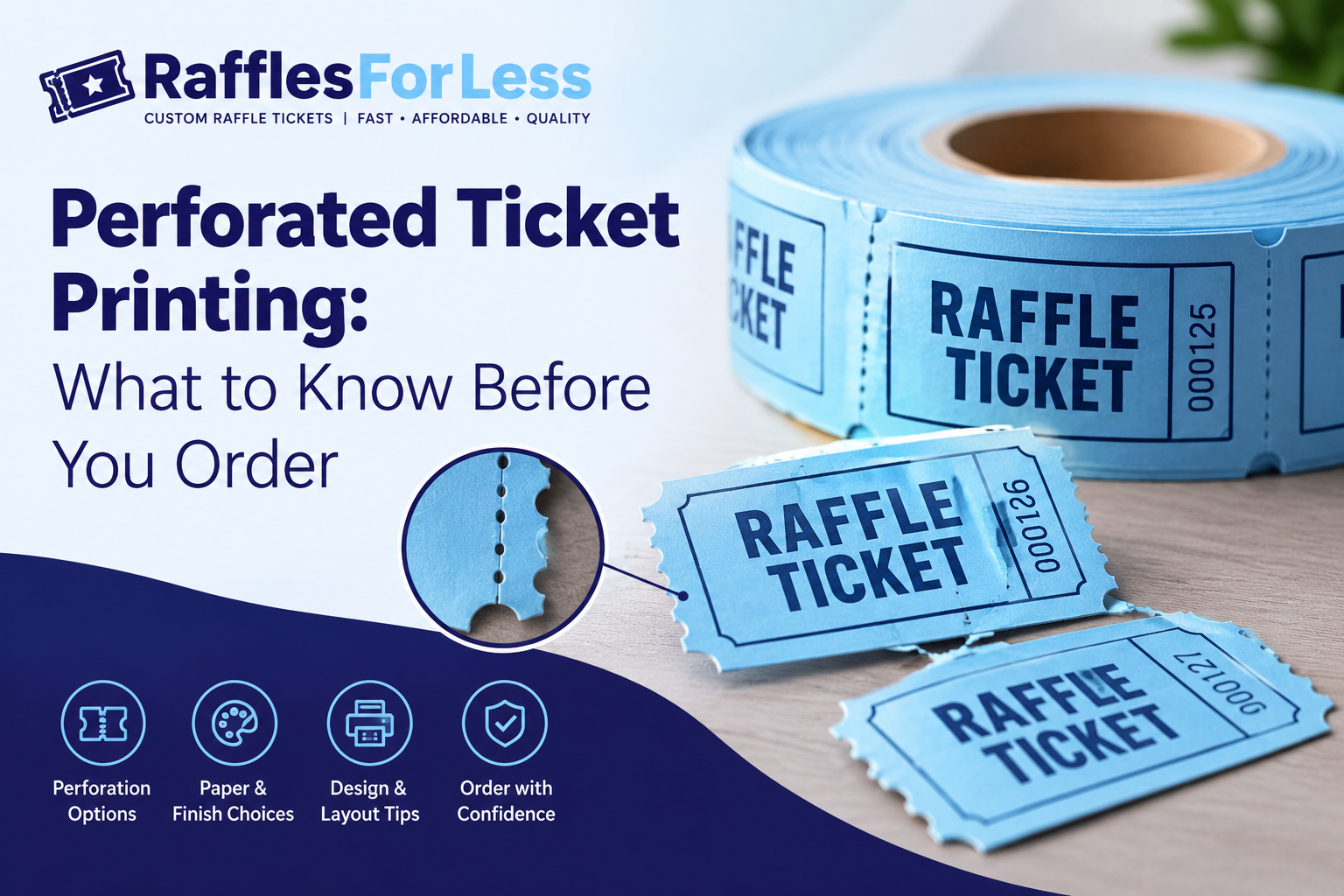
Perforated ticket printing is a printing process that adds a row of small cuts or slits along a ticket, creating a clean, easy-to-tear line between two sections — typically the main ticket and a matching stub. The perforation lets someone tear the ticket apart by hand without jagged edges, scissors, or a paper cutter.
For raffles specifically, the stub stays with the organizer (often dropped in a drawing container or filed for recordkeeping) while the main ticket goes home with the buyer. For general event tickets, perforation is what separates the admission stub taken at the door from the portion the attendee keeps.
Perforation can also be used to create multiple sections on a single sheet, which is why many ticket orders are printed on a larger sheet and then cut and perforated into individual tickets.
Why Perforation Matters for Raffle and Event Tickets
A few practical reasons perforated tickets are worth the extra step compared to plain printed paper:
- Clean separation. A perforated tear line separates evenly every time, unlike tearing along a printed line with no perforation, which usually rips unevenly.
- Faster sales. At a ticket table, sellers can tear tickets apart quickly without needing scissors or a cutting tool.
- Professional appearance. A clean tear signals a properly produced ticket, which matters when you’re asking people to pay for an entry or admission.
- Reliable recordkeeping. For raffles, a matched stub-and-ticket system (same number on both halves) is what allows an organizer to verify and contact a winner later.
Ticket Printing Paper: Stock Weight and Finish Options
The paper stock used for ticket printing affects how durable, professional, and easy-to-handle the final tickets are. A few considerations worth understanding before you order:
Paper Weight (Cardstock Thickness)
Tickets are generally printed on a heavier cardstock than standard printer paper, since thin paper tears unevenly and feels flimsy. Heavier stock holds up better when handled repeatedly at a sales table or admission gate and generally perforates more cleanly than lightweight paper.
Finish
Ticket stock typically comes in a matte or glossy finish. Matte finishes are easier to write on (useful if buyers need to fill in contact information by hand), while glossy finishes tend to show off colors and designs more vividly. Neither is objectively “better” — the right choice depends on whether your tickets need to be written on after printing.
Color and Design Printing
Full-color printing allows for logos, event branding, and prize photos on the ticket itself, which can make tickets feel more official and appealing to buyers compared to single-color, text-only designs.
Perforated Tickets vs. Non-Perforated Printed Tickets
| Factor | Perforated Tickets | Non-Perforated Printed Tickets |
| Tear quality | Clean, even tear every time | Uneven, often requires scissors |
| Speed at point of sale | Fast — tear by hand | Slower — needs a cutting tool |
| Stub/ticket matching | Reliable, built into the tear line | Harder to separate cleanly while keeping numbers aligned |
| Appearance | Professional | Can look unfinished or homemade |
| Best for | Raffles, admission tickets, any ticket needing a stub | Simple printed materials with no stub needed |
If your tickets need a stub at all — which is the case for most raffles and many event tickets — perforation isn’t just a nice-to-have. It’s what makes the stub system actually functional.
What to Consider Before Ordering Printed Event Tickets
Whether you’re printing raffle tickets or general paper tickets for events, a few decisions shape the final product:
- Quantity needed. Order enough tickets for your expected sales plus a reasonable buffer, since running out mid-event means turning away buyers.
- Numbering. Sequential numbering on both the ticket and stub is standard for raffles and recommended for any event where you need to track admission or entries.
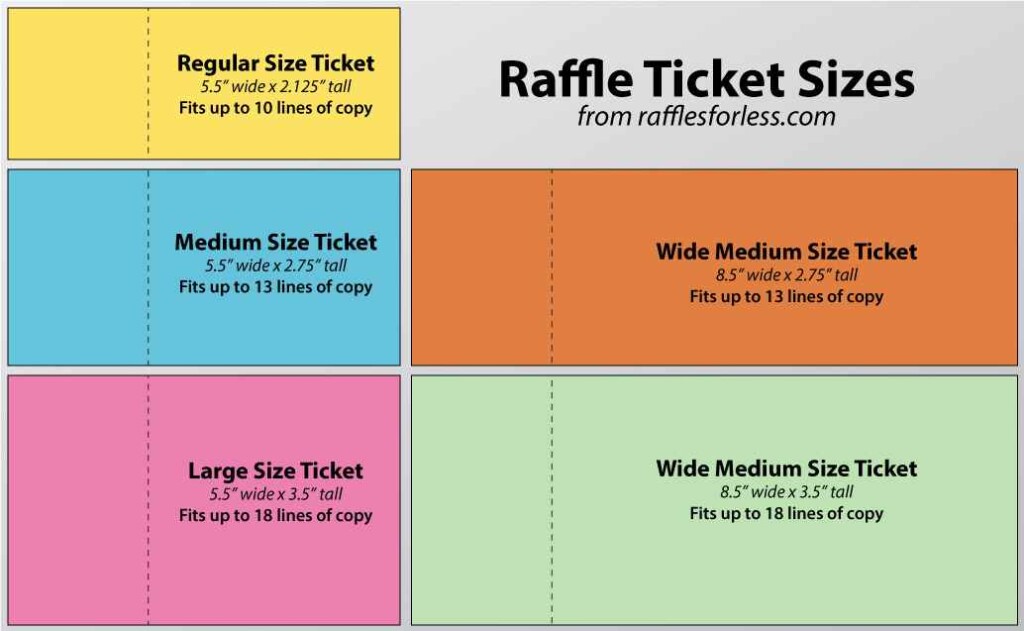
- Ticket size. Standard sizes balance enough space for event details with being easy to handle and store in a cash box or pocket.
- Turnaround time. Factor in how far out your event is — printed tickets, especially custom designs, need lead time to design, print, and ship before you can start selling.
- Design customization. Decide whether you want a fully custom design (logo, colors, prize photos) or a simpler template-based layout.
Common Mistakes When Printing Tickets for Events
- Ordering too few tickets and having to turn away last-minute buyers
- Skipping perforation to save money, then dealing with uneven tears and slower sales at the table
- Printing on paper that’s too thin, resulting in tickets that feel cheap or tear unpredictably
- Forgetting to number the stub to match the ticket, which defeats the purpose of having a stub at all
- Leaving too little lead time, especially for custom-designed tickets that need a design review before printing
DIY Perforated Printing vs. Professional Ticket Printing
Some home and office printers can handle light perforation with the right tools, but it’s generally inconsistent compared to commercial printing equipment built specifically for ticket stock. For a small, informal event where you only need a handful of tickets, a DIY approach with a perforation tool or pre-perforated paper may be enough.
For raffles and events selling tickets at any meaningful volume, professionally printed tickets typically save time once you factor in the hours spent designing, numbering, cutting, and perforating by hand — and they produce a more consistent, professional result across every single ticket in the batch.
Raffles For Less prints custom raffle tickets with numbered, perforated stubs, using professional ticket stock, fast turnaround, and free shipping. If you’re planning pricing alongside your print order, our guide on how to price raffle tickets for a fundraiser can help you settle on pricing before you finalize your ticket quantity. You can also browse raffle ticket templates to see layout options, or check current raffle ticket pricing to plan your order around your event timeline.
FAQ: Perforated Ticket Printing
What does “perforated” mean on a ticket? Perforated means the ticket has a row of small cuts along a line, allowing it to be torn cleanly by hand into separate sections — typically a main ticket and a stub.
Can I perforate tickets myself at home? Yes, for small quantities, using a perforation tool or pre-perforated cardstock. For larger orders, professional printing equipment produces more consistent results across every ticket.
What paper is best for printing raffle or event tickets? A heavier cardstock weight generally works best, since it holds up to handling and perforates more cleanly than standard printer paper. Matte finishes are easier to write on, while glossy finishes show color and design more vividly.
Do event tickets need to be numbered? Numbering isn’t required for every event, but it’s strongly recommended for raffles and any ticketed event where you need to track admission or verify entries.
How long does it take to get printed tickets? Turnaround time depends on the printer and whether you’re using a custom design versus a template. It’s best to order with enough lead time before your event to account for design, printing, and shipping.
What size are standard raffle or event tickets? Most raffle and event tickets use a standard size that fits ticket number, event details, and a stub comfortably, while still being compact enough to handle easily at a sales table or admission gate.
Final Thoughts
Perforation is a small detail that has an outsized effect on how professional your tickets look and how smoothly your event or raffle runs. A clean tear, reliable stub matching, and sturdy paper stock all come down to how the tickets were printed in the first place. For small, informal needs, a DIY approach can work. For raffles, fundraisers, and events selling tickets at scale, professionally printed, numbered, perforated tickets are generally the more reliable choice.
Ready to order? Raffles For Less offers custom, numbered, perforated raffle ticket printing with fast turnaround and free shipping, so your tickets are ready to sell as soon as they arrive.