Putting together raffle tickets from scratch is harder than it looks. Get the layout wrong and you end up with tickets that are confusing to fill out, hard to track, or missing information your state requires for a fair drawing. A good raffle ticket template solves that by giving you a proven layout to start from, whether you’re designing your own or having tickets professionally printed.
This guide covers what belongs on a raffle ticket template, how basic and detailed formats differ, where to find a free printable version if you’re designing your own, and when it makes more sense to use a custom-printed template instead. By the end, you’ll know exactly what your tickets need and which format fits your fundraiser.
What Is a Raffle Ticket Template?
A raffle ticket template is a pre-built layout digital or printable that includes the standard sections a raffle ticket needs, such as a ticket number, event details, prize description, and a matching stub. Instead of designing a ticket layout from nothing, you fill in your organization’s specific details.
Templates generally fall into two categories:
- DIY/printable templates — editable files (often Word, Canva, or PDF) you fill out yourself and print at home or at a local print shop
- Custom-printed templates — a layout you customize online that’s then professionally printed, numbered, and perforated for you
Which one makes sense depends on how many tickets you need, how official the raffle is, and how much time you want to spend designing and cutting tickets by hand.
What Should a Raffle Ticket Template Include?
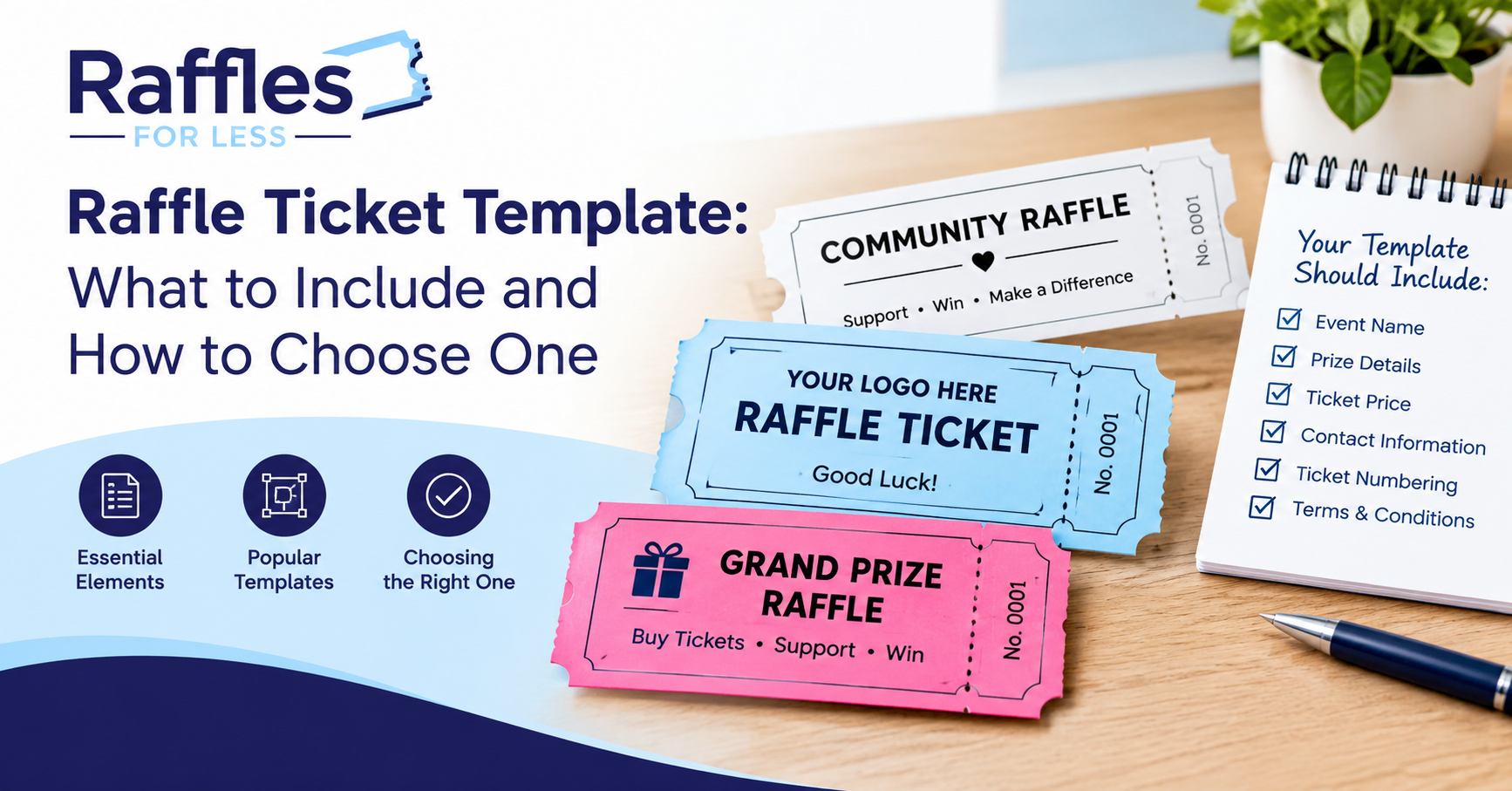
Every solid raffle ticket template, regardless of design style, should include the same core elements. Leaving one out is one of the most common reasons organizers run into confusion during the drawing.
- Ticket number — appears on both the main ticket and the matching stub, so entries can be verified against the stub during the drawing
- Organization or event name — makes clear who is running the raffle
- Prize description — what the buyer is entering to win
- Ticket price — especially important if you’re using bundle pricing (like 1 for $10, 3 for $25)
- Drawing date and location — tells entrants when and where the winner will be announced
- Buyer’s contact information field — usually name and phone number, so the winner can be reached if they’re not present at the drawing
- Rules or disclaimer line — brief text such as whether the buyer needs to be present to win, age restrictions, or other raffle rules
A stub with matching information is what makes a raffle fair and auditable. Without a stub system, there’s no reliable way to contact a winner who isn’t physically present at the drawing.
Basic Raffle Ticket Template vs. Detailed Template
Not every raffle needs the same level of detail. The right format depends on the size and formality of your event.
A basic raffle ticket template typically includes just the essentials: ticket number, organization name, and price. This works well for small, informal raffles like a quick 50/50 raffle at a team practice where extensive rules or contact fields aren’t necessary.
A detailed template includes everything in the basic version plus a contact information field, prize description, drawing date, and rules disclaimer. This is the better choice for larger fundraisers, raffles with higher-value prizes, or any raffle where you need a reliable way to contact a winner who already left the event.
If you’re unsure which to use, a good rule of thumb: the higher the prize value, the more detail your template should capture.
Raffle Ticket Examples by Use Case
Seeing how the same core elements get applied differently helps when you’re deciding what your own ticket needs.
School fundraiser raffle ticket Usually includes the school name, grade or classroom (if tied to a class competition), prize, price, and a parent contact field, since winners are often announced at a school event where not every family is present.
Church or nonprofit raffle ticket Tends to include the organization’s name, a short mission-related note if relevant, the prize, drawing date, and a rules line, since nonprofits often need to document raffle details for state compliance.
Sports team or booster club raffle ticket Often simpler — team name, prize, price, and drawing date — since these are typically smaller, community-based raffles sold directly to parents and local supporters.
50/50 raffle ticket Usually the simplest format: a ticket number, “50/50 Raffle,” price, and event name. Since the payout is based on total sales rather than a fixed prize, detailed prize descriptions aren’t needed.
If you want a closer look at how pricing should be structured for your tickets, our guide on how to price raffle tickets for a fundraiser covers common pricing structures like single-ticket and bundle pricing in more detail.
How to Set Up a Raffle Ticket Prices Template
If you’re offering more than one pricing tier for example, single tickets plus a bundle discount your template needs to clearly display both options so buyers aren’t confused at the point of sale. A simple, clear format works best:
| Option | Price |
| 1 ticket | $10 |
| 3 tickets | $25 |
| 6 tickets | $40 |
Print this pricing directly on promotional materials and, where space allows, on the ticket itself. Confusing or inconsistent pricing is one of the more common reasons people hesitate to buy more than one ticket, since they’re not sure if the bundle discount applies.
Free Raffle Ticket Templates: What to Know Before You Download One
A lot of people searching for a raffle ticket free template are looking for something they can fill out and print quickly, usually for a small, informal raffle. That’s a reasonable approach for low-stakes events, but a few things are worth knowing before you go that route:
- Free templates vary widely in quality. Some are missing a matching stub, which makes it harder to verify entries during the drawing.
- Home printing has limits. Perforation (the clean tear line between the ticket and stub) is difficult to replicate with a home printer, and tickets without a clean tear often look less official.
- Numbering by hand is error-prone. For anything beyond a small batch, manually numbering tickets increases the risk of duplicates or skipped numbers, which can complicate the drawing.
A blank printable raffle ticket template works fine for small, casual raffles where you’re printing a handful of tickets yourself. For larger fundraisers especially ones selling 100+ tickets the time saved and the professional, numbered, perforated result usually make custom printing worth the cost. You can browse ready-made layouts on our raffle ticket templates page if you’d rather customize a professional design than build one from scratch.
Raffle Ticket Form vs. Raffle Ticket
It’s worth clarifying a common point of confusion: a raffle ticket form and a raffle ticket aren’t always the same thing. A raffle ticket is the physical (or digital) entry itself, usually with a number and a stub. A raffle ticket form is sometimes used to refer to a sign-up sheet or entry form for example, when someone fills out their contact details to be entered, rather than purchasing a numbered ticket directly.
If your raffle involves a physical draw from a container, you’ll want numbered tickets with stubs rather than a form, since the ticket number is what ties a specific entry to a specific buyer.
Common Mistakes to Avoid When Using a Raffle Ticket Template
- Skipping the stub. Without a stub, you have no way to verify or contact winners who aren’t present.
- Leaving off the drawing date. Buyers want to know when they’ll find out if they won.
- Inconsistent numbering. Duplicate or skipped ticket numbers create confusion and can undermine trust in the drawing.
- Overcrowding the ticket. A ticket crammed with text is hard to read and fill out quickly at a sales table. Stick to the essentials.
- Forgetting state-specific requirements. Some states require specific disclosures on raffle tickets, such as organization registration numbers. Rules vary by state, so check with your state’s charitable gaming office before finalizing your ticket design.
DIY Template vs. Custom-Printed Tickets: Which Should You Choose?
| Factor | DIY/Free Template | Custom-Printed Tickets |
| Best for | Small, informal raffles (under ~100 tickets) | Larger fundraisers, schools, churches, nonprofits |
| Numbering | Manual, risk of errors | Automatic, sequential, accurate |
| Perforation | Difficult with home printers | Clean, professional tear line |
| Time investment | Higher — design, print, cut by hand | Lower design online, tickets arrive ready to sell |
| Appearance | Casual | Professional |
If your raffle is small and informal, a free or basic template you print yourself is a perfectly reasonable choice. If you’re running a larger fundraiser, selling tickets to people outside your immediate circle, or want a more professional presentation, custom-printed numbered and perforated tickets tend to save time and reduce errors once you account for the hours spent designing, numbering, and cutting tickets by hand.
Raffles For Less offers custom raffle ticket templates you can personalize with your own event details, prize, and pricing, with numbered, perforated printing and free shipping so you get a professional result without starting your design from a blank page.
FAQ: Raffle Ticket Templates
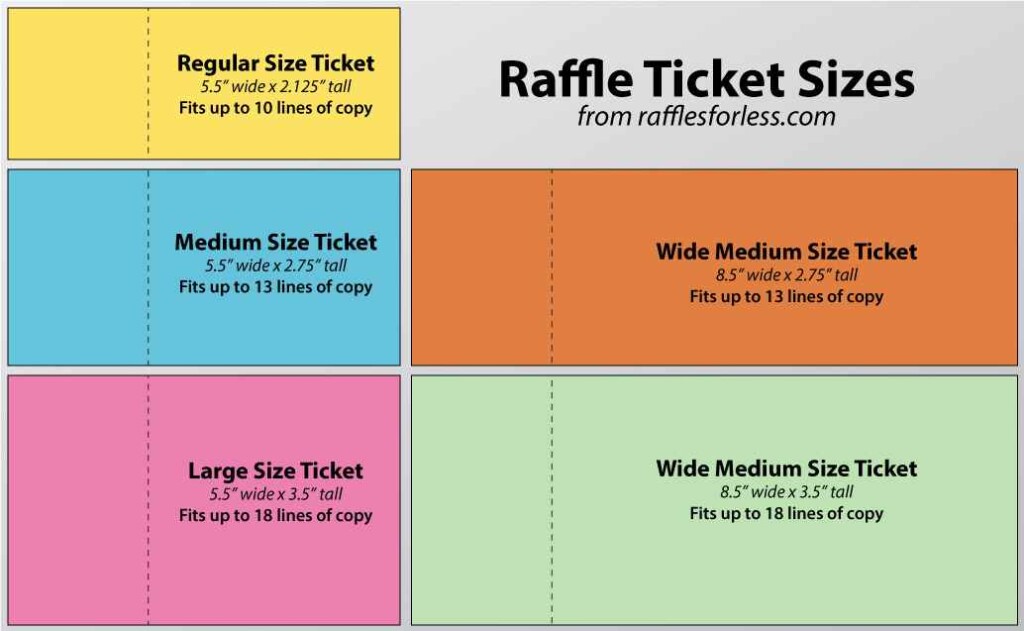
What size should a raffle ticket be? Most raffle tickets are sized similarly to a standard event ticket, large enough to fit a ticket number, prize or event details, and a price, while still being easy to tear along a perforated stub line.
Do raffle tickets need to be numbered? Numbering isn’t universally required by law, but it’s strongly recommended for any raffle with more than a handful of entries, since it’s the simplest way to verify and track entries fairly.
Can I make my own raffle tickets at home? Yes, for small or informal raffles, a printable template filled out and printed at home works fine. For larger raffles, professional numbering and perforation typically produce a more reliable and professional result.
What information is required on a raffle ticket by law? Requirements vary by state and sometimes by the type of organization running the raffle. Some states require specific disclosures, such as a registration or permit number. Check with your state’s charitable gaming office or attorney general’s office for current requirements.
Is a raffle ticket template the same as a raffle entry form? Not exactly. A ticket typically includes a number and matching stub for a physical drawing, while an entry form is more often used to collect contact information for a digital or sign-up-based raffle without numbered tickets.
Where can I find a free raffle ticket template? Free printable templates are available through various design tools and template libraries. If you want a template you can customize and have professionally printed instead, our raffle ticket templates page offers ready-to-personalize options.
Final Thoughts
The right raffle ticket template comes down to matching the format to the size and formality of your fundraiser. A basic printable template is often enough for a small, informal raffle, while larger fundraisers benefit from the accuracy and professional look of numbered, perforated, custom-printed tickets. Either way, make sure your template includes the core elements ticket number, stub, prize, price, and drawing date so your raffle runs smoothly from the first ticket sold to the final drawing.
If you’re ready to move beyond a basic printable template, Raffles For Less offers custom raffle ticket templates with numbered, perforated printing, fast turnaround, and free shipping, so your tickets look professional without the extra design work.