
If you’re organizing a gala, a spaghetti dinner, a golf outing, or a trivia night, the ticket is the first thing your supporters actually hold in their hands. It sets the tone, it controls the door, and it decides how much money you take home.
Most guides on charity event tickets skip straight to “use an online platform.” That’s only part of the job. Charity event tickets have to work as accounting records, as marketing pieces, as proof of entry, and sometimes as raffle entries too. Get any of those wrong and you’re either turning people away at the door or chasing down missing cash for a week afterward.
This guide walks through what charity event tickets are, how to price them, what to print on them, how online and printed sales work together, and the legal and tax details that trip up new organizers. Everything here is written for U.S. nonprofits, schools, churches, sports teams, and volunteer committees running real events on real budgets.
What Are Charity Event Tickets?
Charity event tickets are admission passes sold by a nonprofit or fundraising group to raise money for a cause. The purchase price typically covers the cost of the event itself, food, venue, entertainment plus a margin that becomes the fundraising revenue. Unlike a commercial concert ticket, part of the price is often treated as a donation, which brings specific receiving rules into play.
They show up under a lot of names: benefit tickets, gala tickets, fundraiser tickets, admission tickets. The mechanics are the same. Someone pays, they get a ticket, the ticket gets them in the door, and your group tracks who paid and how much came in.
Charity Event Tickets vs. Raffle Tickets vs. Donation Tickets
These three get mixed up constantly, and confusing them causes real problems at the door and on your tax paperwork.
| Ticket Type | What the buyer gets | Sold how | Typical use |
| Admission ticket | Entry to a specific event on a specific date | One per person or per seat | Galas, dinners, tournaments, concerts |
| Raffle ticket | A chance to win a prize | Often sold in bundles or sheets | Prize drawings, 50/50s, car raffles |
| Donation ticket | Acknowledgment of a gift; sometimes entry | Any quantity | “Can’t attend” giving, sponsor tables |
Plenty of events use all three. A church dinner might sell $25 admission tickets at the door, $5 raffle tickets for a quilt drawing inside, and accept donation-only contributions from members who can’t attend. Each needs its own ticket stock so your counts don’t blur together.
Step-by-Step: Planning a Ticketed Charity Event
Work through these in order. Skipping ahead to ticket design before you’ve set your capacity and price is the most common sequencing mistake.
- Set your fundraising goal and your break-even number. If the venue and catering cost $4,000 and you want to net $6,000, you need $10,000 in ticket and sponsorship revenue. Write that number down.
- Confirm your venue capacity. This is your hard ceiling on tickets sold. Never print or sell beyond it.
- Decide your ticket tiers. Single admission, couple, family, table sponsor, VIP. Three tiers is usually plenty; more than four confuses buyers.
- Price each tier. (Details in the next section.)
- Choose your sales channels. Online, in person, or both. Most successful community events use both.
- Design and order your printed tickets. Allow lead time. Ordering the week of the event is how groups end up with photocopied paper slips.
- Recruit and assign sellers. Give each person a numbered block of tickets and a deadline.
- Promote with a deadline. “Tickets available until Friday” outsells “tickets available now” every time.
- Run the door and reconcile. Match ticket stubs against cash and online reports the same night.
How to Price Charity Event Tickets
Price your tickets by adding your per-guest event cost to the fundraising margin you want, then rounding to a friendly number. If dinner and venue cost $22 per head and you want $28 per guest toward the cause, your ticket is $50.
Three factors should adjust that starting number:
What your community actually pays for similar events. A rural fire department pancake breakfast and a downtown hospital foundation gala live in different price universes. Look at what comparable local events charged last year.
Whether the ticket includes a meal. Guests mentally price meals. A ticket that includes dinner can carry a much higher number than one that includes a dessert table, even if your net is the same.
Your tier spread. A common structure is a standard ticket, a couples or family ticket at a modest discount, and a sponsor tier at three to five times the standard price. The sponsor tier often produces more revenue than every standard ticket combined, so don’t price it timidly.
If you’re also running a prize drawing at the event, our guide on how much to charge for raffle tickets covers bundle pricing and the psychology behind the “1 for $5, 5 for $20” structure that works so well at the table.
A Quick Pricing Sanity Check
Multiply your ticket price by a realistic attendance number not your best-case number. If 60% of capacity at your ticket price still covers your fixed costs, your pricing is safe. If it doesn’t, either raise the price, cut costs, or secure sponsorships before you commit to the venue.
What to Print on a Charity Event Ticket
A ticket has two jobs: get the guest in, and leave your organization a record. Good printed tickets do both without anyone thinking about it.
Essential elements on the main ticket:
- Organization name and cause
- Event name, date, start time, and venue address
- Ticket price and tier name
- A unique sequential number
- Any admit-one or seating note
Essential elements on the stub:
- The matching sequential number
- Space for name, phone, and email
- A short note about what the stub is for (door entry, prize drawing, or both)
Why Numbering and Perforation Matter More Than Design
Sequential numbering is what makes reconciliation possible. When you hand volunteer A tickets 001–100 and volunteer B tickets 101–200, you know exactly who owes what at the end. Without numbers, you’re counting loose paper and hoping.
Perforation matters because it creates a clean tear. Your door volunteer keeps the stub, the guest keeps the ticket, and neither one ends up with a mangled half. If you’re planning a door prize drawing, the stubs become your entry pool automatically no extra step, no separate bucket of index cards.
Both numbering and perforation are standard on professionally printed tickets and nearly impossible to fake convincingly with an office printer. That matters for a fourth reason: a numbered, perforated, properly printed ticket is far harder to duplicate than a photocopy, which protects your gate revenue.
Design That Actually Helps You Sell
Keep the hierarchy simple. Organization or event name largest, date and price next, everything else smaller. Use your group’s colors if you have them. Leave enough white space that the ticket looks like an invitation rather than a receipt supporters are more likely to post a good-looking ticket on social media, and that’s free promotion.
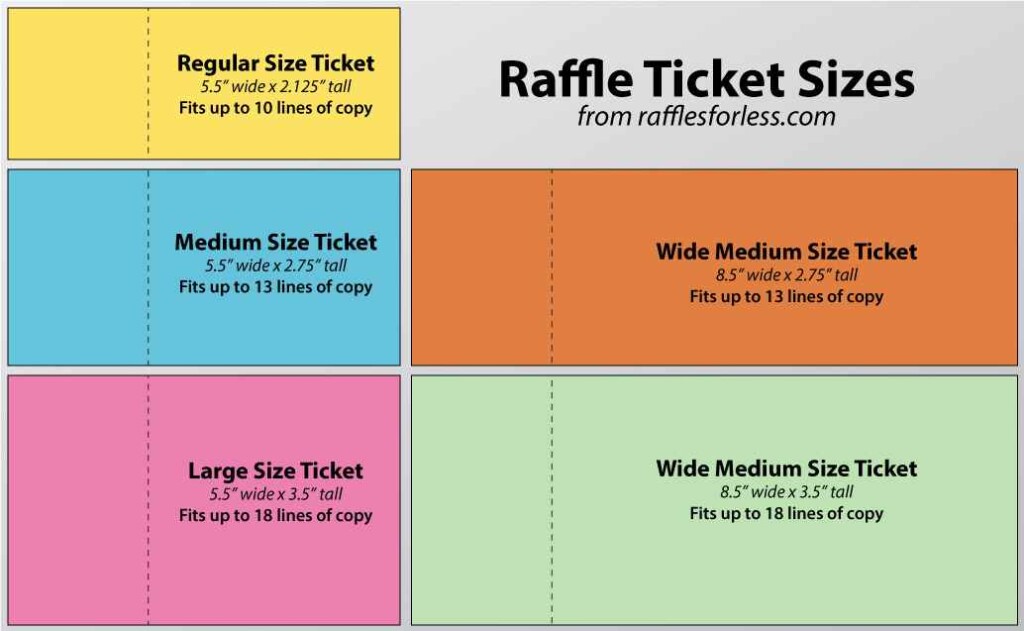
If you’d rather start from a proven layout than a blank page, browsing raffle and event ticket templates is usually faster than designing from scratch, and you can still swap in your own colors, logo, and wording.
Selling Charity Event Tickets Online vs. In Person
The honest answer for most U.S. community fundraisers is that you need both. Here’s how they compare.
| Online ticket sales | Printed ticket sales | |
| Reach | Anyone you can email or reach on social media | Your in-person network |
| Payment | Card, instant, automatic records | Cash, check, card readers |
| Fees | Platform and processing fees per transaction | Printing cost, no per-sale fee |
| Best for | Advance sales, out-of-town supporters, sponsors | Church lobbies, school pickup lines, game days, the door |
| Record keeping | Automatic reports | Stub-based, needs a volunteer |
| Guest experience | Confirmation email or QR code | Physical ticket, easy to gift or display
|
Making Online Ticket Sales Work for a Charity Event
If you’re selling charity event tickets online, a few things consistently increase conversion:
- Put the price and the date above the fold. Buyers decide in seconds.
- Offer a “can’t attend, but I want to give” option. A meaningful share of your list will take it.
- Cap the number of steps. Every extra form field costs you sales.
- Send a reminder 48 hours before your deadline. This is usually the single highest-revenue email you’ll send.
- Decide who absorbs the processing fee. Many nonprofits offer an optional “cover the fee” checkbox rather than silently raising the price.
Making Printed Tickets Work Alongside It
Printed tickets aren’t a fallback. They do things online sales can’t. A volunteer with a stack of tickets at a Sunday service or a Friday night game closes sales that no email would have reached. Sponsors like having physical tickets to hand to employees and clients. And people who buy a ticket in person from someone they know show up at much higher rates than anonymous online buyers.
The practical approach: sell online for advance and distant supporters, print tickets for in-person selling and door sales, and keep one master spreadsheet that reconciles both. Assign a single person to own that spreadsheet.
Adding a Raffle to Your Ticketed Charity Event
A prize drawing is the most reliable way to increase revenue per guest at an event people have already paid to attend. They’re in the room, they’re in a giving mood, and the ask is small.
Three structures that work well:
Door prize from ticket stubs. Zero extra selling effort. Every admission stub is an entry. Great for building goodwill and keeping people in the room until the drawing.
Separate prize raffle sold at the event. Sell raffle tickets at a table or by roaming volunteers. This is where bundle pricing pays off.
Early bird drawing on advance sales. Anyone who buys their event ticket before a set date is entered into a bonus drawing. This pulls sales forward, which helps your catering counts and your cash flow. The mechanics are covered in our early bird raffle guide.
If you’re offering a large prize or a limited number of tickets, it’s worth understanding how to calculate raffle odds before you promote it being able to state the odds clearly builds trust and is required in some jurisdictions.
School groups in particular tend to do well combining a ticketed event with a drawing; our school raffle fundraiser guide covers the volunteer and permission logistics specific to that setting.
Legal, Tax, and Compliance Considerations
Rules for charity event ticketing vary significantly by state, by municipality, and by the type of organization running the event. Nothing below is legal or tax advice, and you should confirm current requirements with your state’s charitable gaming or attorney general’s office, and with a CPA familiar with nonprofits.
That said, here are the areas that most commonly catch organizers off guard.
Quid pro quo contributions. Under IRS guidance, when a supporter pays more than $75 and receives goods or services in return — a dinner, entertainment, a round of golf — the organization is generally expected to provide a written statement telling the donor that the deductible amount is limited to the amount paid above the fair market value of what they received. Many groups print this language directly on the ticket or the confirmation email. IRS Publication 1771 is the standard reference.
Raffle tickets are treated differently from donations. The IRS generally does not treat the purchase of a raffle ticket as a deductible charitable contribution, because the buyer receives a chance to win something of value. Don’t let a volunteer promise donors otherwise.
Prize reporting and withholding. Large raffle prizes can trigger federal reporting and withholding obligations for the organization. The thresholds and mechanics are specific, so check with a tax professional before you offer a high-value prize.
State raffle and gaming registration. Some states require nonprofits to register, obtain a license, or meet organizational requirements before conducting a raffle at all. A few restrict online raffle ticket sales specifically. Requirements differ meaningfully from state to state, so verify before you print.
Alcohol, food service, and permits. If your event serves alcohol or prepared food, that’s a separate set of local permits from anything ticket-related.
Refund and cancellation policy. Decide it in advance and print it. “All sales final; tickets are non-refundable but transferable” is a common approach, but it needs to be stated before someone buys, not after they ask.
Common Mistakes to Avoid
- Printing tickets before capacity is confirmed. Venue changes happen. Confirm the room, then print.
- Skipping sequential numbers. You will regret this during reconciliation. Every time.
- No deadline. Open-ended sales mean supporters put it off and then forget. A deadline creates the urgency that actually closes sales.
- Underpricing sponsor tiers. Organizations routinely leave money on the table here. The people who buy a table at a fundraiser are not price-shopping.
- Leaving contact capture off the stub. The stub is your cheapest source of new supporter names and emails. If there’s no space to write them, you’ve thrown away next year’s list.
- Waiting until the last week to order printing. Rush turnaround limits your options and your design quality. Two to three weeks of buffer removes almost all the stress.
- Letting cash float. Cash should be counted by two people and deposited promptly. Not next week. Not “after I get the stubs sorted.”
A Simple Pre-Event Ticket Checklist
- Capacity confirmed and tickets printed at or below it
- Price, date, time, and address correct on every tier
- Sequential numbers assigned to each seller in writing
- Stubs include name, phone, and email fields
- Required tax or disclosure language on the ticket or receipt
- Refund policy stated
- Online listing live and tested on a phone
- Door volunteers briefed on what to collect and what to tear
- Cash box, change, and a two-person counting plan ready
- Drawing procedure decided and announced in advance
Frequently Asked Questions
How much should charity event tickets cost?
Add your per-guest cost to the margin you want to raise, then round to a friendly number and sanity-check it against comparable local events. Most community fundraisers land between $20 and $75 for standard admission, with sponsor tiers set considerably higher.
Are charity event tickets tax deductible?Generally only the portion above the fair market value of what the guest receives may be deductible, and the organization is typically expected to disclose that amount in writing on payments over $75. Rules depend on the organization’s tax status, so confirm with a CPA.
Can I sell charity event tickets online and in person at the same time?
Yes, and most successful events do. The key is one master record that reconciles both channels and one person responsible for keeping it accurate.
Do I need a license to sell charity event tickets?
Selling admission tickets usually doesn’t require special licensing, but conducting a raffle often does, and requirements vary by state and organization type. Check with your state’s charitable gaming authority or attorney general’s office before you promote a drawing.
How far in advance should I start selling tickets?
Four to six weeks is a common window for community events. Start earlier for galas with sponsor tables, since sponsors need lead time for budget approval.
What’s the difference between a ticket stub and the ticket?
The guest keeps the ticket as proof of purchase and entry. Your volunteer keeps the stub, which carries the matching number and the buyer’s contact information for reconciliation and prize drawings.
Should I use QR codes on printed charity event tickets?
They can help if you’re checking in a large crowd or want to link to an event page, but they’re optional. For most community events, a clear sequential number and a perforated stub handle check-in perfectly well.
How many tickets should I print?
Print to your venue capacity plus a small buffer for comps, sponsors, and volunteers. Printing far beyond capacity wastes budget; printing short costs you sales at the door.
Getting Your Tickets Made
Once your price, tiers, and date are locked in, the ticket itself is the easy part as long as it’s printed properly. Numbered, perforated tickets on real card stock make your event look established, make your door run smoothly, and give you a clean paper trail when it’s time to count.
Raffles For Less prints custom event and raffle tickets for nonprofits, schools, churches, and community groups across the U.S., with sequential numbering, perforated stubs, free design help if you want it, and DIY options if you’d rather handle the layout yourself. You can check ticket pricing and turnaround before you commit to anything, or start from a template and adapt it to your event.
Set your number, set your deadline, and get the tickets in your volunteers’ hands. That’s most of the battle.