Quick clarification up front, since this term gets searched for two different reasons: if you’re looking for official state lottery winning numbers, this article isn’t that you’ll want your state lottery’s official website for that. If you’re organizing or entering a fundraising raffle and want to understand how raffle ticket numbers work, you’re in the right place.
Raffle ticket numbers are what make a drawing fair, trackable, and verifiable. This guide covers how numbering systems work, how winning numbers get selected during a raffle drawing, how numbering differs from a state lottery, and practical guidance for organizers setting up a numbered raffle for the first time.
What Are Raffle Ticket Numbers?
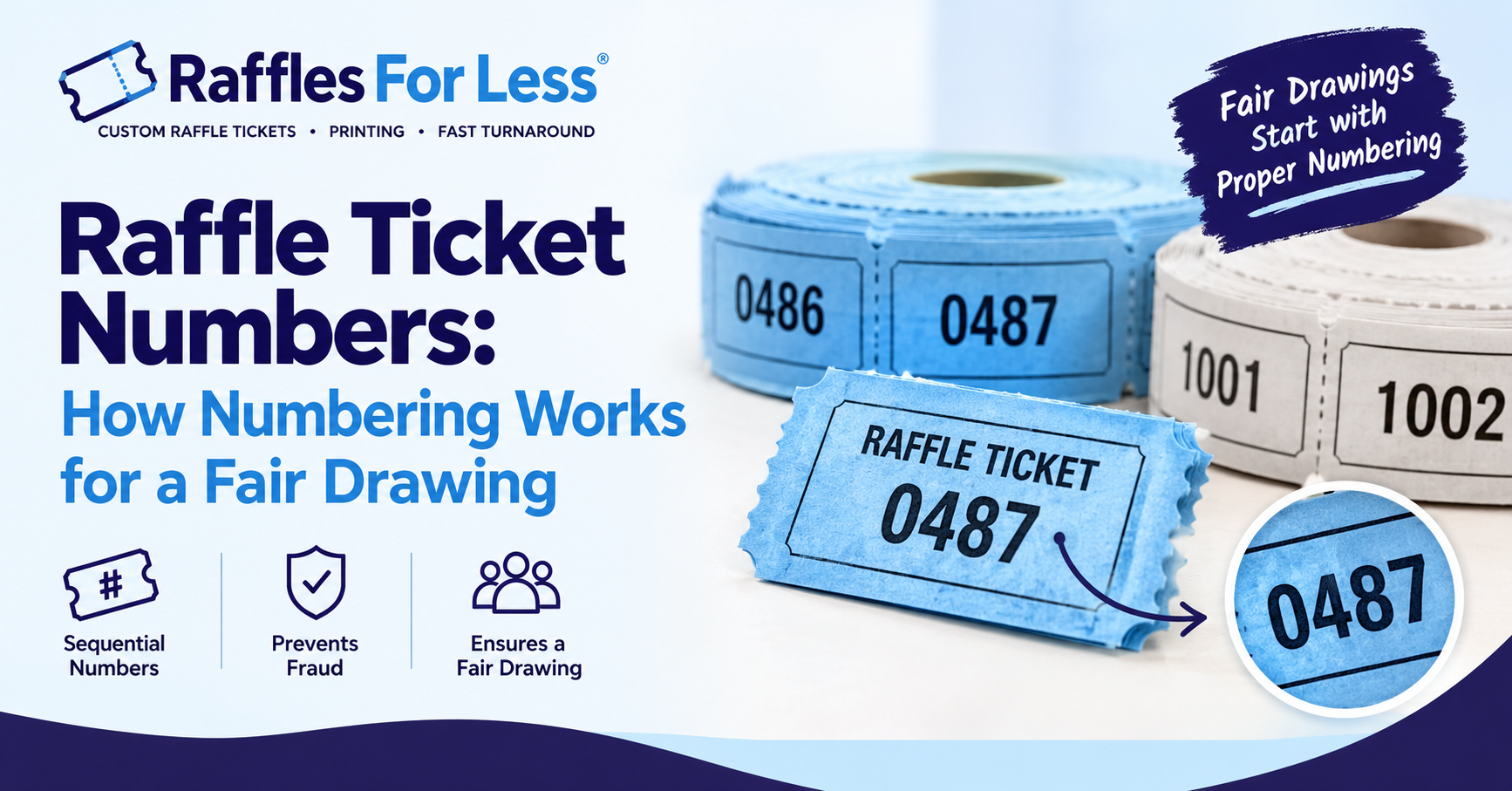
A raffle ticket number is a unique identifier printed on both a raffle ticket and its matching stub, used to track who owns which entry and to determine the winner during the drawing. When someone buys a raffle ticket, they keep the numbered ticket while the organizer keeps the matching stub — usually in a container for the drawing.
Unlike a state lottery, where numbers are typically chosen by the player from a set range, raffle ticket numbers are usually assigned sequentially as tickets are printed and sold. The buyer doesn’t pick their number; they simply receive the next number available.
How Raffle Ticket Numbering Works
Most fundraising raffles use one of two numbering approaches:
- Sequential numbering — tickets are numbered in order (1, 2, 3, and so on) as they’re printed, which is the most common and simplest method to manage
- Batch or book numbering — tickets are organized into numbered books or sheets (for example, Book 1: tickets 1–100, Book 2: tickets 101–200), which helps larger organizations track which seller is responsible for which range of tickets
Sequential numbering on both the main ticket and its stub is what allows an organizer to verify a winning entry. When a number is drawn from the stubs, the organizer confirms the match by checking it against the corresponding ticket.
How Winning Numbers Are Determined in a Raffle
Unlike a lottery drawing raffle number is pulled by chance, not calculated or predicted. Here’s how most fundraising raffles handle the actual drawing:
- All sold ticket stubs go into a container (a box, bag, or drum) — some organizations also set aside unsold ticket stubs separately if entries were limited to purchased tickets only
- A stub is drawn at random, by hand or using a tumbler
- The number on the drawn stub is read aloud and matched against sold tickets
- The organizer verifies the ticket holder, either because they’re present or through contact information collected at the time of purchase
- The process repeats for each prize, if multiple prizes are being awarded
This is why collecting buyer contact information on the ticket stub matters — if a winner isn’t present when their number is drawn, there needs to be a way to reach them.
Raffle Numbers vs. Lottery Numbers: What’s the Difference?
It’s a common point of confusion, especially since both involve purchasing a numbered entry for a chance to win. Here’s how they differ:
| Fundraising Raffle | State Lottery | |
| Run by | Nonprofits, schools, churches, community groups | State government lottery commissions |
| Number selection | Usually assigned sequentially by the organizer | Often chosen by the player or randomly generated |
| Regulation | Varies by state; many require nonprofit registration or a permit | Regulated and operated directly by the state |
| Purpose | Typically supports a specific cause or organization | Generates state revenue, with some allocated to specific programs |
| Where to check winning numbers | Announced directly by the organizing group | Published on the official state lottery website |
If you’re trying to confirm official lottery winning numbers, your state lottery’s official website is the accurate source — this kind of result isn’t something a raffle ticket printing resource would track or publish.
Best Practices for Numbering Your Raffle Tickets
- Use sequential numbering starting from 1 (or a consistent starting point) to make tracking simple and avoid confusion
- Make sure the number on the ticket exactly matches the number on the stub — a mismatch defeats the purpose of having a verifiable system
- Keep a written or digital log of which ticket numbers were sold to which sellers or events, especially for larger raffles sold across multiple locations or dates
- Avoid reusing numbers across different raffles, even if you’re tempted to reuse leftover tickets, since it can create confusion if records from different events get mixed up
- If you’re numbering tickets by hand, double- and triple-check for skipped or duplicate numbers before the tickets go on sale
Common Numbering Mistakes to Avoid
- Printing the ticket number but not the stub number. Without a matching number on both halves, there’s no way to verify a winning entry.
- Starting over at 1 for a second batch of tickets within the same raffle. This creates duplicate numbers that make the drawing unreliable.
- Losing track of which numbers were distributed to which sellers. This makes it harder to reconcile sales and unsold tickets after the event.
- Hand-numbering large batches without a system. For raffles selling more than a hundred or so tickets, manual numbering significantly increases the risk of errors.
Why Professionally Numbered Tickets Are Worth It for Larger Raffles
For a small, informal raffle, numbering tickets by hand is manageable. As the raffle grows, though, accurate sequential numbering becomes harder to maintain without errors — and a numbering mistake discovered mid-drawing can be awkward and undermine trust in the process.
Professionally printed raffle tickets come pre-numbered automatically, with the same number printed on both the ticket and the stub, removing the risk of manual numbering errors entirely. Raffles For Less prints custom, numbered, perforated raffle tickets with fast turnaround and free shipping, which is especially useful for schools, churches, and nonprofits running larger fundraisers where accuracy matters. If you’re also working out how many tickets to order and at what price, our guide on how to price raffle tickets for a fundraiser can help you plan both together.
FAQ: Raffle Ticket Numbers
Do raffle tickets need to be numbered? Numbering isn’t universally required by law, but it’s strongly recommended for any raffle beyond a very small, informal event, since it’s the most reliable way to verify and track entries fairly.
Can I choose my own raffle ticket number? Typically no — most fundraising raffles assign numbers sequentially as tickets are sold, unlike some lottery games where players select their own numbers.
How are raffle winning numbers determined? A raffle winner is usually selected by drawing a ticket stub at random from a container holding all sold tickets, then matching that number to the corresponding ticket and buyer.
Where can I find official state lottery winning numbers? Official lottery winning numbers are published directly on your state lottery’s official website, not through raffle ticket printing or fundraising resources.
What happens if two raffle tickets have the same number? A duplicate number creates ambiguity about which buyer actually holds the winning entry. This is one of the main reasons professionally printed, pre-numbered tickets are preferred for larger raffles.
How do I calculate my odds of winning a raffle? Your odds depend on how many total tickets were sold and how many you purchased. For a full breakdown, see our guide on how to calculate raffle odds.
Final Thoughts
A clear, accurate numbering system is one of the most important parts of running a trustworthy raffle. Sequential numbers that match between ticket and stub make the drawing verifiable, give buyers confidence their entry counts, and make the whole process easier to manage from the first ticket sold to the final winner announced.
If you’re planning a raffle and want pre-numbered, perforated tickets without the risk of manual numbering errors, Raffles For Less offers custom raffle tickets with fast turnaround and free shipping.