Need raffle tickets fast and don’t want to wait on a print order? Printing your own tickets at home is a realistic option for smaller, informal raffles you just need the right layout, the right paper, and a printer setting or two that most people get wrong the first time.
This guide walks through how to build and print your own raffle tickets, what a blank raffle ticket template should include, the difference between individual tickets and raffle sheets, and how to avoid the most common problems that come up when printing tickets at home. If your raffle grows beyond what a home printer can handle well, we’ll also cover when it makes sense to switch to professionally printed tickets instead.
What You Need Before You Print Raffle Tickets
Before opening a design program, gather these basics so you’re not stopping mid-process:
- Event details — organization name, prize, ticket price, and drawing date
- A blank raffle ticket template — either one you build yourself in a program like Word, Google Docs, or Canva, or a printable template you’ve downloaded
- Cardstock paper — standard printer paper works in a pinch, but cardstock holds up much better to handling
- A way to number tickets — manually, through mail merge, or using a design tool that auto-numbers a sequence
- A paper cutter or scissors — since most home printers don’t perforate automatically
Having all of this ready before you print saves you from reprinting a batch because you forgot the drawing date or started numbering from the wrong ticket.
How to Build a Blank Raffle Ticket Template
A basic raffle ticket template doesn’t need to be complicated. At minimum, it should include a ticket number, your organization’s name, the prize, the price, and the drawing date ideally repeated on a matching stub so you can verify and contact winners later.
Here’s a simple structure to build in Word, Google Docs, or a design tool:
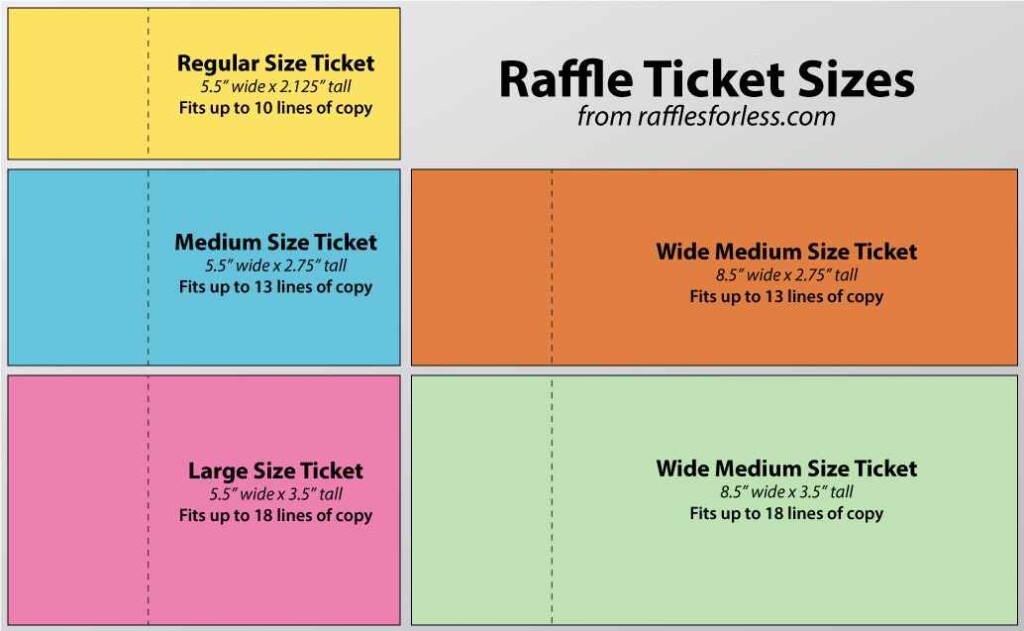
- Create a table or text box sized roughly 2 x 3.5 inches — small enough to fit several per page, large enough to read easily
- Add a ticket number field in the top corner of both the main ticket and the stub section
- List the organization name and prize in the center
- Add the price and drawing date below that
- Include a line for the buyer’s name and phone number, especially if winners might not be present at the drawing
- Duplicate the layout to fill the page, adjusting the ticket number on each copy
If you’d rather not build this from scratch, our raffle ticket templates page has layout options you can customize instead of starting with a blank page.
Free Printable Raffle Ticket Template: What to Expect
A lot of people searching for a raffle ticket template free printable option are looking for something they can download, fill in, and print immediately. That’s a reasonable approach for small, informal raffles, but it helps to know what you’re getting:
- Free templates vary in quality — some include a proper matching stub, others don’t
- Formatting can shift between design programs, so double-check spacing and alignment before printing a full batch
- Most free templates aren’t pre-numbered, meaning you’ll need to add numbers yourself, either by hand or using a mail merge feature in your design program
If you’re printing a small batch for a casual raffle, this approach works fine. For anything beyond 50–100 tickets, manually numbering each one becomes time-consuming and increases the risk of duplicate or skipped numbers.
Individual Raffle Tickets vs. Raffle Sheets
It’s worth understanding the difference between these two formats before you start printing, since they’re built differently.
Individual raffle tickets are single tickets, usually with a matching stub, sold and torn apart one at a time. This is the standard format for most fundraising raffles.
Raffle sheets (sometimes just called a raffle sheet) are a page containing multiple tickets printed together, often used for things like 50/50 raffles, square-based raffles, or bulk ticket books where a seller tears off individual tickets as they sell them. A raffle sheet lets you print and manage tickets in batches rather than designing and printing each one individually.
If you’re selling a large volume of low-cost tickets (like a $1 or $5 entry 50/50 raffle), raffle sheets are usually more efficient to print and manage than individual ticket files. If you’re selling a smaller number of higher-value entries, individual tickets with a detailed stub tend to work better.
Printer and Paper Settings That Make a Real Difference
A few printer settings and paper choices separate clean, professional-looking home-printed tickets from ones that look obviously DIY:
- Use cardstock, not standard paper. Thin paper tears unevenly and feels flimsy when handled at a sales table.
- Print at the highest quality setting available. Draft or economy settings often produce faded text, especially for smaller fonts on a compact ticket layout.
- Check your margins before printing a full batch. Many home printers can’t print edge-to-edge, so test one sheet before committing to 100 copies.
- Trim with a paper cutter rather than scissors if you’re separating multiple tickets from one sheet — it’s faster and produces straighter edges.
- Print a single test page first to confirm numbering, spacing, and alignment look right before using a full stack of cardstock.
Common Mistakes When Printing Your Own Raffle Tickets
- Skipping the stub. Without a stub, there’s no reliable way to verify or contact a winner who isn’t at the drawing.
- Forgetting to number tickets sequentially. Duplicate or skipped numbers create confusion during the drawing and can undermine trust in the process.
- Printing on thin paper. Tickets that tear unevenly or feel cheap can make buyers hesitant, especially for higher-priced entries.
- Not leaving enough lead time. Printing, cutting, and organizing a large batch of tickets by hand takes longer than most people expect.
- Leaving off the drawing date or rules. Buyers want to know when and how the winner will be announced.
When DIY Printing Makes Sense (and When It Doesn’t)
Printing your own raffle tickets is a solid option when:
- Your raffle is small or informal, with well under 100 tickets needed
- You have time to design, print, cut, and number tickets by hand
- A casual, homemade look fits the event (like a classroom or small team raffle)
Professionally printed tickets usually make more sense when:
- You’re selling a large volume of tickets and need consistent, accurate numbering
- You want a clean, perforated stub without cutting by hand
- You’re running a school, church, or nonprofit fundraiser where a polished presentation matters
- You don’t have the time to design and produce tickets yourself
Raffles For Less prints custom raffle tickets with numbered, perforated stubs, professional cardstock, fast turnaround, and free shipping, a practical next step once your raffle outgrows what a home printer can comfortably handle. If you’re also figuring out pricing, our guide on how to price raffle tickets for a fundraiser covers common pricing structures to pair with your ticket order.
FAQ: Printing Raffle Tickets
Can I print raffle tickets myself at home? Yes, for small or informal raffles. Use cardstock rather than standard paper, print at the highest quality setting, and include a matching stub so you can verify entries.
What’s the easiest way to number raffle tickets at home? Many word processors and design tools support a mail merge or auto-numbering feature, which is faster and more accurate than numbering tickets by hand, especially for larger batches.
What size should I print raffle tickets? Most raffle tickets print well at roughly 2 x 3.5 inches — large enough to fit a ticket number, prize details, and price, while still fitting several per page.
Do I need a raffle sheet or individual tickets? It depends on your raffle format. Raffle sheets work well for high-volume, low-cost raffles like a 50/50, while individual tickets with a detailed stub suit raffles with fewer, higher-value entries.
How many raffle tickets should I print? Print enough to cover your expected sales plus a reasonable buffer, since running out mid-event means turning away buyers. Many organizers print 10–20% more than their realistic sales goal.
What’s the difference between a raffle ticket and a raffle ticket form? A raffle ticket is a numbered entry, usually with a matching stub, torn and sold individually. A raffle ticket form is more often a sign-up sheet used to collect buyer information without numbered, tearable tickets.
Is it cheaper to print raffle tickets myself or order them printed? Printing at home can be cheaper for very small quantities once you already own a printer and cardstock. For larger quantities, the time spent designing, numbering, and cutting tickets by hand often outweighs the cost savings compared to a professionally printed order.
Final Thoughts
Printing your own raffle tickets is a practical choice for small, informal fundraisers, as long as you start with a solid template, use sturdy paper, and keep numbering consistent between each ticket and its stub. Once your raffle grows past what’s manageable to design, number, and cut by hand, switching to professionally printed tickets saves time and gives your fundraiser a more polished, trustworthy presentation.
When you’re ready for that next step, Raffles For Less offers custom, numbered, perforated raffle tickets with fast turnaround and free shipping, so you can spend your time selling instead of printing.