If you’re planning a fundraiser, school event, church raffle, or charity campaign, understanding raffle laws by state is essential. Many organizers assume raffles are legal everywhere, but the reality is far more complicated. In most states, raffles are classified as a form of gambling, meaning they are subject to state-specific laws and regulations.
Whether you’re wondering if a raffle is considered gambling, if you can hold a raffle without a licence, or what penalties may apply for an illegal raffle, this guide explains everything you need to know.
What Is a Raffle and Why Is It Regulated?
A raffle is a fundraising activity where participants purchase tickets for a chance to win a prize through a random drawing. Because money is exchanged for an opportunity to win something of value, most states classify raffles as gambling activities.
However, unlike casinos or sports betting, many states allow raffles when they are conducted by qualified nonprofit organizations, charities, schools, churches, or community groups. These exceptions are designed to help organizations raise money for charitable purposes while maintaining transparency and fairness.
Are Raffles Legal in the United States?
The short answer is yes, but only under certain conditions.
There is no single federal law that governs raffles across the country. Instead, each state creates its own raffle rules and regulations. Some states are relatively flexible and allow charitable raffles with minimal requirements, while others impose strict licensing, registration, and reporting obligations.
A raffle that is completely legal in one state may be prohibited in another. This is why understanding US raffle laws before selling tickets is critical.
Federal vs State Raffle Laws
Many people assume that raffle laws are regulated by the federal government. In reality, most raffle regulations are handled at the state level.
Federal authorities generally leave gambling-related matters, including raffles, to individual states. As a result, every state determines who can operate a raffle, what permits are required, how proceeds must be used, and what restrictions apply to prizes and ticket sales.
In some locations, county and city governments may also enforce additional rules. This means organizations often need to review both state and local regulations before conducting a raffle.
Is a Raffle Considered Gambling?
Yes, in most jurisdictions, a raffle is considered a form of gambling.
Legally, gambling typically involves three elements: consideration, chance, and prize. When participants purchase a ticket, enter a random drawing, and compete for a prize, all three elements are present.
Because raffles meet this legal definition, states regulate them under charitable gaming or gambling laws. The key distinction is that many states provide exemptions for qualified nonprofit organizations conducting fundraising activities.
Can You Hold a Raffle Without a Licence?
In many states, the answer is no.
Before selling raffle tickets, organizations may be required to obtain a raffle permit, charitable gaming license, or registration approval. The exact requirements vary significantly from one state to another.
Some jurisdictions allow small raffles without formal licensing, while others require approval regardless of the size of the event. Failing to obtain the proper authorization can result in fines and other legal consequences.
Can You Do a Raffle for Personal Gain?
Most states prohibit individuals and for-profit businesses from conducting raffles for personal profit.
Raffle exemptions are generally reserved for nonprofit organizations, educational institutions, religious groups, and charitable entities. If an individual conducts a raffle for personal financial benefit, the activity may be considered illegal gambling under state law.
Before organizing any raffle, it is important to verify whether your organization qualifies under your state’s charitable gaming regulations.
General Raffle Rules and Regulations
Although raffle laws vary across the country, several common requirements appear in most states.
Organizations are often required to obtain permits before conducting a raffle, maintain accurate financial records, verify eligibility as a nonprofit entity, follow age restrictions, and comply with prize limitations. Many states also require proceeds to be used for charitable or community purposes.
These regulations are designed to protect participants, prevent fraud, and ensure that fundraising activities remain transparent.
Raffle Laws by State
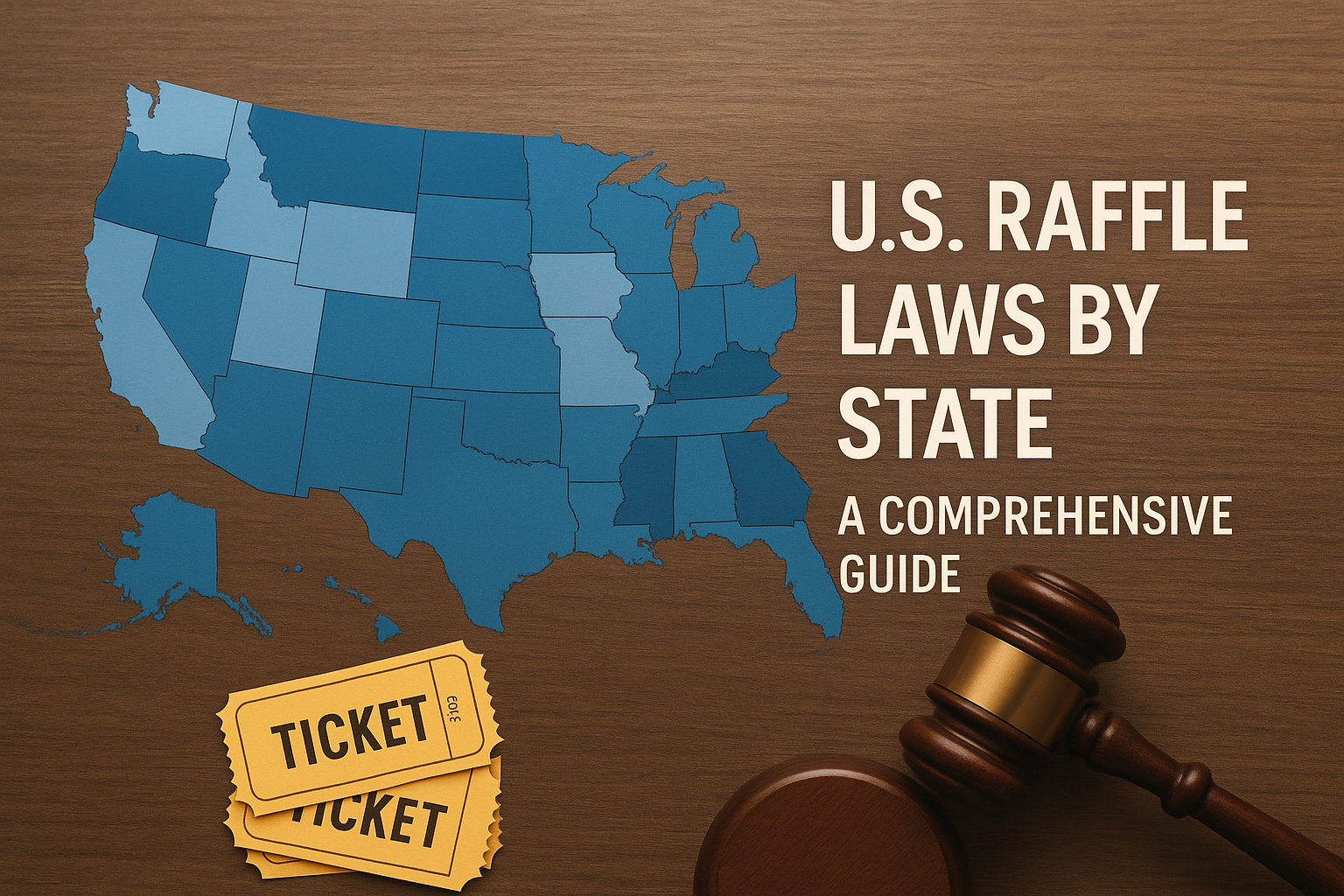
Raffle laws differ significantly across the United States. Some states prohibit raffles entirely, while others allow them under strict nonprofit regulations.
States Where Raffles Are Generally Prohibited
Alabama, Hawaii, Mississippi, and Utah maintain some of the strictest restrictions on raffles and charitable gaming activities. Organizations operating in these states should carefully review current regulations before planning any raffle event.
States That Allow Licensed Nonprofit Raffles
The majority of states allow raffles when conducted by qualified nonprofit organizations. States such as California, Texas, Florida, New York, Pennsylvania, Illinois, Ohio, Washington, and many others require varying levels of registration, permits, or licensing before tickets can be sold.
California Raffle Laws
California allows raffles for qualified nonprofit organizations, but registration requirements are extensive. Organizations must generally register with state authorities and ensure that raffle proceeds support charitable purposes.
Texas Raffle Laws
Texas raffle laws permit qualified nonprofit organizations to conduct raffles under strict regulations. Cash prizes are generally prohibited, and organizations must comply with state charitable gaming requirements.
New York Raffle Laws
In New York, raffle licensing is typically handled at the local level. Charitable organizations must obtain the necessary approvals and comply with reporting requirements established by local authorities.
Penalty for Illegal Raffle Operations
Conducting an unauthorized raffle can have serious consequences.
Many states impose financial penalties for illegal raffles, with fines ranging from hundreds to thousands of dollars. Organizations may also lose charitable gaming licenses and future fundraising privileges.
In more serious cases, illegal raffles may result in misdemeanor or felony charges depending on the state’s gambling laws. Beyond legal penalties, organizations risk damaging their reputation and losing the trust of donors, sponsors, and community supporters.
How to Ensure Your Raffle Is Legal
The safest approach is to research state and local raffle regulations before launching any fundraising campaign.
Organizations should verify eligibility requirements, secure all necessary permits, maintain detailed records, and ensure compliance with charitable gaming laws. Taking these steps helps avoid legal complications and creates a successful fundraising experience for everyone involved.
Frequently Asked Questions About Raffle Laws
Are raffles illegal?
Raffles are not automatically illegal. Their legality depends on state law and whether the organization conducting the raffle meets applicable requirements.
Is a raffle considered gambling?
Yes. Most states classify raffles as gambling because participants pay for a chance to win a prize through a random drawing.
Can you hold a raffle without a licence?
Many states require a raffle license, permit, or registration before tickets can be sold legally.
Can you do a raffle for personal gain?
In most cases, no. Raffles are generally limited to nonprofit and charitable organizations.
What is the penalty for an illegal raffle?
Penalties may include fines, loss of licensing privileges, criminal charges, and reputational damage.
Final Thoughts
Understanding raffle laws by state is essential for any organization planning a fundraiser. Because US raffle laws and raffle rules and regulations vary significantly across jurisdictions, compliance should always be a top priority.
Before conducting a raffle, review your state’s requirements, obtain any necessary licenses, and ensure your event meets all legal obligations. By following the rules, your organization can focus on raising funds, supporting its mission, and delivering an enjoyable experience for participants.