Most raffle ticket prices land between $1 and $20, and the right number for your fundraiser depends on three things: who is buying, what you are giving away, and how much money you need to raise.
That range is wide on purpose. A school hallway raffle with a gift basket works at a very different price than a gala raffle with a trip or a car on the line. Pick a price that is too high and tickets sit in a box. Pick one that is too low and you work twice as hard to hit your goal.
This guide walks through common raffle ticket prices, what each price point is good for, how to do the math backward from your fundraising goal, and the pricing mistakes that quietly cost organizations money. If you are also wondering what it costs to print the tickets, that is covered too.
What Are Common Raffle Ticket Prices?
Common raffle ticket prices are $1, $2, $5, $10, and $20 per ticket, often paired with bundle deals such as 3 for $10 or 6 for $20. Higher-value raffles, such as those with a vehicle, vacation, or cash jackpot, sometimes sell tickets for $50, $100, or more.
There is no universal “correct” price. These are the price points organizers reach for most often, and what each one tends to suit:
| Ticket price | Typically works well for | Things to keep in mind |
| 1–2 | Kids’ events, school and classroom raffles, high-volume crowds, 50/50 drawings | You need a lot of buyers or a lot of tickets per buyer to raise meaningful money |
| $5 | Community events, church functions, sports team fundraisers, basket raffles | A flexible middle ground; pairs well with bundles |
| $10 | Festivals, club fundraisers, raffles with prizes worth a few hundred dollars | Still an easy impulse buy for most adults |
| $20 | Galas, dinners, donor events, higher-value prizes | Buyers usually want to see a prize that justifies the price |
| 50–100+ | Big-ticket prizes, limited-entry raffles, major donor audiences | Fewer tickets sold, so each one needs a compelling reason to buy |
Treat this table as a starting point, not a rulebook. Your audience and prize can push the right answer in either direction.
What Is the Best Price for a Raffle Ticket?
The best raffle ticket price is the one your typical supporter will buy without hesitating, while still letting you reach your net fundraising goal at a realistic sales volume.
To find it, work through four questions.
1. Who Is Your Audience?
Think about the person standing at your table or opening your email. Parents at a school carnival, church members after a service, and attendees at a corporate-sponsored gala all have different comfort levels. A price that feels like a casual gesture to one group may feel steep to another.
2. What Is the Prize Worth?
Buyers naturally compare the ticket price to the prize. A $5 ticket for a $50 gift basket feels fair. A $50 ticket for the same basket does not. As a general guideline, the more valuable and exciting the prize, the more room you have to raise the ticket price.
3. How Many Tickets Can You Realistically Sell?
Be honest here. Consider the size of your event, your email list or membership, how many volunteers will be selling, and how long the raffle will run. Selling 300 tickets at $10 is more believable for many small groups than selling 3,000 tickets at $1.
4. What Do You Need to Raise?
Your goal drives everything. The next section shows how to turn it into a price.
How to Set Your Raffle Ticket Price in 5 Steps
If you want a repeatable way to land on a number, use this process.
- Set your net goal. Decide how much money you want to keep after expenses.
- Add your costs. Include prize costs (if you are buying them), ticket printing, promotion, and any event or licensing fees.
- Calculate gross sales needed. Net goal plus costs equals the total you need to bring in.
- Divide by a realistic ticket count. Estimate how many tickets you can actually sell.
- Round to a buyer-friendly price. Adjust to a clean number like $5 or $10, and consider a bundle.
An Example: Working Backward From a Goal
Suppose a youth sports club wants to net $5,000, and expects about $800 in total expenses for prizes and printing. These numbers are illustrative, not typical results.
- Gross sales needed: $5,000 + $800 = $5,800
- At $5 per ticket: about 1,160 tickets to sell
- At $10 per ticket: about 580 tickets to sell
- At $20 per ticket: about 290 tickets to sell
Seeing it laid out makes the decision easier. If the club has 150 families and each could reasonably sell or buy a handful of tickets, $10 may be more achievable than $5. If the raffle is a single evening with 100 attendees, $20 with a stronger prize might fit better.
For a deeper walkthrough, see our guide on how much to charge for raffle tickets.
Raffle Ticket Prices for Fundraisers by Type of Event
The same fundraiser can look very different depending on the setting. Here is how pricing commonly plays out in a few U.S. scenarios.
School and PTA Raffles
School raffles often use lower price points, such as $1 to $5, because many buyers are parents, relatives, and neighbors making quick, friendly purchases. Bundles help, since families often buy several at once. If you are planning one, our page on a raffle for a school fundraiser covers ideas specific to schools. Also check your school or district policies on student-run sales.
Churches and Community Groups
Supporters at church events and community functions are often loyal and generous. A $5 or $10 ticket, or a bundle such as 3 for $10, is a common fit, particularly for basket raffles or donated prizes.
Sports Teams and Booster Clubs
Team raffles benefit from volunteers who can sell throughout a season. Mid-range prices like $5 and $10 work well, and numbered ticket books make it easy to track how many each player or family has sold.
Galas, Dinners, and Donor Events
When the audience is already prepared to give, higher prices are more realistic. A $20 ticket, or a few tickets for $50, paired with an attractive prize can raise significant funds from a smaller crowd.
50/50 Raffles
In a 50/50 raffle, half of the ticket sales go to the winner and the rest goes to the organization. These often use low per-ticket prices with bundles, such as $1 each, 6 for $5, or 25 for $20, because the jackpot grows with every sale. Rules for 50/50 raffles vary by state, so confirm what is allowed where you are.
Big-Ticket Raffles
For a car, vacation, or large cash prize, organizers sometimes sell fewer tickets at a much higher price. Because the stakes are higher, make sure your legal and tax obligations are clear before you launch.
Should You Offer Bundle Pricing?
Yes, in most cases. Bundles increase the average purchase size and give buyers a reason to take more than one ticket.
A simple structure many organizations use:
- 1 ticket for $5
- 3 tickets for $10
- 7 tickets for $20
The buyer gets a better deal per ticket, and you move more tickets per transaction. Keep the math easy to explain out loud. If a volunteer has to pause and calculate, the sale is harder.
Tiered pricing can also work with time-based incentives. Some groups reward early buyers with extra entries or a special draw, which you can read more about in our guide to early bird raffles.
How Ticket Price Affects Your Odds and Buyer Appeal
Price and odds are connected. The more tickets you sell, the lower each ticket’s chance of winning. A low price attracts more buyers and a larger pool of tickets, so each individual ticket has a smaller chance. A high price usually means fewer tickets, so each one has better odds.
If you want to show supporters their chances, see how to calculate raffle odds. Being transparent about how many tickets you expect to sell builds trust, particularly at higher price points.
What Does It Cost to Print Raffle Tickets?
Sometimes “raffle ticket cost” means what you charge. Sometimes it means what you pay to produce the tickets. They are two separate numbers, and both belong in your budget.
Printing costs generally depend on:
- Quantity: Larger orders usually bring the per-ticket price down.
- Numbering and perforation: Numbered, perforated tickets let buyers keep a stub while you keep the matching half for the drawing.
- Design: A custom design with your logo, colors, and event details looks more professional and can build confidence in your fundraiser.
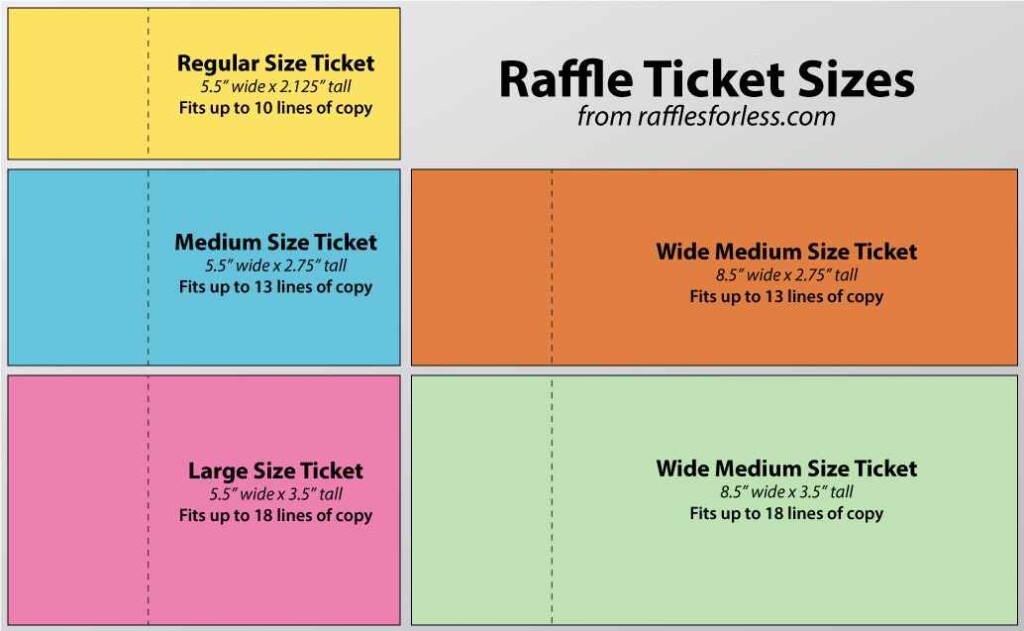
- Size and layout: The format you choose can affect cost.
- Turnaround and shipping: Timing matters if your event date is close.
Raffles For Less offers professionally printed custom raffle tickets with numbering, perforation, custom design or DIY design options, and free shipping. You can see current options on our raffle ticket pricing page.
Ticket printing is usually a small share of a fundraiser’s budget compared with the money it can help you raise, but it is still worth planning for early.
Raffle Ticket Pricing Mistakes to Avoid
Setting the price before knowing your goal. Start with what you need to raise, then choose a price.
Pricing too high for the audience. A great prize cannot fix a price that your supporters are not comfortable paying.
Pricing too low without a volume plan. $1 tickets can work, but only if you have a way to sell hundreds or thousands.
Ignoring expenses. Prizes, printing, promotion, and fees all reduce your net. Calculate them first.
Skipping bundles. Selling singles only leaves money on the table when buyers would happily take a few.
Confusing or complicated deals. If supporters cannot understand the pricing in five seconds, they may walk away.
Overlooking legal requirements. Raffle rules differ widely across states and sometimes by city or county. Some places require a license or registration, restrict who can run a raffle, or limit how tickets can be sold. Prizes may also carry tax obligations. This article is not legal or tax advice, so verify current requirements with your state or local authority, or a qualified professional, before selling tickets.
Tips for Making Your Price Work Harder
- Match the price to the prize story. Tell supporters exactly what they are winning and why it matters.
- Make buying easy. Offer a clear price, clear bundles, and numbered tickets that are simple to hand out and track.
- Show the impact. Explain where the money goes, such as new uniforms, a field trip, or a building fund.
- Use multiple prizes. More winners can make a mid-priced ticket feel more valuable.
- Sell before the event. Letting volunteers sell ahead of time spreads out the effort and raises more than a one-night push.
- Use professional tickets. Clean, numbered, well-designed tickets signal that the raffle is organized and legitimate.
Ready to Choose Your Tickets?
Once your price is set, the next step is getting tickets in hand. Raffles For Less makes it simple to order affordable, professional custom raffle tickets, with numbering, perforation, free shipping, and either a custom design or a do-it-yourself option. Visit our pricing page to see what fits your fundraiser.
Frequently Asked Questions
How much should I charge for a raffle ticket?
Most organizations charge between $1 and $20. Choose a price based on your audience, prize value, and fundraising goal. For many community fundraisers, $5 or $10 per ticket, or a bundle like 3 for $10, is a practical starting point.
Is $5 a good price for a raffle ticket?
Yes, $5 is one of the most common prices because it is affordable for most buyers and still raises meaningful money. It works especially well with bundle options.
What are common raffle ticket prices for a 50/50 raffle?
50/50 raffles often use low prices such as $1 per ticket, with bundles like 6 for $5 or 25 for $20. The goal is to sell high volume and grow the jackpot. Check your state’s rules before running one.
How do I calculate the right raffle ticket price?
Add your net fundraising goal to your expenses, then divide by the number of tickets you can realistically sell. Round the result to a clean, buyer-friendly price.
Does the ticket price change a player’s chances of winning?
The price itself does not change the odds. The number of tickets sold does. Lower prices tend to sell more tickets, which lowers each ticket’s odds.
Should I sell raffle tickets in bundles?
Bundles are usually a good idea. They encourage larger purchases and give supporters a reason to buy more than one ticket.
How much does it cost to print custom raffle tickets?
Cost depends on quantity, design, numbering, perforation, and turnaround time. Check the current options on the Raffles For Less pricing page for details.
Do I need a license to sell raffle tickets?
It depends on your state, locality, and type of organization. Many places require registration or a license, so confirm requirements with the appropriate state or local authority before you sell.
Final Thoughts
Choosing raffle ticket prices comes down to knowing your supporters, valuing your prize honestly, and doing the math before you print. Start with your net goal, factor in your costs, test a price against a realistic sales number, and add a simple bundle. Then make your tickets look as trustworthy as your cause.