Raffle ticket sales rarely take care of themselves. Even a great prize can fall flat if tickets aren’t priced right, promoted through the right channels, or made easy for people to buy. If you’re planning a raffle for a school, church, sports team, or nonprofit, the difference between a mediocre fundraiser and a sold-out one usually comes down to a handful of decisions you make before ticket sales even begin.
This guide walks through what actually drives raffle ticket sales, how to sell tickets both online and in person, common mistakes that quietly cost organizations money, and a step-by-step process for running the whole thing from start to finish.
What Actually Drives Raffle Ticket Sales
Before diving into tactics, it helps to understand the handful of factors that determine whether a raffle ticket fundraiser sells out or stalls:
- The prize — how desirable and relevant it is to your specific audience
- The price — whether it feels like a fair trade for a chance to win
- The story — why the money matters and where it’s going
- The ask — how many times, and how many ways, people are actually asked to buy
- The ease — how simple it is to pay and receive a ticket
Most raffles that underperform aren’t failing because of the cause. They’re failing because one of these five elements is weak. The rest of this article addresses each one.
Set Clear Goals Before You Start Selling
Every successful fundraising raffle starts with a number. Decide how much you need to raise, then work backward into how many tickets you’ll need to sell at what price. If you’re hoping to raise $3,000 and plan to sell tickets at $10 each, you need 300 sales which tells you immediately whether you need a bigger volunteer team, a longer sales window, or a lower ticket price to hit your goal realistically.
It’s also worth deciding early who your buyers actually are. A raffle for a school fundraiser usually draws from parents, teachers, and local businesses, while a church or sports league raffle may lean more on congregation members or team families. Knowing your audience shapes everything from ticket pricing to where you sell.
How to Sell Raffle Tickets Online and In Person
Most fundraising raffles today use a mix of both online and in-person sales, since each reaches a different type of buyer.
Selling Raffle Tickets Online
Selling raffle tickets online extends your reach beyond the people you’ll physically see before the drawing. It’s especially useful for grandparents, out-of-town family, alumni, and supporters who want to help but can’t attend an event.
To sell raffle tickets online effectively:
- Use a raffle or fundraising platform (or a simple online payment link) so buyers can pay by card in a couple of clicks.
- Share the link through email, text, and social media rather than relying on people to find it themselves.
- Post a countdown as the drawing date approaches a sense of urgency noticeably increases last-week sales.
- Confirm each purchase with a receipt or ticket number so buyers know their entry was recorded.
One thing to check before you commit to online sales: some states have specific rules about online or out-of-state raffle ticket sales, particularly for nonprofits. It’s worth confirming your organization’s plans comply with your state’s charitable gaming or raffle laws before promoting ticket sales broadly online.
Selling Raffle Tickets in Person
In-person sales still convert at a higher rate for most community fundraisers, because a face-to-face ask is harder to turn down than a link in a text message. Effective in-person selling usually includes:
- Setting up a table at church, school pickup, practice, or a community event
- Asking volunteers to sell to their own personal networks, not just strangers
- Bringing physical tickets people can hold, tear off, and keep as proof of entry
- Accepting both cash and card, since requiring exact cash turns away buyers
Physical raffle tickets also do something a digital-only raffle can’t: they act as a visible reminder. A ticket stub sitting on someone’s kitchen counter or in their car is a small, repeated nudge that keeps your cause top of mind until the drawing.
Proven Strategies to Increase Raffle Ticket Sales
Once the basics are in place, these strategies tend to make the biggest difference in total raffle ticket sales:
- Price for impulse, not deliberation. Tickets priced at $5, $10, or $20 are easy yes decisions. Higher prices work better when paired with bundle pricing, like “3 for $25.”
- Offer an early bird incentive. An early bird raffle structure where buyers who purchase before a certain date are entered into a bonus drawing pulls sales earlier in your timeline instead of everyone waiting until the last week.
- Sell to the same person more than once. Most raffle income doesn’t come from reaching new people; it comes from asking existing supporters at multiple touchpoints an email, a flyer, a table, and a reminder text.
- Make the prize match the buyer. A prize that’s genuinely appealing to your specific audience (a family experience, local gift cards, a big-ticket item) sells better than a generic prize picked for convenience.
- Give volunteers a specific number. “Please sell tickets” gets vague results. “Can you sell 10 tickets to your network by Friday?” gets a real answer and real accountability.
- Show your numbered tickets are legitimate. Sequentially numbered, perforated tickets with a matching stub reassure buyers that the drawing is run fairly and their entry is tracked.
How to Do a Raffle With Tickets: Step-by-Step
If you’re organizing your first raffle ticket fundraiser, here’s the general process most organizations follow from start to finish:
- Check your local requirements. Many states require nonprofits to register or obtain a permit before running a raffle. Rules vary significantly by state and by organization type, so confirm requirements with your state’s gaming or charities office before setting a date.
- Choose your prize. Pick something with broad appeal to your specific supporter base, and confirm you can actually deliver it if you win the drawing before the raffle starts.
- Set your price and goal. Decide the ticket price and how many you need to sell to hit your fundraising target.
- Order your tickets. Use professionally printed, numbered, and perforated tickets so each entry has a matching stub for the drawing and a record for both the buyer and your organization.
- Promote across channels. Combine in-person selling, email, social media, and online sales to reach the widest possible group of supporters.
- Track every sale. Keep a simple log of ticket numbers, buyer names, and contact information as tickets sell, especially for stub-based systems, so the drawing is easy to run and disputes are easy to resolve.
- Hold the drawing publicly. Draw the winning stub or number in front of witnesses, or livestream it, so the result is transparent and buyers trust the outcome.
- Follow up. Announce the winner, thank your buyers, and share how the funds raised will be used. This step is easy to skip but matters for the next raffle you run.
Common Mistakes That Hurt Raffle Ticket Sales
A few recurring mistakes show up across underperforming raffles:
- Starting sales too close to the drawing date. A short sales window leaves no time for reminders, early bird pushes, or word-of-mouth to build.
- Relying on one channel. Organizations that sell only online, or only at one event, consistently raise less than those combining several channels.
- Unclear pricing. If buyers have to ask “how much are the tickets,” you’ve already lost some of them. Price should be obvious on the ticket, the table sign, and the online listing.
- No urgency. Without a deadline, an early bird bonus, or a visible countdown, sales tend to trickle rather than build momentum.
- Handwritten or informal tickets. Tickets that look unofficial can make buyers hesitant, particularly for higher-value prizes, and make it harder to track entries accurately.
- Not knowing your break-even point. If you haven’t worked out how much to charge for raffle tickets relative to your prize cost and printing cost, it’s easy to end up with a raffle that raises less than expected even after selling well.
Choosing the Right Raffle Tickets for Your Fundraiser
The tickets themselves are a small cost relative to what’s at stake, but they affect both how smoothly your raffle runs and how buyers perceive it. Look for:
- Sequential numbering, so every stub can be matched to a sale and the drawing is easy to verify
- Perforated stubs, so buyers keep a record and you keep a matching entry
- Custom design, so the tickets reflect your organization, event, or school rather than looking generic
- Clear pricing and rules printed on the ticket, including the drawing date and any restrictions
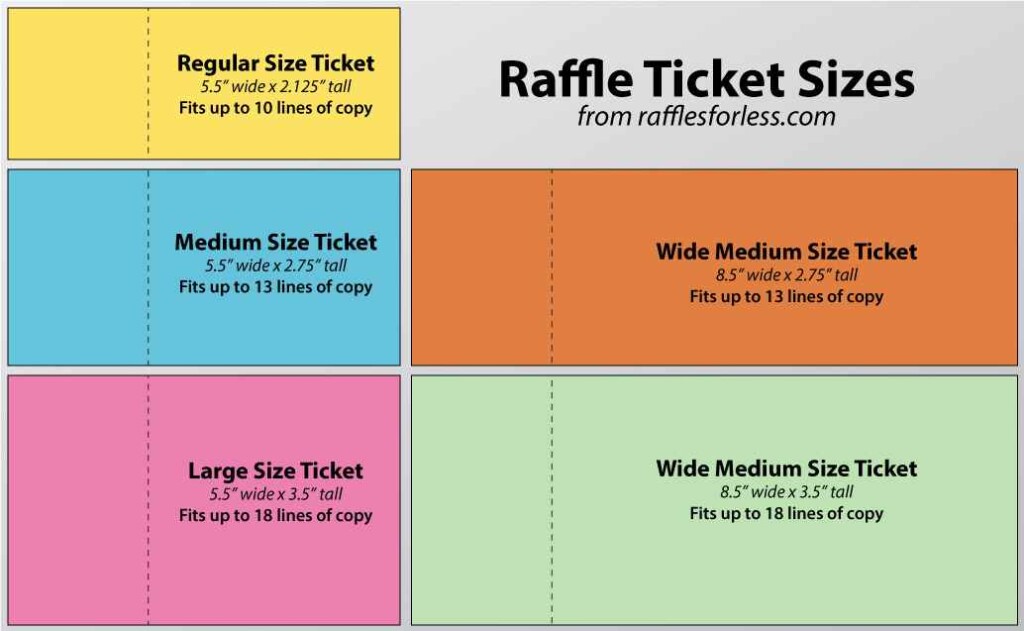
Raffles For Less prints custom, numbered, perforated raffle tickets designed specifically for fundraising use, with both ready-to-use templates and fully custom design options. If you’d rather not design tickets from scratch, a template is often the fastest way to get a professional-looking ticket without extra design time. You can compare formats and see current pricing before placing an order.
If you’re still working out how many tickets to sell and at what odds feel fair to buyers, it can also help to calculate your raffle odds before you finalize pricing buyers are more likely to purchase when the odds feel reasonable relative to the ticket price.
A Note on Raffle Rules and Regulations
Raffle laws in the U.S. vary by state, and sometimes by county or municipality, along with the type of organization running the raffle. Requirements can include registration, permits, reporting on how proceeds are used, and rules about who can sell tickets or where. Some states also have specific requirements for online raffle ticket sales.
This article is meant as general guidance, not legal advice. Before you sell your first ticket, check with your state’s charitable gaming office, attorney general’s office, or a legal advisor familiar with nonprofit fundraising to confirm what applies to your specific organization and event.
FAQs About Raffle Ticket Sales
How many raffle tickets should I print for a fundraiser? Print more than you expect to sell. It’s common to run out of momentum before running out of tickets, but printing too few can cap your fundraising total if demand is strong. Many organizations print 25–50% more than their sales goal to leave room for growth.
What’s a good price for raffle tickets? It depends on your prize value and audience, but 5–20 per ticket, or a bundle price like “3 for $25,” tends to work well for most community fundraisers. Higher-value prizes can support higher ticket prices.
Can you sell raffle tickets online legally? In many cases, yes, but rules vary by state and by organization type, and some states restrict online or out-of-state raffle sales. Confirm your specific requirements with your state’s charitable gaming authority before selling online.
How do I track raffle ticket sales for a large event? Numbered, perforated tickets make tracking straightforward — record the ticket number, buyer name, and contact information as each one sells. A simple spreadsheet is usually enough for most community fundraisers.
What’s the difference between a 50/50 raffle and a standard raffle ticket fundraiser? A 50/50 raffle splits the pot between the winner and the organization, with the ticket price determining the prize. A standard raffle ticket fundraiser typically has a separately sourced prize, unrelated to how much is raised in ticket sales.
Do raffle tickets need to be numbered? Numbering isn’t required everywhere, but it’s strongly recommended. Sequential numbers make the drawing verifiable and give buyers confidence that entries are tracked fairly.
How far in advance should I start selling raffle tickets? Most organizations get the best results starting sales three to six weeks before the drawing, which allows time for an early bird push, in-person selling, and follow-up reminders without buyer fatigue.
Bringing It Together
Raffle ticket sales come down to a fairly short list of decisions: a fair price, a genuinely appealing prize, a sales window long enough to build momentum, and tickets that make the whole process feel organized and trustworthy to your buyers. None of this requires a big budget or a professional events team it just requires planning the sale as carefully as you plan the prize.
If you’re ready to move from planning to printing, Raffles For Less can help with custom, numbered raffle tickets built for exactly this kind of fundraiser, whether you’re working from a template or starting a fully custom design from scratch.