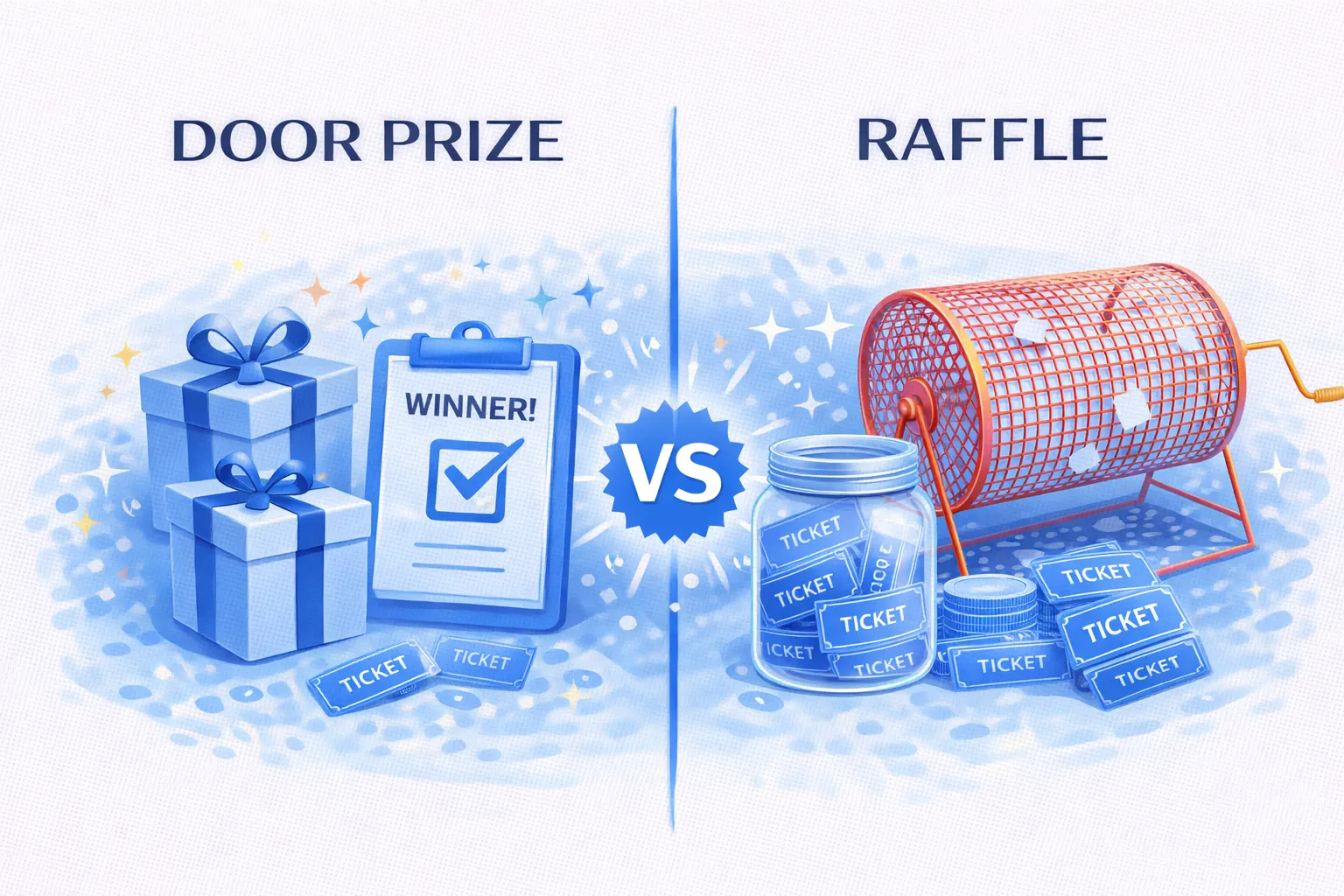
When organizing an event, one common question is: door prize vs. raffle, which is better? Both methods are popular ways to add excitement to events, reward attendees, and sometimes raise money. However, they work in very different ways.
A door prize is usually given randomly to someone attending the event, often without requiring any extra payment. A raffle, on the other hand, typically involves selling tickets and drawing a winner from those entries.
Understanding the difference between these two options helps organizers choose the best method for their event goals. Some events focus mainly on entertainment, while others aim to raise funds for a cause. In many cases, raffles are used for fundraising because they allow organizations to generate revenue from ticket sales.
If you are new to raffle-based events, it helps first to understand what raffles are and how to run your own, since raffles have specific rules and structures that differ from simple prize giveaways.
This guide explains the differences between door prizes and raffles, how each one works, and which option may be better for your event.
What Is a Door Prize?
A door prize is a gift given to a randomly selected attendee at an event. Usually, people become eligible for the prize simply by attending the event.
When guests arrive, they may receive a ticket or have their names added to a list. At some point during the event, the organizer randomly selects a winner.
Unlike raffles, participants usually do not need to buy additional tickets to enter a door prize drawing. The goal of a door prize is typically to create excitement and reward attendees for showing up.
Door prizes are often used at events such as:
- Conferences and seminars
• Company parties
• Community gatherings
Since everyone attending has a chance to win, door prizes can help increase event participation.
What Is a Raffle?
A raffle is a prize drawing where participants buy tickets for a chance to win prizes. Each ticket represents one entry into the drawing.
At the end of the event, organizers randomly select a ticket, and the owner of that ticket wins the prize.
Unlike door prizes, raffles are usually designed to raise money. Participants pay for tickets, and the proceeds support the event or a charitable cause.
Many raffles offer multiple prizes, which encourages participants to buy more tickets. Organizers often research top raffle prize ideas to boost participation and ensure their prizes attract strong interest.
Because raffles involve ticket sales and prize drawings, they require clear rules and good organization.
Door Prize vs Raffle: Key Differences
Although both door prizes and raffles involve prize drawings, their purpose and structure are quite different.
| Feature | Door Prize | Raffle |
| Entry Method | Usually free | Requires ticket purchase |
| Purpose | Reward attendees | Raise funds |
| Number of Winners | Usually one or a few | Often multiple |
| Participation | Automatic attendance | Based on the tickets bought |
| Fundraising Potential | Low | High |
This comparison highlights why nonprofits and charities often use raffles. Since participants purchase tickets, the organization can raise funds while also creating excitement.
When a Door Prize Is the Better Option
Door prizes work best when the main goal is to make an event more enjoyable rather than to raise money.
For example, conferences often include door prizes to encourage people to stay until the end of the program. Corporate events may also use them to reward employees or guests.
Another advantage of door prizes is their simplicity. Since there are no ticket sales involved, organizers do not need to manage pricing, ticket distribution, or fundraising logistics.
Door prizes are especially useful for events focused on networking or appreciation rather than fundraising.
When a Raffle Is the Better Option
Raffles are ideal when the goal of the event is to raise funds while also entertaining participants.
Because attendees must buy tickets to enter, raffles generate revenue for the organization. Many charities rely on raffles as a key part of their fundraising strategy.
Successful raffles often feature several attractive prizes and well-designed tickets. Many organizers improve ticket sales by following professional raffle ticket design tips, which can make tickets look more appealing and trustworthy.
Proper ticket pricing is also important. Setting the right price can encourage more participation while maximizing fundraising results.
Legal Considerations
Another important factor when comparing door prizes and raffles is legality.
Door prizes usually have fewer legal requirements because participants do not pay for entry. Since the prize is simply given to someone attending the event, the process is often considered a promotional giveaway.
Raffles, however, may be regulated in some locations because they involve payment for a chance to win a prize.
Many organizers review US raffle laws by state before planning a raffle to ensure they follow all necessary rules and regulations.
Understanding these legal differences can help prevent problems when organizing fundraising events.
Which Option Raises More Money?
When comparing door prizes and raffles, the answer is clear if fundraising is the goal.
Door prizes rarely generate direct revenue because participants do not pay for entry. They mainly serve as entertainment or appreciation gifts.
Raffles, on the other hand, are specifically designed to raise money through ticket sales.
Organizations that want to maximize fundraising results often use strategies such as:
- Selling ticket bundles
• Offering multiple attractive prizes
• Promoting the raffle before the event
These methods help increase ticket purchases and overall fundraising success. Many organizers follow expert tips for holding successful raffles to increase participation and ticket sales.
Can You Use Both at the Same Event?
Yes, many events successfully combine both door prizes and raffles.
Using both methods can create a balanced experience for guests. Door prizes can reward attendees for being present, while raffles can help organizations raise funds.
For example, an event might include one free door prize drawing for attendees and several raffle prizes that require ticket purchases.
This combination helps maintain excitement while also supporting fundraising goals.
Final Thoughts
When comparing door prizes and raffles, the best choice depends on your event’s purpose.
If the goal is simply to reward attendees and create excitement, a door prize is a simple and effective option.
However, if the goal is to raise funds while engaging participants, a raffle is usually the better choice. Raffles encourage people to purchase tickets and support the cause while still enjoying the thrill of winning prizes.
By understanding the differences between a raffle vs door prize, event organizers can choose the approach that best fits their goals and create an enjoyable experience for everyone involved.