Selling raffle tickets online can help a school, nonprofit, church, sports organization, or community group reach supporters who cannot attend an in-person event. But simply putting a “Buy Now” button on a website is not enough.
You need a clear raffle offer, an easy purchase process, a promotion strategy, accurate entry tracking, and, most importantly, a plan that follows the raffle laws that apply to your organization.
In this guide, you’ll learn how to sell raffle tickets online, how to structure your ticket offers, where to promote them, how to use Facebook and email effectively, what mistakes to avoid, and how to combine online sales with traditional printed raffle tickets.
The best way to sell raffle tickets online is to first confirm that online raffle sales are permitted for your organization and location, then create a clear sales page, offer simple ticket pricing or bundles, collect and track entries accurately, and promote the raffle through email, social media, your website, and your existing supporter network.
Can You Sell Raffle Tickets Online?
Yes, online raffle sales are possible in some parts of the United States, but you should never assume that an online raffle is legal simply because your organization can legally hold a raffle.
Raffles are generally regulated at the state and sometimes local level. The rules can cover who may conduct a raffle, how tickets can be sold, where purchasers may be located, payment methods, advertising, prizes, ticket information, and recordkeeping.
The IRS also notes that raffles are considered gaming activities and that gaming conducted by tax-exempt organizations is normally regulated under state and local law.
Before you start selling raffle tickets online, verify the requirements that apply to your organization.
What to Check Before Selling Online
Confirm:
- Whether your organization is eligible to conduct the raffle
- Whether your state permits online raffle ticket sales
- Whether online or electronic payments are permitted
- Whether purchasers must be located within a particular jurisdiction
- Whether a permit, registration, or license is required
- Whether there are age restrictions
- What information must appear on the ticket or sales page
- Whether there are prize-value restrictions
- How raffle proceeds must be handled
- What records must be maintained
- Whether local rules apply in addition to state requirements
Do not treat this article as legal advice. Raffle requirements can differ substantially from one state to another.
For example, Raffles For Less provides a dedicated guide explaining the specific requirements that apply to eligible organizations conducting raffles in Texas.
How to Sell Raffle Tickets Online Step by Step
If online raffle sales are permitted for your fundraiser, the process can be broken into eight practical steps.
1. Define Your Fundraising Goal
Start with the number you actually need to raise.
For example:
| Fundraising target | $10,000 |
| Expected raffle expenses | $1,000 |
| Total amount you need to generate | $11,000 |
| Average ticket price | $5 |
| Tickets required at that price | 2,200 |
This is only a planning example. Your actual numbers should account for prize costs, printing, platform fees, payment processing, advertising, permits, and other expenses.
A clear goal also makes your marketing stronger.
Instead of:
“Buy a raffle ticket.”
Try:
“Help our school raise $10,000 for new playground equipment. Every ticket supports the project, and one lucky participant will win our grand prize.”
The second message gives people a reason to participate.
2. Choose Your Prize
The prize is one of the biggest reasons people decide whether to buy.
Strong raffle prizes are:
- Relevant to your audience
- Easy to understand
- Visually appealing
- Valuable enough to create excitement
- Clearly described
- Legitimately available to the organization
A school fundraiser might promote a family vacation package, sports tickets, electronics, a themed basket, or a donated service.
A nonprofit might use a donated experience, vacation, vehicle, gift package, or cash prize when legally permitted.
The important point is not simply choosing the most expensive prize. Choose something your particular supporters actually want.
3. Confirm Your Ticket Pricing
Your ticket price needs to feel affordable while still helping you reach your fundraising target.
Common structures include:
| Ticket offer | Example |
| 1 ticket | $5 |
| 5 tickets | $20 |
| 15 tickets | $50 |
| 40 tickets | $100 |
Bundle pricing can encourage supporters to purchase more than one entry.
However, don’t automatically discount tickets just because competitors do. Calculate how many tickets you realistically expect to sell and whether your pricing can support your fundraising goal.
If you need help with this part, see our guide on how much to charge for raffle tickets for additional pricing examples and strategies.
4. Create a Simple Online Sales Page
Your sales page should answer the questions a potential buyer has before they purchase.
At minimum, explain:
- What the fundraiser supports
- What the prize is
- Ticket price
- Available ticket packages
- Raffle closing date
- Drawing date
- How the winner will be selected
- Who is eligible
- How the winner will be contacted
- Applicable rules and restrictions
- How proceeds will be used
- How to contact the organization
Keep the purchase process simple.
If someone has to click through five or six pages before reaching checkout, you are creating unnecessary opportunities for them to leave.
5. Make the Purchase Process Mobile Friendly
A large portion of your audience will see the raffle through a phone.
Test the complete process yourself.
Open the page on a smartphone and ask:
- Can I immediately see the prize?
- Can I understand the cause?
- Is the ticket price obvious?
- Can I find the purchase button?
- Can I complete payment without zooming?
- Are the terms easy to find?
- Do I receive confirmation after purchasing?
If the answer to any of these is no, fix it before promoting the raffle.
6. Track Every Entry
Online sales can make recordkeeping easier, but only if your system is organized.
Track information such as:
- Purchaser name
- Email address
- Ticket or entry number
- Number of entries purchased
- Purchase date
- Payment status
- Contact information
- Eligibility information when required
Your system should also make it easy to reconcile the number of tickets sold with the money received.
7. Promote the Raffle
Do not publish your sales page and wait for people to find it.
Use several channels:
- Your organization’s website
- Text messages where appropriate
- Sponsor newsletters
- Community groups where permitted
- Event announcements
- Printed flyers with QR codes
- Board members and volunteers
- Local business partners
The goal is to put the raffle in front of people multiple times without making every message identical.
8. Create Urgency Before the Deadline
People often postpone raffle purchases.
Use legitimate deadlines and progress updates to create a reason to act.
Examples:
“Only 3 days left to enter.”
“Ticket sales close Friday at midnight.”
“Our fundraiser has reached 75% of its goal.”
“Final weekend to support the project and enter the drawing.”
Avoid fake scarcity. Your deadline should be real.
Choose the Right Way to Sell Raffle Tickets Online
There is no single system that works for every fundraiser.
Your best option depends on your organization, location, legal requirements, audience, and how you plan to manage the drawing.
| Sales method | Best for | Main advantage | Watch out for |
| Dedicated raffle platform | Larger online fundraisers | Automated sales and records | Verify legal compatibility |
| Event/fundraising platform | Organizations already using one | Centralized fundraising | Raffle features may vary |
| Website sales page | Established organizations | Full control over messaging | More setup and management |
| Online form + payment | Small campaigns | Simple setup | Entry tracking can become manual |
| Hybrid online + printed | Community fundraisers | Reaches online and offline buyers | Requires careful reconciliation |
Current fundraising platforms increasingly offer online ticketing, bundles, entry tracking, and digital sales pages, but platform availability does not automatically determine whether your raffle is lawful where you operate.
Create an Online Raffle Sales Page That Converts
Your sales page has one job: make the decision to participate easy.
A useful structure is:
Above the Fold
Show:
Prize
Ticket Price
Fundraising Cause
Drawing Date
Buy Tickets button
Do not bury the most important information below several paragraphs of text.
Explain the Cause
People are more likely to support a fundraiser when they understand what their purchase accomplishes.
For example:
“Your ticket purchase helps our community center replace outdated computers used by local students.”
That is much more meaningful than:
“Proceeds benefit our organization.”
Be specific whenever possible.
Show the Prize Clearly
Use high-quality photographs and explain exactly what the winner receives.
If the prize has restrictions, expiration dates, blackout dates, or other conditions, explain them before purchase.
Add Trust Signals
Your page can include:
- Organization name
- Logo
- Contact information
- Cause information
- Sponsor information
- Official rules
- Permit information when applicable
- Drawing details
- Privacy information
- Winner notification process
Trust matters even more when someone is being asked to enter remotely.
How to Price Online Raffle Tickets
There is no universal “correct” raffle ticket price.
The right price depends on your audience, prize, fundraising target, expected number of participants, and local requirements.
A simple planning formula is:
Required ticket revenue ÷ expected tickets sold = approximate average ticket price
For example, if you need $8,000 in net raffle revenue and expect to sell 2,000 tickets:
$8,000 ÷ 2,000 = $4 per ticket
You could then test a structure such as:
- 1 for $5
- 5 for $20
- 15 for $50
The exact structure should be based on your actual financial model rather than copied from another fundraiser.
For additional examples, see the Raffles For Less guide to fundraiser raffle ticket prices.
How to Promote Raffle Tickets Online
Selling online is only half the job.
Promotion drives the traffic that turns into ticket purchases.
Use a Multi-Channel Promotion Strategy
A simple campaign can look like this:
| Timing | Promotion |
| 2–4 weeks before | Launch announcement |
| 10–14 days before | Prize spotlight |
| 7 days before | Fundraising progress update |
| 3–5 days before | Reminder |
| 48 hours before | Final weekend message |
| Final day | Closing reminder |
| After drawing | Winner announcement and thank-you |
The exact schedule depends on your raffle rules and campaign length.
Make Every Message Different
Do not post:
“Buy raffle tickets!”
every day.
Instead, rotate the angle.
Cause-focused:
“Help us fund new equipment for our youth program.”
Prize-focused:
“Someone is going home with this amazing prize.”
Progress-focused:
“We’re already 70% of the way to our fundraising goal.”
Deadline-focused:
“Ticket sales close tomorrow.”
Community-focused:
“Help our local team reach its fundraising target.”
This keeps the campaign from feeling repetitive.
How to Sell Raffle Tickets on Facebook
Facebook can be useful for reaching existing supporters, but raffle-related promotions require particular care.
Do not assume that because your raffle is for charity, every Facebook promotion or advertising option will automatically be available to you.
The safest approach is to follow the rules that apply to your organization, jurisdiction, and the platform you’re using.
For organic promotion, your posts can focus on:
- The fundraising purpose
- The prize
- The drawing date
- The official raffle page
- The organization’s story
- Progress toward the goal
- Deadline reminders
Example Facebook Post
We’re raising $10,000 to help fund new equipment for our community youth program.
Our raffle is now open, and tickets are available through our official fundraiser page.
The drawing takes place on [DATE], and ticket sales close on [DATE].
Learn about the prize, fundraiser, eligibility requirements, and official rules before entering.
Keep the post factual and link users to the page containing the complete information.
How to Sell Raffle Tickets on Facebook Without Becoming Spammy
Use the 80/20 principle as a starting point for your content mix.
Most posts should provide useful or engaging information about the cause, event, organization, prize, or community.
Then use dedicated posts to promote the raffle.
Also encourage supporters to share your official post instead of having dozens of volunteers publish identical messages.
Use Email to Increase Online Raffle Sales
Email can be one of the most valuable channels because your organization already has a relationship with its subscribers.
A simple email campaign can include four messages.
Email 1: Launch
Explain:
- Why you’re fundraising
- What the prize is
- How to enter
- When sales close
Email 2: Story
Show the real-world impact of the fundraiser.
Explain what the money will help accomplish.
Email 3: Reminder
Tell supporters how much time remains.
Include the purchase link again.
Email 4: Final Call
Keep it short.
“Ticket sales close tonight.”
Make the deadline obvious.
Avoid sending excessive reminders that could cause subscribers to disengage.
Combine Online Sales With Printed Raffle Tickets
Online sales are not always a replacement for physical tickets.
For many schools, churches, clubs, nonprofits, and community groups, a hybrid strategy can work better.
You can accept online entries where permitted while continuing to sell printed tickets at:
- Fundraising dinners
- School events
- Sports games
- Church gatherings
- Community festivals
- Local business locations
- Meetings
- Charity events
Printed tickets also give volunteers something tangible to sell.
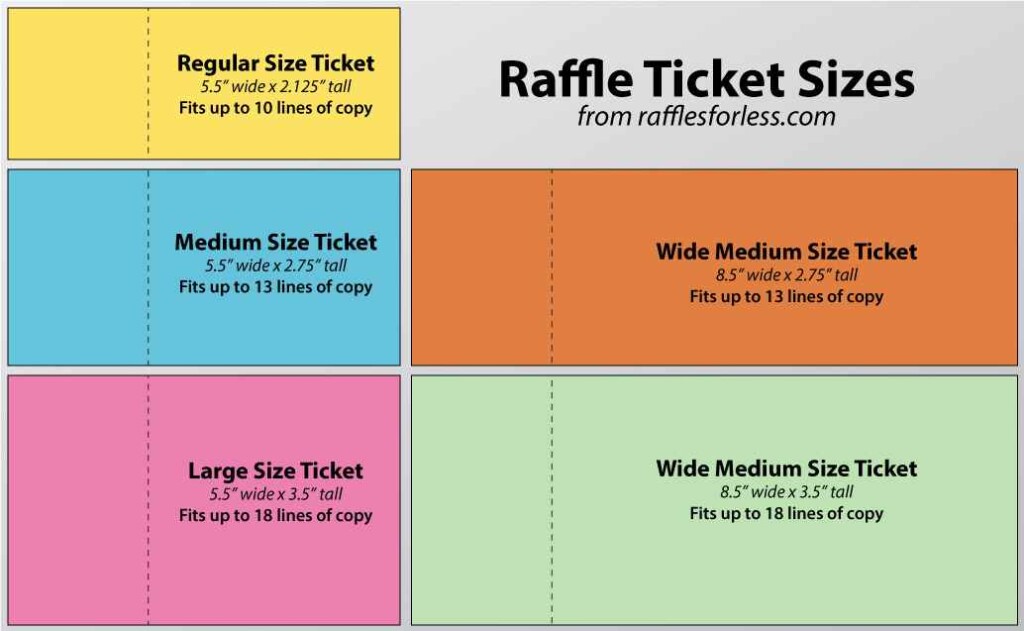
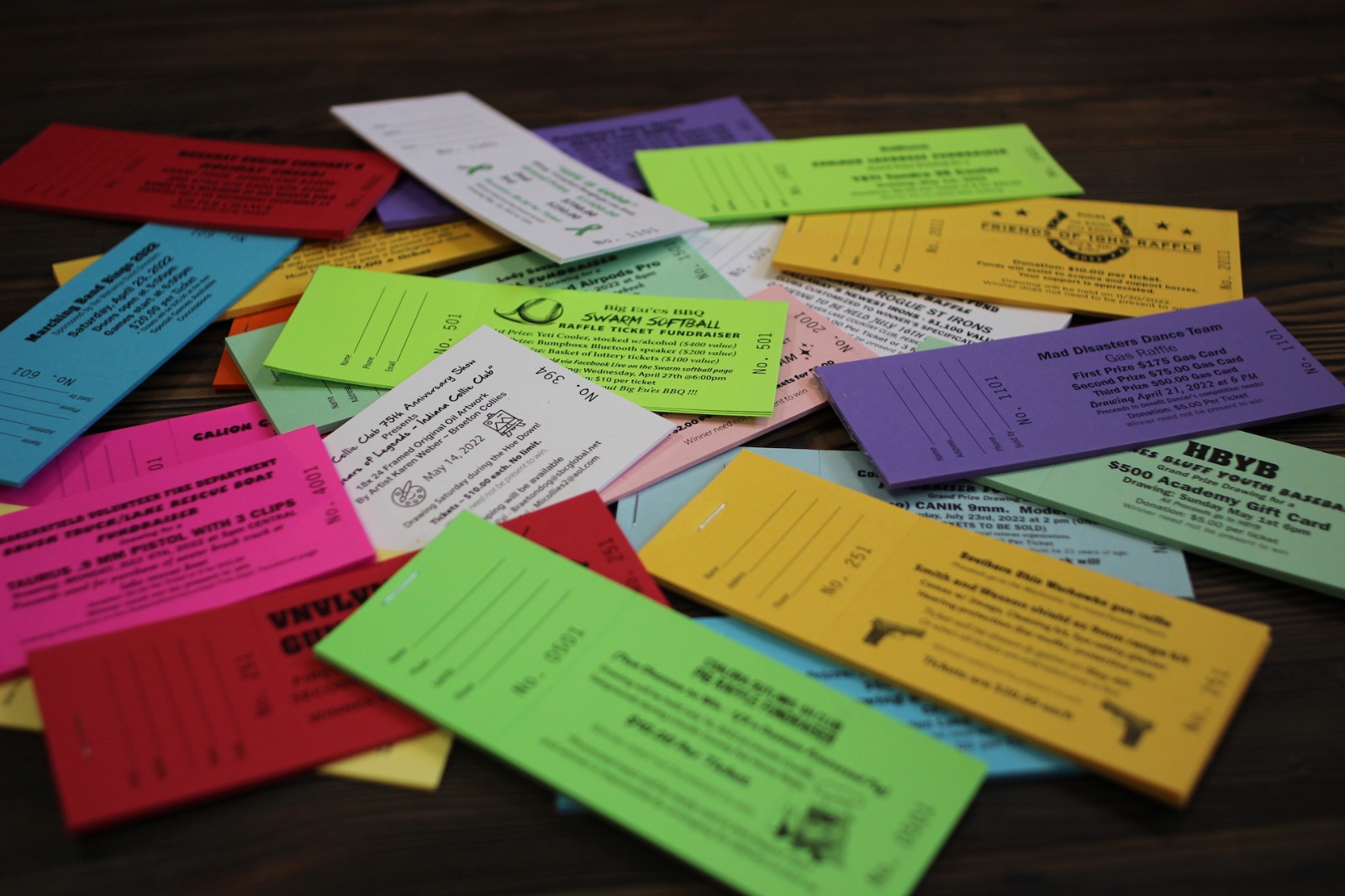
Raffles For Less specializes in custom printed raffle tickets, including numbered tickets and different ticket sizes and formats. The company’s FAQ notes that standard-color tickets are printed on 67# Vellum Bristol, while upgraded colors use 65# cover stock.
If you want professionally printed tickets alongside your online campaign, explore our custom raffle ticket printing options.
Make Your Printed Tickets Support Your Online Campaign
Your physical ticket does not have to compete with your online campaign.
It can support it.
For example, your printed materials can include a QR code that sends supporters to your official campaign page, where permitted and appropriate.
Your ticket design should make important information easy to find.
Include applicable:
- Organization name
- Prize information
- Ticket number
- Ticket price
- Drawing date
- Contact information
- Required terms
- Eligibility information
- Permit or license information when applicable
If you are creating your own artwork, Raffles For Less provides ticket templates showing the ticket dimensions, safe areas, perforation position, and numbering location.
How to Track Online Raffle Ticket Sales
Good tracking protects both your fundraiser and your participants.
Create a central record for every sale.
A basic spreadsheet might contain:
| Entry | Purchaser | Quantity | Payment | Date | |
| 00125 | Jane Smith | jane@example.com | 5 | Paid | Aug. 12 |
| 00130 | Mark Jones | mark@example.com | 1 | Paid | Aug. 13 |
For larger campaigns, use a system that automatically assigns unique entry numbers and maintains transaction records.
Before the drawing, reconcile:
Total entries issued = total paid entries recorded
If you also sell physical tickets, reconcile both systems so that no number is accidentally duplicated.
Your drawing procedure should be documented before sales close.
Common Mistakes When Selling Raffle Tickets Online
Mistake 1: Starting Before Checking the Rules
This is the biggest mistake.
Online raffle laws vary, and some jurisdictions place specific restrictions on electronic sales or payments.
Check first.
Mistake 2: Making the Purchase Process Complicated
Every additional step can create friction.
Keep the path from promotion to purchase as short and clear as possible.
Mistake 3: Focusing Only on the Prize
A great prize attracts attention, but your cause gives people a reason to support the fundraiser.
Tell both stories.
Mistake 4: Hiding Important Information
Do not make buyers hunt for:
- Price
- Drawing date
- Eligibility
- Rules
- Prize details
- Contact information
Transparency builds confidence.
Mistake 5: Using the Same Social Post Repeatedly
Repeated “buy now” posts quickly become background noise.
Change the message and provide progress updates.
Mistake 6: Failing to Reconcile Entries
A fundraiser can become difficult to manage if online and offline sales are tracked separately.
Use one master record.
Mistake 7: Running Out of Printed Tickets
If you are using a hybrid strategy, estimate your physical ticket needs early.
Raffles For Less recommends ordering a sufficient supply initially because a second smaller order can cost more than ordering enough tickets in the first place.
Best Practices for Selling Raffle Tickets Online
For a smoother fundraiser:
- Confirm legal requirements before launch.
- Set a specific fundraising goal.
- Choose a prize your audience values.
- Calculate ticket pricing before advertising.
- Offer simple ticket packages.
- Build a mobile-friendly sales page.
- Clearly explain the cause.
- Show the prize prominently.
- Display the drawing date and closing date.
- Explain eligibility and official rules.
- Use email and social media together.
- Give supporters multiple legitimate ways to discover the fundraiser.
- Track every entry.
- Reconcile payments and entries.
- Keep a record of your drawing process.
- Announce the winner clearly.
- Thank everyone who participated.
- Report the fundraising result when appropriate.
Online Raffle Sales Checklist
Use this checklist before launching your campaign:
- Confirm your organization is eligible to hold the raffle.
- Check state and local raffle requirements.
- Confirm whether online ticket sales are permitted.
- Confirm permitted payment methods.
- Secure the prize.
- Set your fundraising goal.
- Calculate ticket pricing.
- Create ticket bundles if appropriate.
- Build the online sales page.
- Add prize photos and descriptions.
- Publish official rules and required information.
- Test the purchase process on mobile.
- Set up entry tracking.
- Prepare email promotions.
- Prepare social media posts.
- Create printed tickets if using a hybrid strategy.
- Add a QR code to promotional materials if appropriate.
- Reconcile sales regularly.
- Stop sales at the stated deadline.
- Conduct the drawing according to your stated rules.
- Document the result.
- Notify the winner.
- Thank your supporters.
Frequently Asked Questions
1. Can you sell raffle tickets online?
Yes, online raffle ticket sales are possible in some U.S. jurisdictions, but the rules vary by state and sometimes by locality. Before launching, confirm that your organization is eligible and that online sales and your intended payment method are permitted.
2. What is the best way to sell raffle tickets online?
The best way to sell raffle tickets online is to combine a simple sales page, clear pricing, an easy checkout process, accurate entry tracking, and consistent promotion through email, social media, your website, and your existing supporter network.
3. How do I sell fundraiser tickets online?
To sell fundraiser tickets online, establish your fundraising goal, confirm raffle requirements, choose the prize, set ticket prices, create an online sales page, configure entry tracking, promote the campaign, and maintain accurate sales records until the drawing.
4. Can I sell raffle tickets on Facebook?
You may be able to promote your fundraiser on Facebook, but you should follow both the applicable raffle laws and Facebook’s current rules and advertising policies. Do not assume that charitable status automatically makes every raffle promotion or advertising method permissible.
5. How can I sell raffle tickets online and in person?
A hybrid approach lets you combine online sales with physical ticket sales at events, meetings, and community locations. Use a centralized tracking system and carefully reconcile online and printed ticket numbers so entries are not duplicated.
Conclusion: Turn Online Attention Into Raffle Ticket Sales
Learning how to sell raffle tickets online is less about finding one magic platform and more about building a trustworthy, easy-to-follow fundraising process.
Start with compliance. Then build a clear offer around a desirable prize and meaningful cause. Make the purchase process simple, price your tickets based on real fundraising numbers, promote through several channels, and keep meticulous records.
And don’t overlook physical tickets. For many U.S. fundraisers, combining online promotion with professionally printed raffle tickets can help reach supporters both digitally and in person.
If your campaign needs custom printed tickets, Raffles For Less can help you create numbered, professional raffle tickets designed around your fundraiser.
The goal isn’t simply to sell more entries. It’s to create a raffle that supporters understand, trust, and want to participate in.