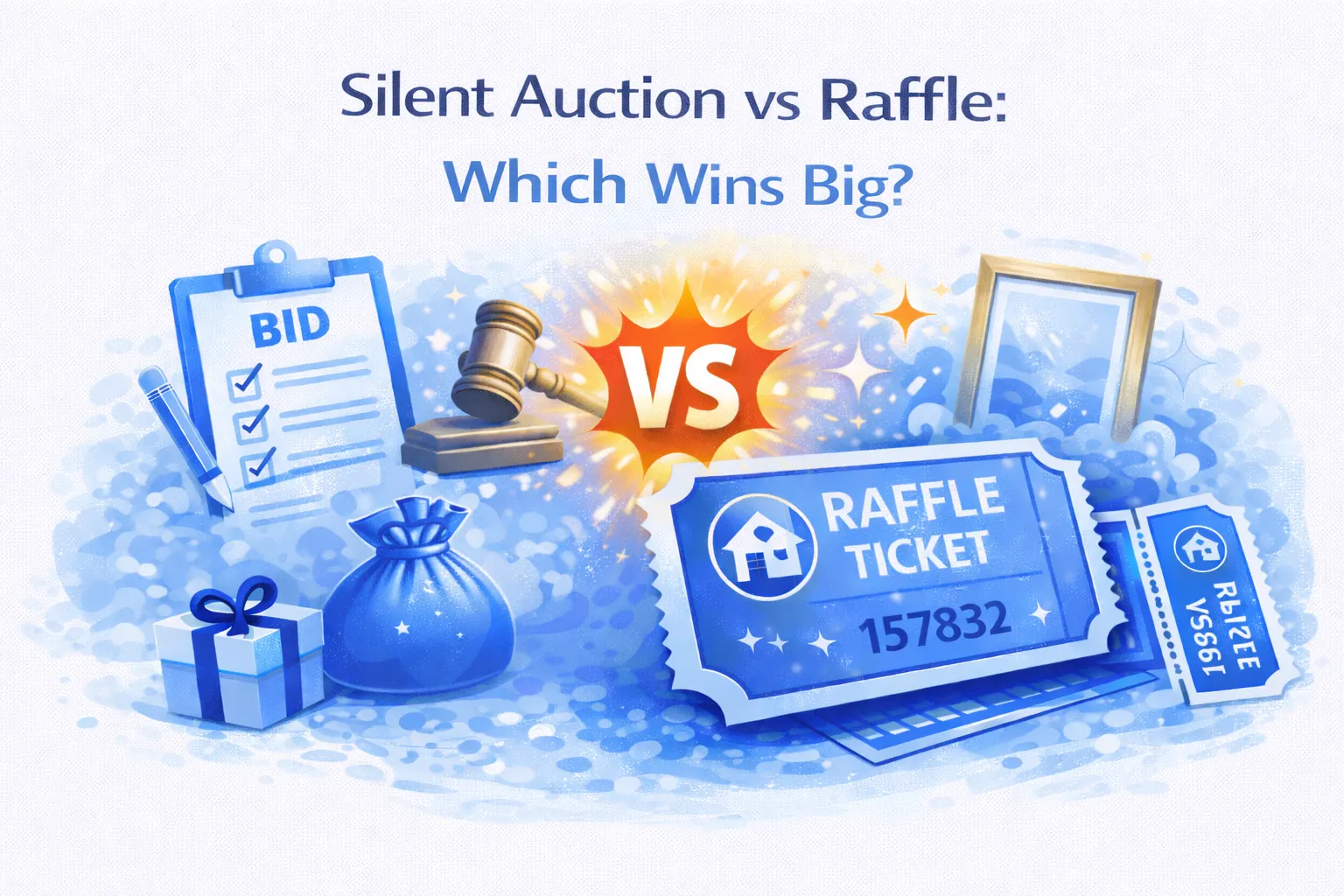
When planning a fundraiser, one question comes up again and again: silent auction vs raffle, which one actually raises more money?
Nonprofits, schools, churches, and community groups across the United States rely heavily on these two methods. Both work. Both can generate impressive revenue. But the right choice depends on your audience, event type, legal environment, and marketing strategy.
This in-depth guide breaks down the real differences between a raffle vs silent auction, compares revenue potential, costs, effort, and legal factors, and shows you which one wins in specific scenarios. By the end, you will know exactly which format fits your fundraising goals.
What Is a Silent Auction?
A silent auction is a fundraising event where items are displayed with bid sheets. Guests write their bids, and the highest bidder wins when the auction closes.
It is common at:
- Gala dinners
- School fundraisers
- Charity banquets
- Corporate fundraising events
How Silent Auctions Make Money
Revenue comes from competitive bidding. The higher the emotional attachment and perceived value, the higher the final bid.
Typical high-performing items:
- Vacation packages
- Signed sports memorabilia
- Luxury gift baskets
- Exclusive experiences
Silent auctions work best when attendees have strong purchasing power and are already invested in the cause.
What Is a Raffle?
A raffle is a lottery-style fundraiser. Participants purchase tickets for a chance to win a prize. Winners are selected randomly.
You can run:
- 50 50 raffles
- Basket raffles
- Calendar raffles
- Online raffles
- Large jackpot raffles
Revenue depends on ticket volume and pricing strategy. Unlike auctions, raffles allow anyone to participate at a low entry price.
If you are planning one, review these practical tips for holding a successful raffle to avoid common mistakes and maximize ticket sales.
Silent Auction vs Raffle: Direct Comparison
| Factor | Silent Auction | Raffle |
| Revenue Potential | High per item | High volume-based |
| Entry Cost for Guests | High | Low |
| Planning Effort | Moderate to High | Low to Moderate |
| Legal Requirements | Minimal | Regulated by the state |
| Works Without Event? | Harder | Yes |
| Best For | Galas, upscale events | Schools, sports, and community |
Which Raises More Money?
The honest answer is: it depends.
Let’s analyze real-world performance scenarios.
Scenario 1: High Income Gala Event
Audience: 150 guests
Average income: Upper middle class
Ticket price: 150 dollars per seat
In this case, a silent auction usually outperforms a raffle.
Why?
- Guests are already spending money
- Competitive bidding drives prices up
- Exclusive experiences sell extremely well
A single vacation package could raise 5,000 dollars. Multiply that by 10 premium items, and revenue scales quickly.
Winner: Silent Auction
Scenario 2: School or Community Fundraiser
Audience: 500 families
Mixed income levels
Casual event
Here, a fundraising raffle vs silent auction comparison leans heavily toward raffle.
Why?
- Tickets priced at 5 or 10 dollars are accessible
- More people participate
- You can sell tickets before and after the event
When priced correctly using proven strategies like those in How to Price Raffle Tickets for a Fundraiser, total revenue often surpasses a silent auction at similar events.
Winner: Raffle
Revenue Breakdown Example
Let’s look at projected numbers.
Silent Auction Example
- 15 items
- Average winning bid 600-dollars
- Total revenue: 9,000 dollars
Expenses:
- Catering upgrades
- Display materials
- Staff time
Net might be around 7,000 dollars.
Raffle Example
- 2,000 tickets sold
- 10 dollars per ticket
- Total revenue: 20,000 dollars
Prize cost: 5,000 dollars
Net: 15,000 dollars
In this case, raffle wins significantly.
But ticket pricing is critical. Many organizers struggle with this. Following guidance on what are reasonable raffle ticket prices prevents underpricing and loss of profit.
Cost Differences: Silent Auction vs Raffle
Silent Auction Costs
- Venue upgrades
- Printed bid sheets
- Payment processing
- Staff or volunteers
- Marketing
Raffle Costs
- Ticket printing
- Prize purchase
- Legal compliance fees
- Promotion
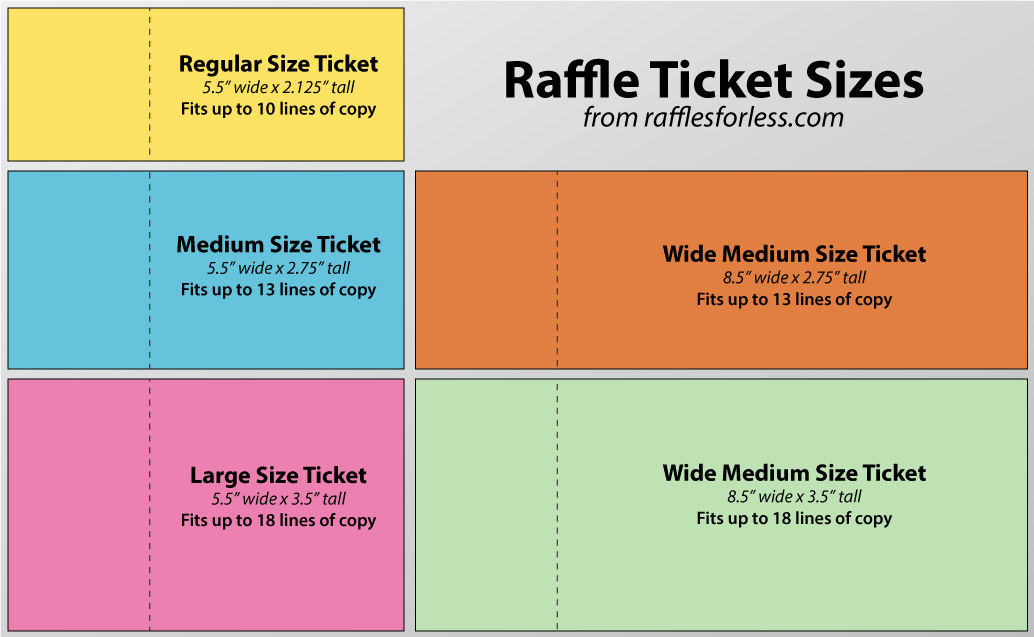
Professional printing matters more than many people realize. Poor ticket design reduces trust and sales. This is why many organizers rely on professional raffle ticket printing services instead of printing at home.
Legal Considerations in the United States
This is where raffles become more complex.
Silent auctions are generally simple from a legal standpoint.
Raffles are regulated at the state level. Some states require:
- Registration
- Permits
- Reporting
- Specific disclosures
If you operate in Texas, for example, you must comply with the regulations explained in How to Hold a Raffle Legally in Texas. Essential steps you must follow.
Always check your state laws before launching a raffle. Noncompliance can cancel your fundraiser and create legal risk.
Psychological Differences That Affect Revenue
Understanding buyer psychology helps answer raffle vs silent auction questions more accurately.
Silent Auction Psychology
- Competitive instinct
- Social status influences
- Fear of losing
People bid higher when others are watching.
Raffle Psychology
- Low risk entry
- Excitement of chance
- Urgency before drawing
The emotional hook is different. Raffles rely on excitement. Auctions rely on competition.
Effort and Volunteer Requirements
Silent Auction Requires
- Item procurement team
- Event management
- Bid monitoring
- Checkout process
Raffle Requires
- Ticket sellers
- Marketing push
- Draw management
Raffles can scale beyond events. You can sell tickets for weeks in advance, including online. If you want to expand your reach, learn how to sell raffle tickets online to increase participation outside your local event.
Hybrid Strategy: The Smartest Move?
Many successful nonprofits combine both.
Example structure:
- Silent auction for premium donors
- 50/50 raffle for mass participation
- Basket raffle for families
This layered approach diversifies revenue streams and reduces risk.
Local Optimization Strategy
If your organization operates locally, the promotion strategy determines the outcome more than format.
For local SEO success:
- Promote on Google Business Profile
- Use city-specific landing pages
- Partner with local businesses for prizes
- Encourage community sharing
A locally promoted raffle often outperforms a poorly marketed silent auction.
Common Mistakes That Reduce Revenue
Silent Auction Mistakes
- Too many low-value items
- Poor item display
- Closing bidding too early
- No mobile bidding option
Raffle Mistakes
- Weak prize
- Poor ticket design
- Confusing rules
- Underpricing
Ticket design affects credibility and urgency. Applying proven raffle ticket design tips to sell more tickets can dramatically improve conversions.
Data Driven Decision Guide
Use this quick framework.
Choose Silent Auction If:
- You host a formal gala
- Your audience has strong spending power
- You have high-value donated items
- You want fewer transactions with higher margins
Choose Raffle If:
- You have a broad community audience
- You want pre-event sales
- You need predictable volume revenue
- You want lower planning complexity
Which Is More Profitable Long Term?
For recurring annual events:
- Silent auctions depend heavily on donor item quality each year
- Raffles depend more on marketing and ticket distribution
Raffles tend to be more scalable over time because systems can be standardized.
Silent auctions fluctuate more based on item sourcing quality.
Silent Auction vs Raffle Fundraiser Final Verdict
If your audience is affluent and your event is premium, silent auctions can generate impressive per-item returns.
If your audience is broad and community-based, raffles usually generate higher total revenue due to participation volume.
In most school, church, and sports team environments across the United States, raffle vs silent auction comparisons show raffles winning in total net profit.
However, the highest performing organizations combine both strategically.
Frequently Asked Questions
Is a raffle easier than a silent auction?
Yes, in most cases. Raffles require less event management but may require legal compliance steps.
Can I run both at the same event?
Absolutely. Many top-performing fundraisers use both formats.
Do raffles work without an event?
Yes. You can sell tickets in advance, online, or through community partners.
Do silent auctions work without a live audience?
They can, but they perform best with social competition.
Conclusion
The debate around silent auction vs raffle is not about which is universally better. It is about context.
Raffles win on accessibility, scalability, and community participation.
Silent auctions win on high-ticket donor engagement and premium item revenue.
If your goal is maximum predictable revenue with broad participation, raffles often outperform.
If your goal is prestige and major donor cultivation, silent auctions deliver.
The smartest strategy is not choosing one blindly. It is aligning your fundraising model with your audience demographics, legal environment, marketing capacity, and long-term growth goals.
When executed strategically, either format can become a powerful revenue engine for your organization.