Online vs Local Raffle Ticket Printing: Which Is Better for Your Fundraiser
Choosing between online vs local raffle ticket printing can affect your fundraising budget, preparation time, ticket quality, and how easily volunteers sell tickets. Whether you are organizing a school fundraiser, church raffle, charity event, or sports team fundraiser, the right printing option should fit your timeline, ticket quantity, and design requirements.
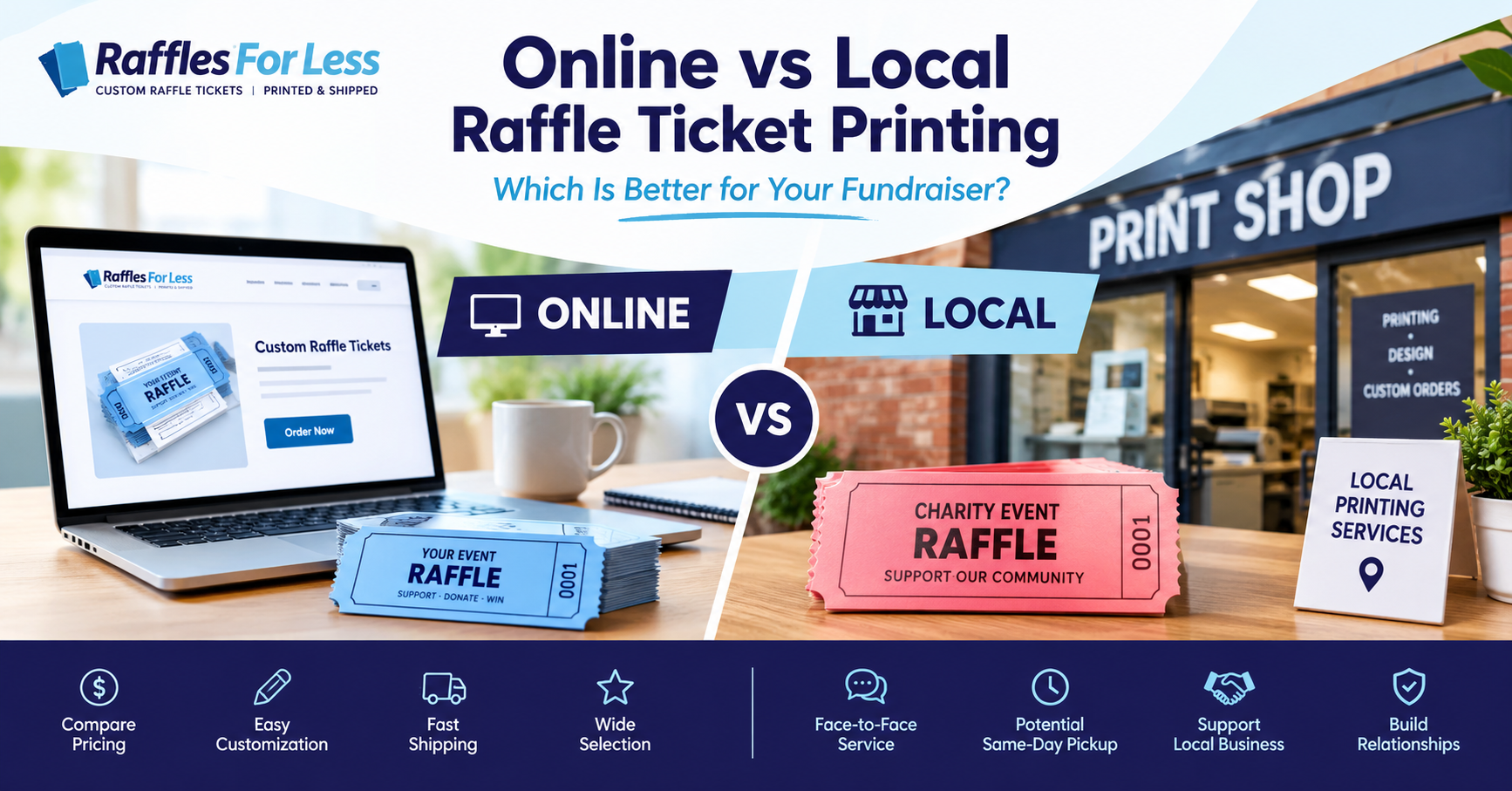
A nearby print shop offers face-to-face service and potential local pickup. Online printing services let you compare products, review pricing, customize your design, and have tickets shipped to your organization. Neither option is automatically best for every fundraiser.
This guide explains the differences, the costs to consider, and how to choose a reliable printing service so you can prepare professional raffle tickets without unnecessary expense or last-minute stress.
What Is Online vs Local Raffle Ticket Printing?
Online vs local raffle ticket printing describes two ways to order physical raffle tickets. Online printing involves placing an order through a printer’s website, while local printing means working with a nearby print shop that produces tickets for pickup or delivery.
Both options can provide customized designs, but available sizes, numbering, perforation, paper stocks, production times, and prices vary by provider. Your decision should depend on the complete order, not just the advertised starting price.
What Is Online Raffle Ticket Printing?
Online raffle ticket printing allows you to select ticket specifications, prepare or upload artwork, review available options, and submit an order through a website. Depending on the printer, you may be able to preview a design, request a proof, choose ticket sizes, and have the finished order shipped to your address.
This option is particularly useful when you need hundreds or thousands of tickets and want to compare prices before committing.
For example, Raffles For Less offers several physical ticket sizes, online ordering, numbered tickets, perforation options, and free shipping. You can review its custom printed raffle tickets to understand the available formats and features.
What Is Local Raffle Ticket Printing?
Local raffle ticket printing means ordering from a printer in your community. You can discuss your requirements in person, ask questions about paper and finishing, and potentially collect the completed tickets without waiting for a shipping carrier.
Local printing can be especially helpful when your event is approaching and the shop confirms it can complete the order on time.
However, not every local shop specializes in raffle tickets. Some may primarily print flyers, brochures, and business cards, so you should confirm that they can handle sequential numbering, matching ticket stubs, and clean perforations.
Online vs Local Raffle Ticket Printing Differences
The main difference is how you order, compare, approve, and receive your tickets. Online services can make product comparison and repeat ordering convenient, while local printers may offer easier in-person communication and pickup.
Before choosing, consider these practical differences.
1. Pricing and Overall Value
Online printers often publish product prices, allowing you to compare ticket sizes and quantities before ordering. Some also offer free shipping, which can make budgeting easier.
Local shops may provide a quote based on your specifications. That can be useful for unusual designs, but you should request a complete price that includes setup, numbering, perforation, finishing, and taxes where applicable.
Do not compare prices until you know both quotes cover the same specifications.
2. Turnaround Time
A nearby shop may be able to print a small order quickly, particularly if it has suitable equipment and available production capacity.
Online orders require shipping time in addition to production. However, an established online printer may have a more predictable workflow for standard ticket orders than a local shop that handles them occasionally.
Check the actual production schedule, proof approval requirements, weekends, holidays, and delivery estimate before ordering.
3. Printing Quality
Professional results depend on the equipment, paper stock, artwork, finishing process, and quality control rather than whether you order online or locally.
Ask how the printer handles numbering and perforation. If each ticket includes a detachable stub, the number on the ticket and stub should match. Text must also remain legible, and important details should not be placed too close to the edges or perforation.
4. Customization and Ticket Sizes
Both types of providers may offer custom printing, but their available features differ.
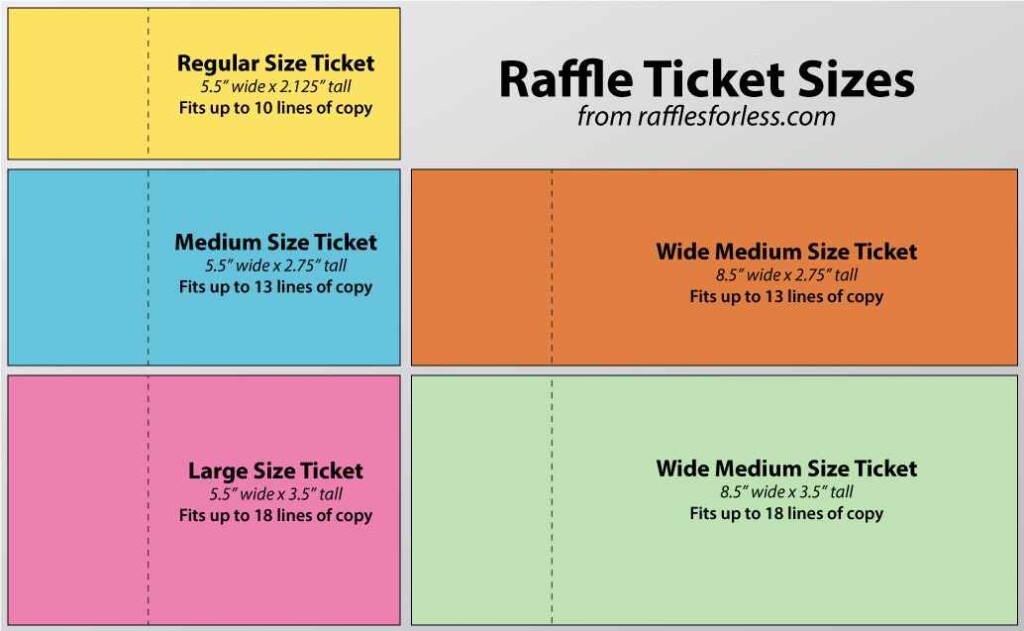
Ask whether you can include your organization’s name, logo, prize information, ticket price, drawing date, contact fields, and relevant rules. Confirm the available ticket dimensions, colors, numbering, and finishing options before approving the artwork.
If you need a specific layout, review the raffle ticket templates available from Raffles For Less before preparing your design.
5. Communication and Convenience
A local print shop may be easier to reach for an in-person discussion. Online providers can offer digital proofs, website-based ordering, email support, and order records without requiring a store visit.
The better choice depends on how you prefer to work. If you already have print-ready artwork and clear specifications, online ordering may be straightforward. If your design is unusual, direct communication with a knowledgeable printer may be more valuable.
Advantages of Online Ticket Printing Services
Online ticket printing services can be a practical option for organizations that want professional tickets without managing the entire production process themselves.
Here are the main advantages to consider.
Easier Price Comparison
Online pricing pages can help you compare quantities and ticket dimensions before ordering. You can estimate your printing budget, check available upgrades, and determine whether a larger order makes financial sense.
For a current example, visit the Raffles For Less raffle ticket pricing page. Compare the price for your required size and quantity, then check whether optional features change the final cost.
Convenient Ordering
You can place an order without traveling to a shop. This can save time for volunteer committees, school administrators, church staff, and nonprofit organizers who already have other responsibilities.
Online order forms can also make repeat orders easier when your organization runs an annual fundraiser and wants to reuse a familiar ticket format.
Professional Numbering and Perforation
When available, professionally produced numbering and perforation reduce the manual work involved in preparing tickets.
Matching numbers help connect the buyer’s ticket with the retained drawing stub. Perforation provides a defined tear-off line, making it easier to separate the two sections.
These features are worth considering when you are preparing hundreds or thousands of tickets.
Multiple Ticket Sizes and Designs
A small community raffle may need only a basic ticket with a short prize description. A larger fundraiser may need more room for sponsor names, instructions, contact details, or additional information.
Compare the available dimensions before choosing a design. Raffles For Less explains the practical steps involved in choosing a raffle ticket template, including the information that should appear on the ticket.
When Local Raffle Ticket Printing Makes Sense
Online printing is not always the most practical option. A local provider can be the better choice when you need personal assistance, an unusual job, or a confirmed pickup deadline.
Consider a local printer if:
- You need a small batch and the shop can produce it economically.
- You want to discuss a complex design face-to-face.
- You need to inspect a physical sample before approving a large order.
- Pickup would be faster than shipping.
- The shop confirms it can provide the required numbering and perforation.
For example, imagine a school fundraiser that discovers a printing error three days before its event. A nearby shop with available production capacity may be able to reprint the tickets and arrange pickup sooner than an online order could arrive.
That outcome depends on the shop’s workload, equipment, and the complexity of the job. Always confirm the deadline rather than assuming a local printer can provide same-day service.
How Much Does Raffle Ticket Printing Cost?
The cost of raffle tickets depends on quantity, size, paper stock, color, finishing, design assistance, and delivery. The cheapest quote is not necessarily the best value if it excludes important features or requires substantial volunteer labor.
When comparing print shop vs online printing, calculate the total cost of getting usable tickets into your volunteers’ hands.
Consider these expenses:
- Base printing price: The quoted amount for your selected ticket size and quantity.
- Setup and design: Any artwork preparation or design assistance fees.
- Numbering and perforation: Confirm whether these features are included.
- Finishing: Check whether stapling, gluing, or other options cost extra.
- Shipping or pickup: Include delivery charges and travel expenses.
- Labor: Estimate the time required for manual numbering, cutting, sorting, and assembling tickets.
For instance, a local quote might look cheaper at first, but require volunteers to number and cut tickets themselves. An online quote could include those finishing steps but charge for an upgraded paper stock. Comparing the complete job reveals which option better fits your budget.
If your fundraising plan also depends on keeping ticket sales profitable, read the guide to how much raffle tickets should cost.
Custom Ticket Printing Options to Compare
The best custom ticket printing options are those that meet your fundraiser’s practical requirements without adding unnecessary expense.
Before ordering, review the following features.
Ticket Size and Layout
Choose a size that accommodates the information buyers need. A standard ticket may work for a simple raffle, while a larger format can provide extra room for instructions, sponsor information, or a longer prize description.
Make sure the layout allows enough space for readable text and a detachable stub when required.
Numbering and Perforation
Sequential numbering helps organizers track ticket distribution and identify the winning entry. If the ticket has a stub, confirm that the corresponding numbers match.
Perforation is useful when volunteers need to separate the buyer’s portion from the drawing entry. Confirm its location and whether the selected ticket format includes it.
Paper and Finish
Paper should be durable enough to handle distribution, sales, and collection. A finish that allows buyers to write on the ticket may be important when collecting names or phone numbers.
Ask your printer which stocks and finishes are available and whether the proposed material is suitable for your design.
Proofing and Artwork
Review the final proof carefully before approving production. Check spelling, prize descriptions, drawing details, prices, contact information, numbering placement, and the ticket’s overall readability.
For additional preparation advice, read what information to include on a raffle ticket.
How to Choose Where to Print Raffle Tickets
If you are wondering where to print raffle tickets, start by writing down the specifications of your job. This makes it easier to request comparable quotes from online providers and local print shops.
Follow these steps.
Step 1. Estimate Your Quantity
Estimate how many tickets you reasonably expect to sell, how many volunteers will be distributing them, and whether you need extra tickets for replacement or additional sales.
Avoid ordering an unnecessarily large quantity simply because the unit price looks lower.
Step 2. Prepare Your Requirements
Write down your ticket size, color preferences, numbering requirements, perforation needs, design specifications, and delivery deadline.
If you have artwork ready, confirm that it meets the printer’s file requirements. If not, ask whether design assistance is available and what it costs.
Step 3. Request Comparable Quotes
Contact at least two providers if your budget and timeline allow. Ask each to quote the same quantity, dimensions, paper, printing, finishing, and delivery requirements.
This helps you avoid choosing a printer based on an incomplete estimate.
Step 4. Verify Production and Delivery
Ask when production begins, whether proof approval is required, and when the tickets are expected to arrive or be ready for pickup.
For online orders, review the provider’s stated production schedule. Raffles For Less explains its standard timing and relevant exceptions in its raffle ticket printing turnaround guide.
Step 5. Check the Final Proof
Before approving the order, inspect every important detail. If you find an error, request a correction before production starts.
A careful proof review is easier and less expensive than discovering a mistake after the entire batch has been printed.
Common Mistakes to Avoid
Even a well-planned fundraiser can run into printing problems if the order is rushed or specifications are unclear.
Avoid these mistakes:
- Choosing on price alone. Compare total costs, quality, finishing, and delivery.
- Ordering too late. Leave time for artwork corrections, production, and shipping.
- Assuming every printer offers numbering. Confirm sequential numbering and matching stubs explicitly.
- Ignoring design requirements. Follow the selected printer’s template and artwork specifications.
- Ordering too many tickets. Estimate demand realistically instead of focusing only on the unit price.
- Skipping proof approval. Check the design before authorizing the full print run.
- Overlooking applicable raffle rules. Confirm your organization’s eligibility, required disclosures, and any state or local restrictions before selling tickets.
For more preparation ideas, see the guide to hosting a raffle successfully.
Best Practices for a Successful Printing Order
A reliable printing process starts before you submit the order.
First, assign one person to approve the design and communicate with the printer. This reduces confusion when several volunteers are involved.
Second, maintain a record of the approved artwork, ticket quantity, numbering range, invoice, production estimate, and delivery details. If you reorder later, those records make it easier to confirm what needs to change.
Third, build a small buffer into your schedule. Tickets should arrive early enough for volunteers to organize books, distribute inventory, and begin selling before the event.
Finally, review how the tickets will be used. If volunteers will sell tickets at multiple locations, establish a process for recording which ticket numbers each person receives and returns. Good inventory control helps your organization reconcile sold tickets, unsold tickets, and collected payments.
Final Checklist Before Ordering Raffle Tickets
Use this checklist before choosing a local print shop or online provider.
- Confirm the total quantity required.
- Choose the appropriate ticket dimensions.
- Confirm numbering and matching stub requirements.
- Select paper stock and finishing options.
- Verify the complete price, including shipping or pickup costs.
- Review artwork, spelling, and required raffle details.
- Confirm the production and delivery deadline.
- Approve the final proof.
- Plan ticket distribution and inventory tracking.
- Check applicable raffle rules before sales begin.
Conclusion
Choosing online vs local raffle ticket printing comes down to your budget, schedule, ticket specifications, and preferred ordering process. Local printing may suit urgent jobs, in-person support, or convenient pickup. Online printing can be a strong option when you want to compare published prices, select from available ticket formats, and order professionally printed tickets for delivery.
Before deciding, compare the complete cost and confirm that the printer can provide the numbering, perforation, design, and turnaround your fundraiser requires.
If you need custom printed tickets for a school, church, nonprofit, or community fundraiser, start by reviewing the Raffles For Less pricing and ordering options. Check the specifications carefully and choose the format that best supports your event.
Frequently Asked Questions
1. Is online vs local raffle ticket printing cheaper?
Neither option is always cheaper. Online printers may offer published pricing and shipping promotions, while local shops may save delivery time or travel costs. Compare the complete price for the same ticket quantity, size, numbering, perforation, and finishing.
2. Where can I print custom raffle tickets?
You can order custom raffle tickets from an online ticket printer or a local print shop. Choose a provider that supports your required ticket dimensions, artwork, sequential numbering, perforation, and delivery schedule.
3. Are online ticket printing services reliable?
They can be reliable when the provider has clear specifications, a documented ordering process, responsive support, and a realistic production estimate. Review the proof carefully and verify delivery timing before submitting your order.
4. Can a local print shop print numbered raffle tickets?
Some local print shops can print sequentially numbered tickets with matching stubs, but capabilities vary. Ask whether numbering and perforation are available and whether they are included in the quote.
5. How long does custom raffle ticket printing take?
Production time depends on the printer, quantity, design complexity, finishing, and proof approval. Shipping adds time to online orders. Confirm the actual production schedule and expected delivery date before placing an order.
6. What information should appear on a raffle ticket?
A ticket commonly includes the organization’s name, prize details, ticket price, drawing date, ticket number, and buyer contact fields when needed. Include relevant rules or disclosures and verify local requirements before printing.