When you’re organizing a fundraiser, the ticket you choose can make your event easier to manage and more professional. Raffle ticket stubs are especially useful because they separate the participant’s proof of entry from the portion used for the drawing.
A typical raffle ticket has two connected sections. The buyer keeps the main ticket, while the organizer collects the detachable raffle ticket stub. Both sections usually have the same number, making it easy to identify the winning entry.
Whether you’re planning a school fundraiser, charity event, church raffle, sports fundraiser, or community event, understanding how raffle stubs work can help you choose the right ticket format.
What Is a Raffle Ticket Stub?
A raffle ticket stub is the detachable section of a raffle ticket that the organizer keeps for the prize drawing.
Raffle Stub Meaning
The basic raffle stub meaning is the removable portion of a numbered raffle ticket used as an entry in the drawing. The participant normally keeps the main ticket, while the organizer places the stub into a drawing box or other secure container.
For example, if a participant receives ticket number 1057, both the ticket and its stub should display 1057. When the winning stub is selected, the participant can use the matching ticket to verify their entry.
How Do Raffle Ticket Stubs Work?
The process is simple:
- The organization prints numbered raffle tickets.
- A participant purchases a ticket.
- The participant keeps the main portion.
- The organizer collects the detachable stub.
- The stub is placed into the drawing container.
- A winning stub is selected.
- The matching ticket number is used to identify the winner.
This system works particularly well for physical fundraising events because it doesn’t require participants to use an app, website, or digital account.
What Should a Raffle Ticket Stub Include?
The exact information depends on the fundraiser and applicable requirements, but common information includes:
- Organization or fundraiser name
- Ticket number
- Participant’s name
- Phone number
- Email address, when needed
- Drawing date
- Prize information
- Organizer contact information
Don’t overcrowd the stub. If buyers need to write their names or phone numbers, make sure there is enough space to write clearly.
For additional guidance, review the Raffles For Less resource on information to include on a raffle ticket.
Why Matching Numbers Matter
Matching numbers are one of the most important features of raffle ticket stubs.
For example:
| Participant Ticket | Drawing Stub |
| #1057 | #1057 |
| #1058 | #1058 |
| #1059 | #1059 |
If the numbers do not match, identifying the winner can become unnecessarily complicated.
Sequential numbering also helps organizers keep track of which tickets were distributed, sold, returned, or left unsold.
Before printing, carefully verify the starting number, ending number, and total quantity.
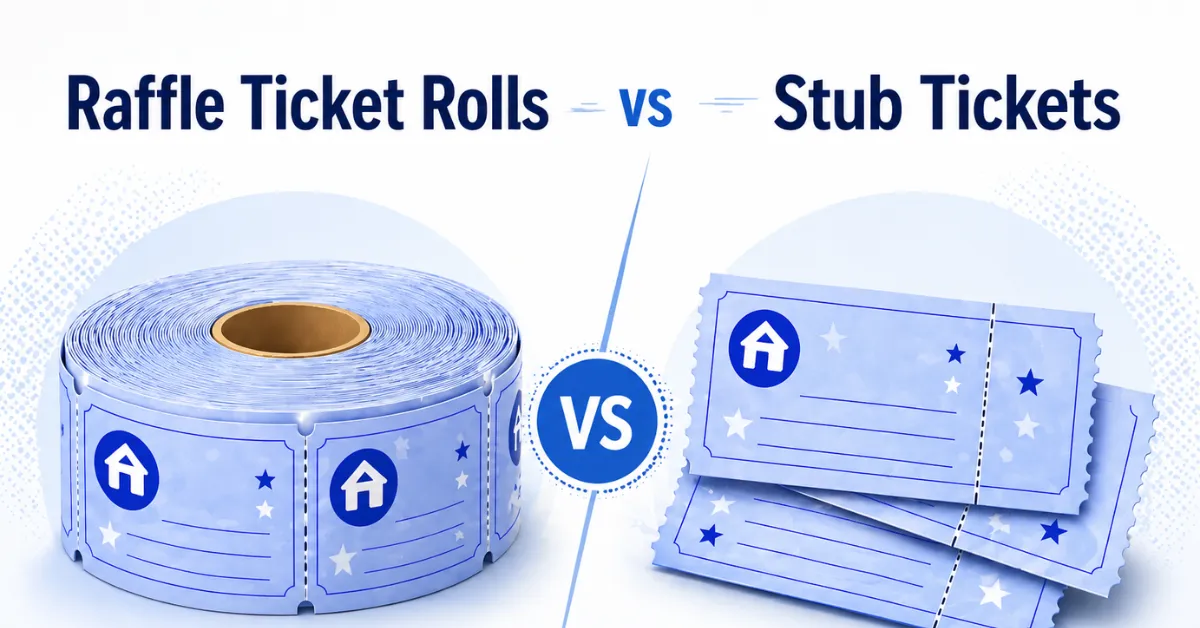
Raffle Ticket Stubs vs. Ticket Rolls
Both stub tickets and rolls can work for fundraising, but they serve different purposes.
| Feature | Stub Tickets | Ticket Rolls |
| Detachable section | Yes | Usually limited |
| Buyer information | Easy to collect | Less space |
| Customization | High | Usually limited |
| Numbering | Sequential | Usually sequential |
| Organization | Excellent | Good |
| Speed | Moderate | Fast |
| Best for | Fundraisers | Quick sales |
Raffle ticket stubs are often the better option when your event requires participant information, branding, detailed prize information, or a more organized drawing process.
Ticket rolls can be more convenient when speed and simplicity are the priority.
You can compare both formats in the Raffles For Less guide to raffle ticket rolls vs. stub tickets.
Raffle Ticket Stub Design Tips
A good raffle stub should be easy to understand and easy to use.
Make the Number Easy to Find
The ticket number should be clearly visible on both sections. Avoid placing it over busy images or decorative elements.
Leave Enough Writing Space
If you need the buyer’s name or phone number, provide enough room for handwritten information.
Keep the Design Consistent
Your organization name, logo, colors, and event information should create a consistent appearance across the ticket.
Make the Perforation Clear
Participants should immediately understand which section they keep and which section they return.
For additional design ideas, see these raffle ticket design tips.
What Are the Best Ticket Templates Available?
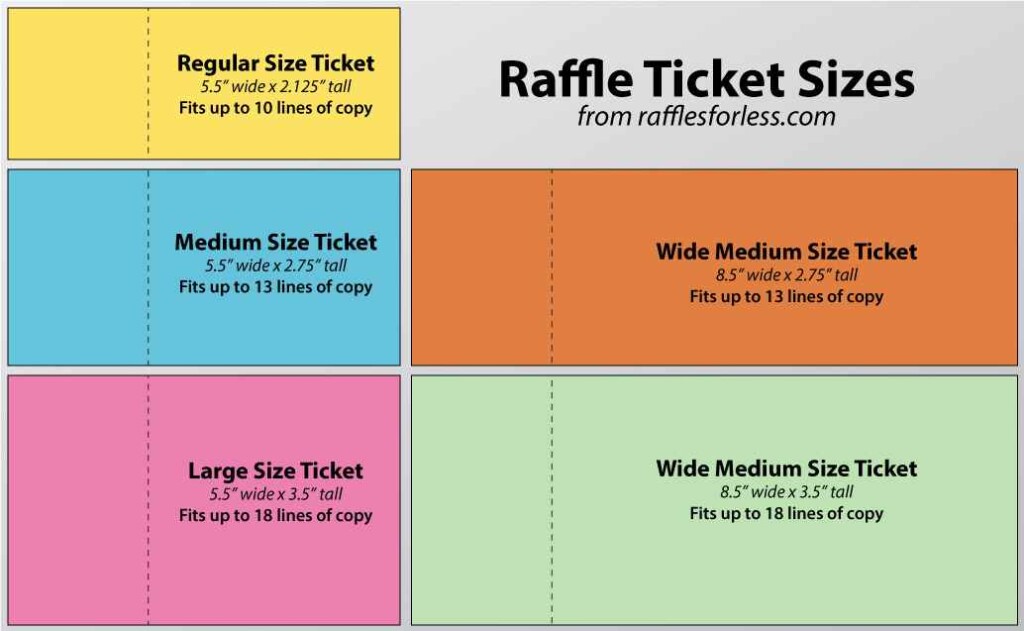
The best template is one that matches your ticket size, numbering requirements, perforation position, and printing method.
A good template should provide space for:
- Event information
- Ticket number
- Prize details
- Buyer information
- Organization branding
- Required disclosures
Instead of choosing a generic template based only on appearance, consider how the ticket will actually be sold, collected, and used during the drawing.
You can explore raffle ticket templates for different ticket formats and sizes.
What Are the Different Ticket Template Options Available for Events?
Common ticket template options include:
- Numbered raffle tickets
- Tear-off stub tickets
- Fundraiser tickets
- Event tickets
- Calendar raffle tickets
- Custom raffle tickets
- Large-format tickets
The right choice depends on your event. A charity fundraiser may need a more detailed ticket, while a small community raffle may only require basic numbering and prize information.
How to Create Raffle Ticket Stubs
Creating professional tickets starts with planning.
Step 1: Determine Your Quantity
Decide how many tickets you expect to sell. Your quantity should support your fundraising goal without leaving you with unnecessary inventory.
Step 2: Choose the Number Range
For example, 500 tickets could be numbered 1001 through 1500.
Step 3: Plan the Stub
Determine whether you need the participant’s name, phone number, email, or other information.
Step 4: Design Both Sections
Make sure the main ticket and stub share the same number and clearly indicate which section the buyer keeps.
Step 5: Proof Before Printing
Check the event name, date, prize, price, contact details, numbering, and spelling before approving the final version.
Raffles For Less also provides guidance on how to make raffle tickets.
Common Mistakes to Avoid
Even a simple raffle can become difficult to manage if ticket preparation is rushed.
Avoid these common mistakes:
- Using mismatched ticket numbers
- Printing numbers that are too small
- Forgetting the drawing date
- Providing too little writing space
- Overloading the stub with unnecessary text
- Failing to proofread the final design
- Mixing sold and unsold tickets
- Losing track of ticket number ranges
- Ignoring applicable state and local raffle requirements
Keep collected stubs secure until the drawing.
Best Practices for Managing Raffle Stubs
Once tickets are printed, organization becomes just as important as design.
Record which ticket numbers are given to each seller. For example:
| Seller | Ticket Range |
| Volunteer A | 1001–1050 |
| Volunteer B | 1051–1100 |
| Volunteer C | 1101–1150 |
Before the drawing, reconcile sold tickets, unsold tickets, returned tickets, and collected stubs.
If your stubs contain personal information, restrict access to people who need it and handle the information responsibly.
Raffle Ticket Stub Checklist
Before printing, check:
- Organization name
- Event name
- Ticket price
- Prize information
- Drawing date
- Ticket number range
- Matching numbers
- Buyer information fields
- Contact information
- Required rules or disclosures
- Correct perforation
- Final quantity
- Proofreading completed
Raffle Ticket Stubs and U.S. Regulations
Raffle laws vary by state and sometimes by local jurisdiction. Organizations should confirm applicable requirements before selling tickets.
Requirements may address eligibility, ticket wording, prize restrictions, licensing, registration, record keeping, or drawing procedures.
Federal tax treatment is a separate issue. The IRS provides information about gambling winnings and reporting requirements, including raffle winnings. Review current IRS guidance on gambling income when appropriate.
This article is educational and should not be treated as legal or tax advice.
Conclusion
Choosing the right raffle ticket stubs can make a fundraiser easier to organize, easier to track, and more professional for participants.
A well-designed stub should have matching numbers, enough writing space, clear event information, and a practical layout. For larger or more formal fundraisers, customized stub tickets can provide more flexibility than basic ticket rolls.
Before ordering, determine your ticket quantity, number range, design requirements, and applicable raffle rules. Then carefully proof the final ticket before printing.
When the ticket design and event process work together, your raffle can run more smoothly from the first sale through the final drawing.
Frequently Asked Questions
What is a raffle ticket stub?
A raffle ticket stub is the detachable section of a raffle ticket that the organizer collects and uses for the drawing.
What is a raffle stub?
A raffle stub is the removable part of a raffle ticket. It usually contains a number matching the participant’s ticket.
What is a ticket stub?
A ticket stub is a detachable portion of a ticket retained for record keeping, entry, or drawing purposes.
Should raffle tickets have matching numbers?
Yes. Matching numbers help connect the participant’s ticket with the entry placed into the drawing.
What information goes on a raffle ticket stub?
Common information includes the ticket number, participant name, phone number, organization name, and drawing details.
How much do raffle tickets cost?
Pricing depends on quantity, size, printing, numbering, perforation, paper, and customization. Review current Raffles For Less pricing for available options.